💡 Key Takeaways
- “Beans” is a kitchen word covering many Fabaceae seeds: Old World pulses and New World Phaseolus species domesticated independently.
- Dried beans store protein and fiber for months — a preservation technology as important as their flavor.
- American common beans met corn and squash in Mesoamerican agriculture; Old World lentils and chickpeas fed earlier Near Eastern farming.
What “Beans” Means in Food History
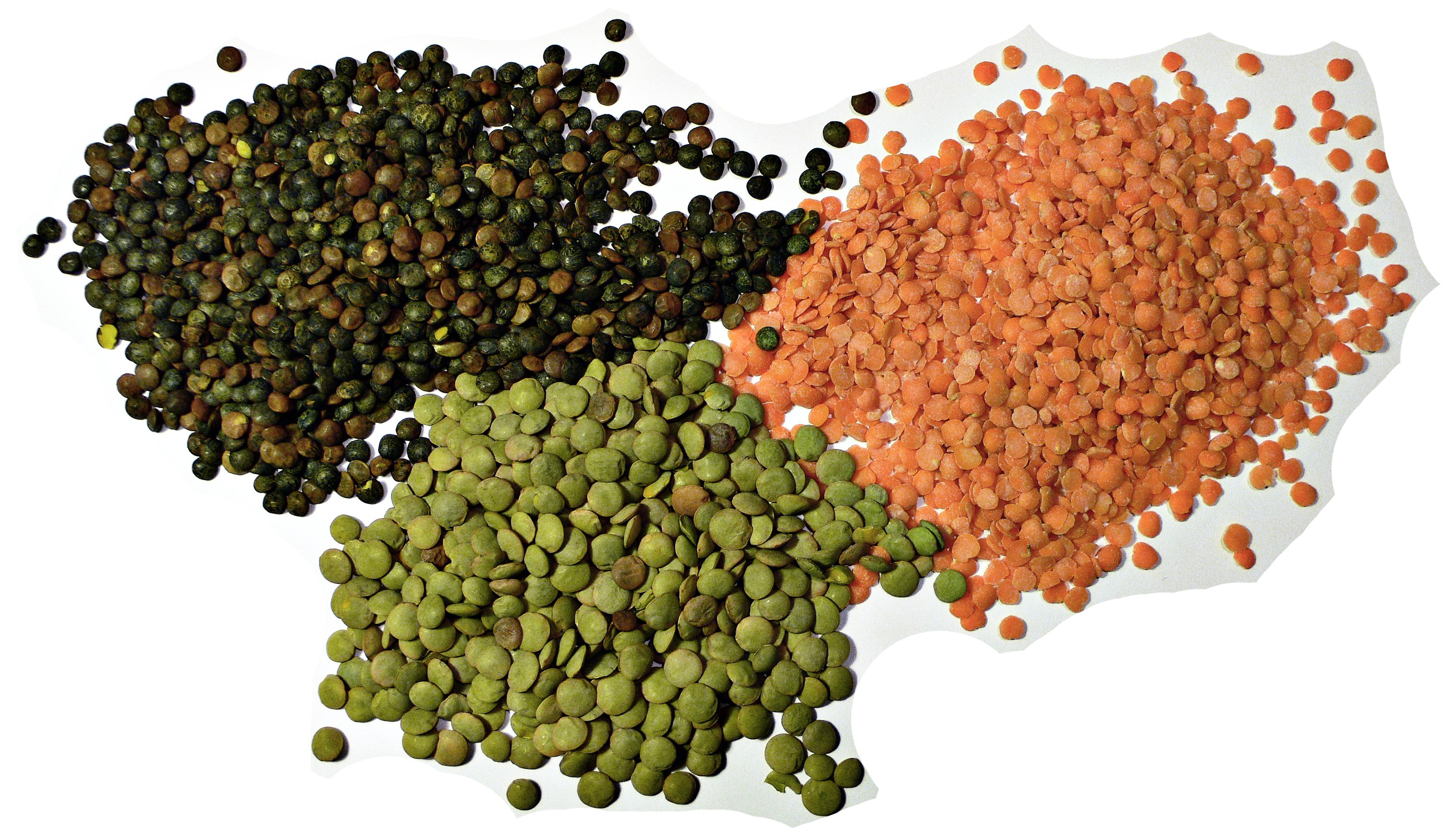
In kitchens, “beans” is a broad label for edible legume seeds. Food history has to split the word: Old World pulses such as lentil, chickpea, and fava sit in Near Eastern and Mediterranean farming; New World Phaseolus species — common bean, lima, runner — were domesticated in the Americas [1][2][4].
Both lineages share a practical gift: dry seeds keep for months. Beans are preservation technology as much as cuisine. That is why they anchor fiber and plant-protein conversations in 2026 without needing a new crop invention.
Old World Pulses
Near Eastern Neolithic packages included lentils, peas, and bitter vetch beside cereals [2]. These pulses fed porridge pots and stews long before American kidney beans arrived. In South Asia and the Mediterranean, dals, ful, and chickpea dishes kept legumes central to daily protein [1].
Soybean is a separate East Asian story — another legume empire of curds and ferments — but English speakers still reach for the word “bean” when they mean soy. Taxonomy and kitchen language rarely match perfectly.
New World Phaseolus and the Three Sisters
In Mesoamerica and the Andes, farmers domesticated Phaseolus beans and often grew them with corn (maize) and squash — the “Three Sisters” polyculture that combined climbing vines, tall stalks, and ground cover [2][4]. Black beans, pintos, and many market types descend from that American work.
After 1492, American beans flooded Eurasian and African markets. Minestra, cassoulet cousins, chili pots, and rice-and-beans plates are Atlantic-world foods built on that transfer [1].
Stews, Cans, and the Fiber Pantry
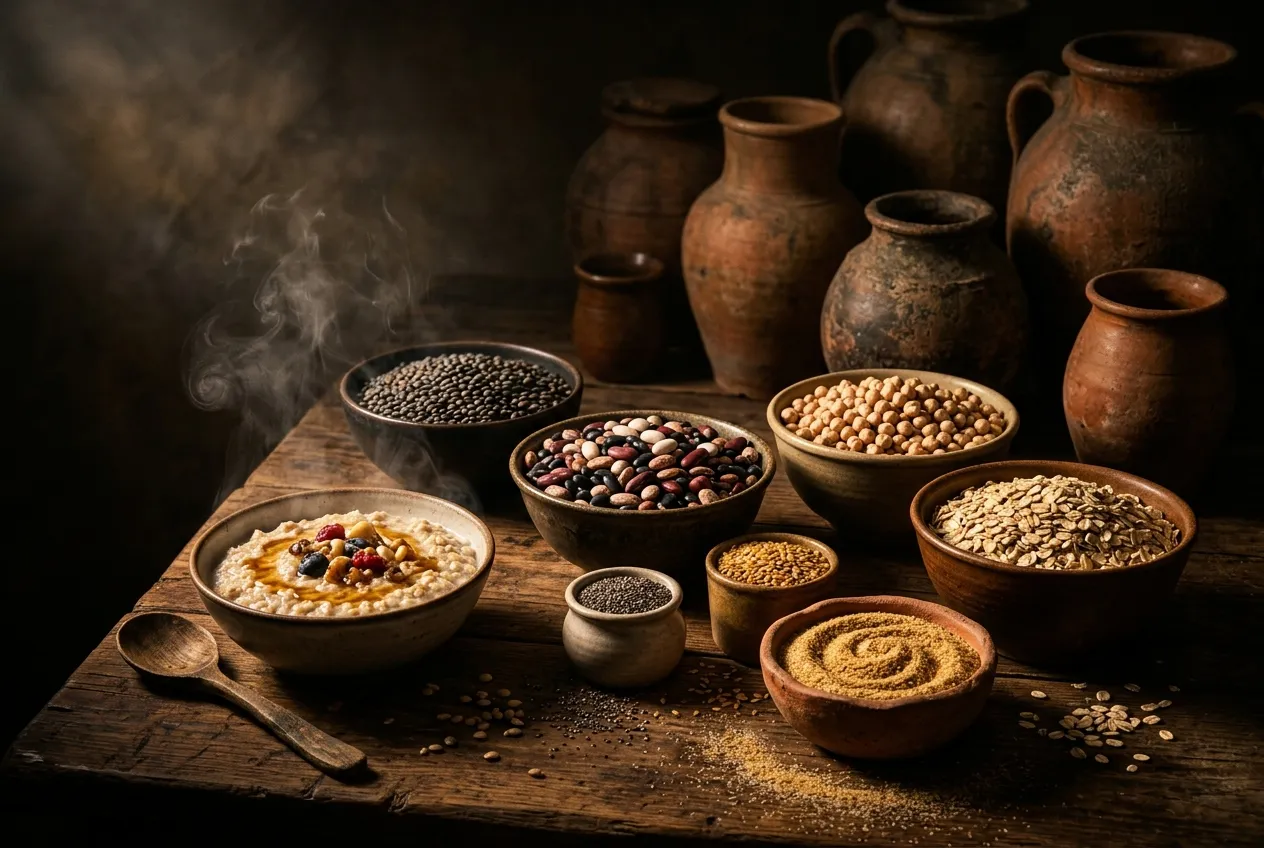
Dried and canned beans made weeknight stews possible worldwide. Fermented black beans (douchi), refried beans, baked beans, and dal-style pots show how many cuisines treat legumes as flavor bases, not side dishes [3].
On this site, beans link fiber hubs to lentil, chickpea, and oats — staple carbohydrates and proteins that predate “fibermaxxing” vocabulary. The history is agricultural and migratory; the trend word is new packaging for old bowls.
In the news
Recent 2026 food-culture notes that reference this article.
- Jul 6, 2026Why Americans Miss Fiber Targets→
- Jun 19, 2026Red Bean (Azuki) Desserts Going Mainstream→
- Jun 16, 2026What Is Fibermaxxing? Meaning, Origins, and the Foods Behind It→
- Jun 15, 2026The High-Fiber Smoothie Trend Rests on Beans, Oats and Fermentation→
- Jun 12, 2026Psyllium Origin: The 3,500-Year-Old Plant Behind Fibermaxxing→
- Jun 11, 2026Fibermaxxing Searches Rose 115%: Why an Old Pantry Went Viral→
Historical Timeline
Lentils, peas, and related pulses enter early farming packages
Phaseolus beans are domesticated and paired with maize and squash
American beans enter Eurasian and African kitchens; Old World pulses continue as staples
Canned beans and dry-pack commodity trade make beans a global pantry default
Fibermaxxing and plant-protein trends renew search interest in bean bowls and stews
Evidence Explorer
Review the Source Trail
Inspect the article sources, scoped review credits, and copyable citation details without leaving the page.
Reviewed for Stated Scope
Sources Listed
Comments
Community comments are coming soon. Check back later to join the discussion!