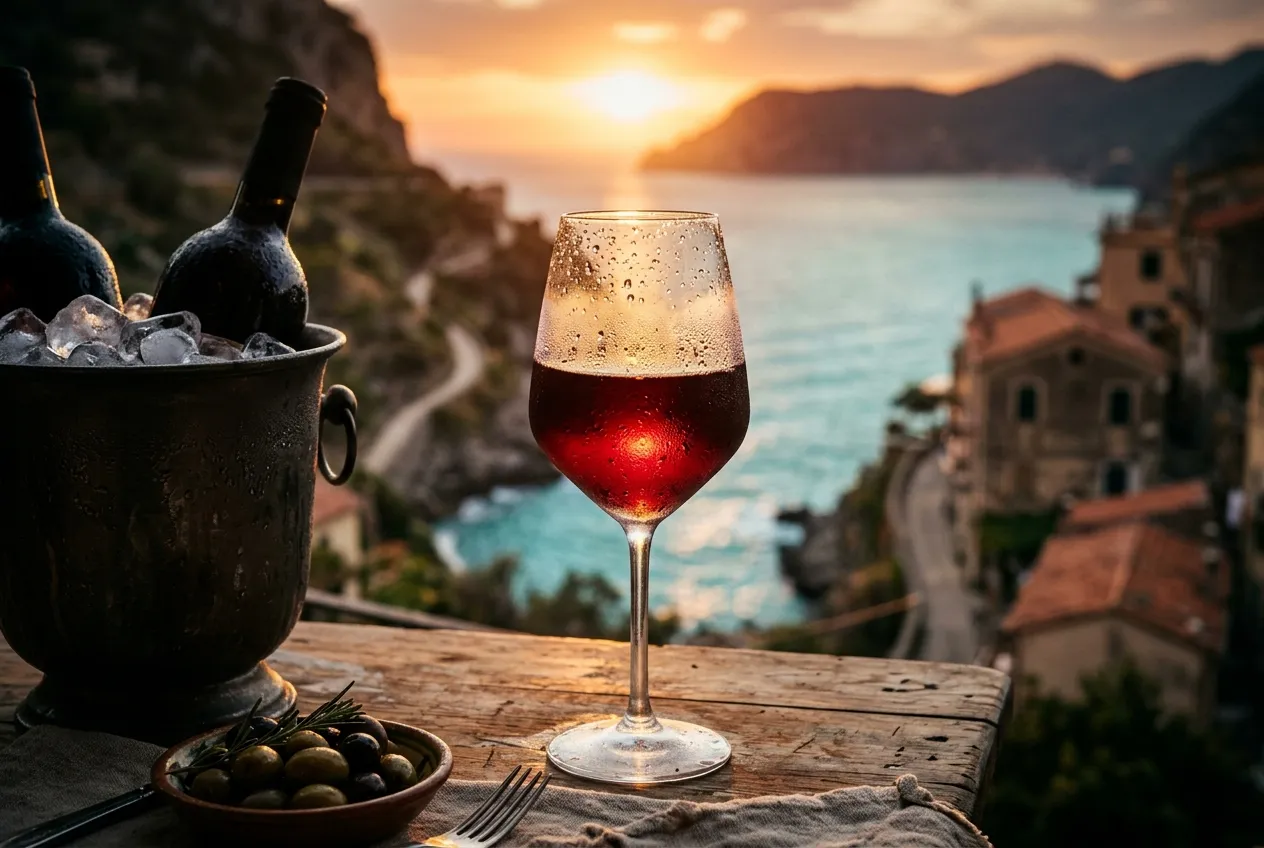
Should Red Wine Be Chilled? Origin of Europe’s Summer Red Habit
Chilled red wine spiked in U.S. searches in 2026 — but lightly cooling lighter reds is an old European warm-weather habit, not a new American rule-break.
Chilled red wine is at peak search interest in summer 2026, per Google Summergeist, with "chilled red wine trend" up about 20%. The practice is new to many U.S. drinkers but an old European habit: lightly cooling lighter reds — Beaujolais, Lambrusco, Pinot Noir — for warm-weather meals.
What's happening
Chilled red wine is one of Google Summergeist's 2026 summer breakouts. Searches for "chilled red wine trend" rose about 20%, and the practice has moved past the approval-seeking stage — "should red wine be chilled" is down, meaning drinkers now simply do it [1]. The shift is toward lighter, fruity reds served cool in summer rather than heavy room-temperature reds.
The history behind it
Chilling red wine is not an American invention. In Europe, lightly cooled reds have long been normal in warm weather: Lambrusco in Emilia, Beaujolais served cellar-cool in French summers, and young Mediterranean reds poured slightly chilled with food [2]. The "room temperature" rule was always contextual — it came from drafty historical European rooms, not modern warm kitchens. Red wine itself is a roughly 8,000-year story, from Transcaucasian viniculture to the global wine trade [3].
Why it matters
The food-history value is that a 2026 U.S. trend is an old European habit meeting a new audience. The "rule" that red wine must be warm was always softer than it sounded. For the full history of wine, see the article below.
How to try it
Pick a lighter red, such as Beaujolais or Gamay, Lambrusco, a young Pinot Noir, or a fruity Spanish Garnacha, and chill it for about 20 to 30 minutes in the fridge before serving. You want it cool, not cold, around 14 to 16 degrees Celsius. Heavy, tannic reds like Cabernet or Nebbiolo do not benefit from chilling. The goal is a refreshing summer red that still tastes like wine, not a chilled fruit soup. For how red wine developed into the styles we chill today, read the history of wine below.
📖 Read the full history
Trend Desk notes are timely. The durable history behind each trend lives in these articles and collections.

Comments
Community comments are coming soon. Check back later to join the discussion!