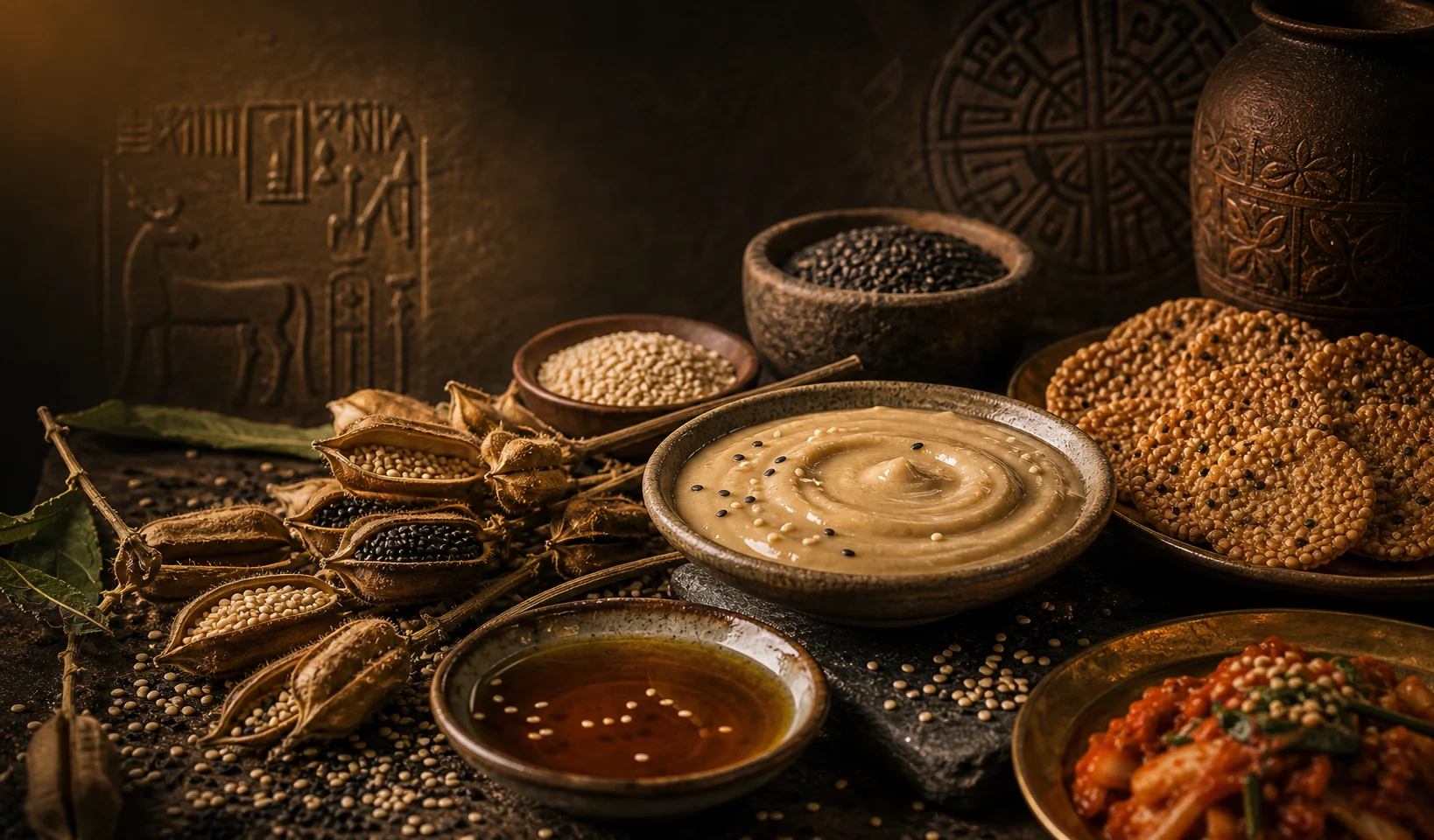
Black Sesame vs White Sesame: What Is Actually Different
Black and white sesame are the same seed, but the hull changes the flavor, texture, color and traditional use. Here is the difference behind the 2026 dessert trend.
Black and white sesame are the same seed — Sesamum indicum — but black sesame is unhulled and white sesame is hulled. The hull changes everything: black is darker, nuttier, crunchier and used in Chinese and Japanese desserts and medicine; white is milder, softer and used in tahini, halva and baking.
What's happening
As black sesame desserts break out in 2026, one comparison keeps climbing: "black sesame vs white sesame" [1]. The question is practical — recipes call for one or the other, and they do not behave the same way in a dough, paste or ice cream base.
The history behind it
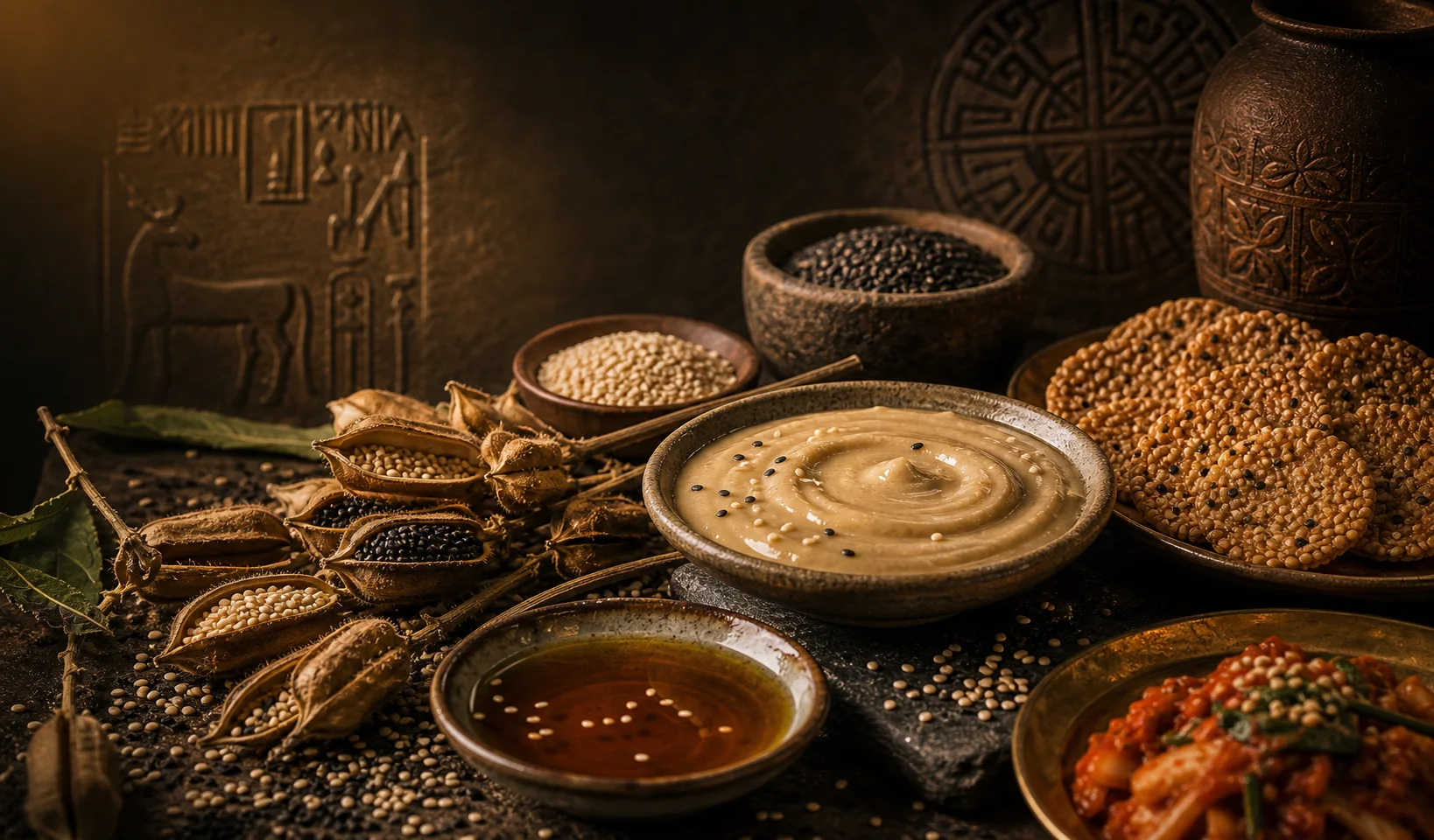
White sesame is hulled: the seed coat is removed, leaving a soft, pale, mild seed that grinds into tahini and bakes into bread and halva across the Levant and Mediterranean [2]. Black sesame is unhulled: the dark coat stays on, holding stronger flavor, more crunch and a color that dyes ice cream and cookies grey-black. East Asian kitchens kept black sesame for desserts, pastes and medicine; West Asian and Mediterranean kitchens mostly hulled it for oil and tahini [3].
Why it matters
The food-history value is that the two colors map to two culinary worlds — East Asian dessert sesame and West Asian oil-and-paste sesame — both built on the same ancient seed. For the full history of sesame, see the article below.
How to try it
Use them for different jobs. White, hulled sesame is your tahini, halva, burger-bun, and mild sesame-oil sesame: soft, oily, and blending-friendly. Black, unhulled sesame is your dessert and garnish sesame: stronger, crunchier, and color-shifting. Do not swap one for the other in a recipe without expecting a change in flavor, texture, and appearance. Black sesame in a tahini dressing is bitter and gritty; white sesame in a tangyuan is bland and pale. For the full history of both, read below.
📖 Read the full history
Trend Desk notes are timely. The durable history behind each trend lives in these articles and collections.
Comments
Community comments are coming soon. Check back later to join the discussion!