💡 Key Takeaways
- Sesame (Sesamum indicum), also called benne, is one of the oldest cultivated oilseeds, domesticated in Africa or India with Indus Valley evidence by about 2500 BCE.
- Its seed pods split open at maturity — the origin of the phrase "open sesame" — and its paste (tahini) and oil anchor cuisines from the Middle East to East Asia.
- Enslaved West Africans carried benne to the American South, where it became a Lowcountry staple, and sesame now rides the 2026 Korean-food boom alongside gochujang and doenjang.
Where did sesame originate?
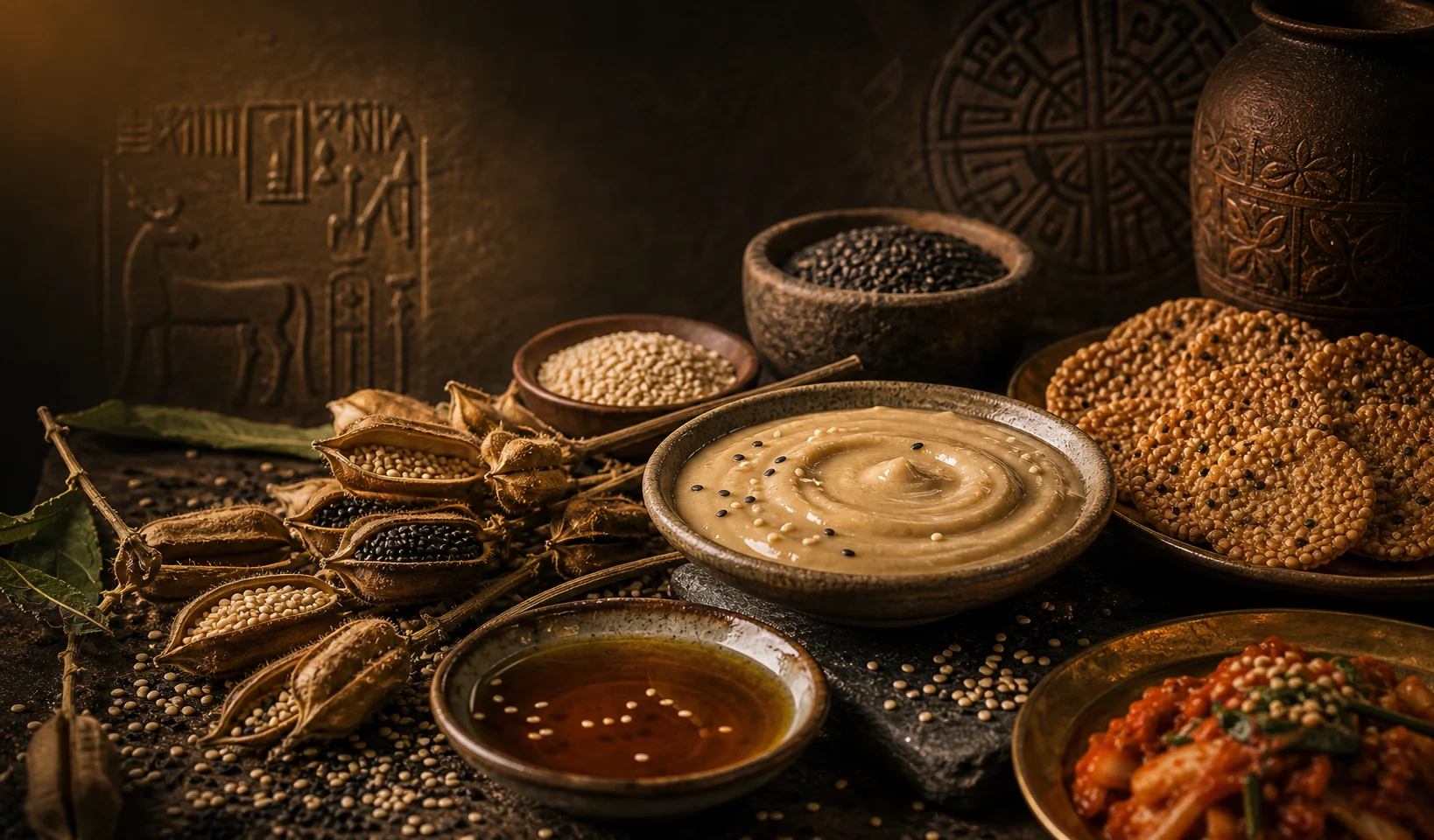
Sesame (Sesamum indicum), also called benne, is one of the oldest cultivated oilseed crops. Wild relatives cluster across Africa and a smaller number in India, and archaeobotanical evidence places cultivated sesame in the Indus Valley by roughly 2500 BCE [1][3]. The plant is grown for its small oil-rich seeds, which ripen in grooved pods that split open at maturity and scatter the seed — the botanical quirk behind the phrase "open sesame" [1].
Domestication is usually credited to India or Africa, and the crop spread early along trade routes into Mesopotamia, the Levant, and the Mediterranean, where its seed and its oil became kitchen and ritual staples [2].
Ancient Middle East and the Mediterranean
In the ancient Near East, sesame was pressed for oil and ground into paste long before the word "tahini" carried the idea into modern menus. Babylonian and Assyrian records list sesame as a valuable oilseed, and early seed-and-honey confections were the ancestors of halvah and the Greek pasteli [1][2].
Across the Mediterranean and the Silk Road, sesame traveled as both a food and a trade good. Jewish and Arab kitchens kept sesame paste central; honey and sesame became a durable pairing in confections, and sesame oil was used in lamps, medicine, and cooking [2].
East Asia: Sesame Oil and the Korean Cluster
East Asia turned sesame oil into a defining flavor. Toasted sesame oil, made from roasted seeds, carries a deep nutty aroma thanks to compounds such as sesamol, and it is used as a finishing oil rather than a frying oil in Chinese, Korean, and Japanese kitchens [4].
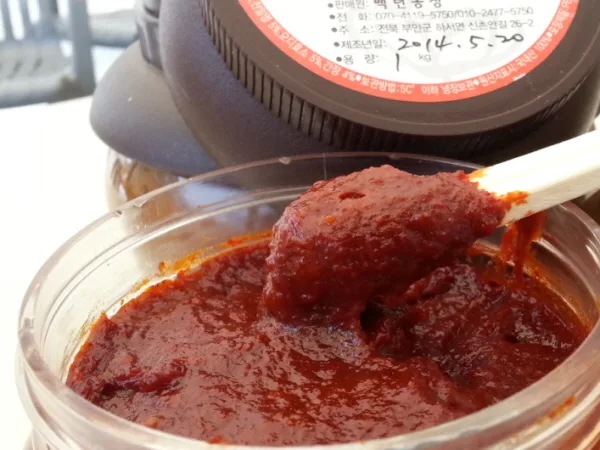
In Korean cooking, sesame oil and seeds finish stews, marinades, and banchan alongside the fermented soybean and chili cluster: gochujang, doenjang, and soybean pastes, often with chili pepper heat [4]. Black sesame, ground into pastes for Korean and Japanese sweets, is a separate, older East Asian dessert thread.
Benne: From West Africa to the American South
"Benne" is the West African word for sesame — from Wolof, spoken in Senegal — and it marks one of the most important American journeys of the seed. Enslaved West Africans carried benne to the Carolina and Georgia Lowcountry, where it became a staple of plantation and later Southern kitchens [5].
Lowcountry cooks turned benne into benne wafers and benne biscuits, thin crispy cookies built on toasted sesame and sugar, which remain a Charleston specialty. The story is a corrective one: a seed treated as a Southern quaintitude is in fact an African survival, carried by cooks whose names rarely made the recipe books [5].
How Sesame Is Used Today (and the 2026 Korean Food Boom)
Today sesame is a global pantry staple. Tahini drives the hummus boom; sesame oil finishes Korean and Chinese dishes; sesame seeds top bread, bagels, and burger buns. World production runs near 6–7 million tonnes a year, led by India, Myanmar, Sudan, Nigeria, and Tanzania [7].
The 2026 Korean-food boom has lifted sesame oil demand alongside doenjang and gochujang, as global cooks build Korean flavor foundations at home. Sesame also now carries a regulatory footprint: since 2023 the United States has listed sesame as a major food allergen under the FASTER Act, requiring explicit labeling on packaged foods [6].
In the news
Recent 2026 food-culture notes that reference this article.
- Jun 20, 2026Sesame on the Silk Road: Trade History→
- Jun 19, 2026Tangyuan with Black Sesame: Festival Dumpling History→
- Jun 19, 2026Goma: Japanese Sesame Sweets Behind the Breakout→
- Jun 19, 2026Black Sesame Paste and Nerigoma History→
- Jun 19, 2026Black Sesame Latte: Dessert Seed Meets Coffee→
- Jun 10, 2026Black Sesame vs White Sesame: What Is Actually Different→
- Jun 9, 2026What Is Black Sesame? The Ancient Ingredient Behind 2026's Breakout Desserts→
- Jun 8, 2026Black Sesame Ice Cream Is Breakout on Google — and It Is 1,000 Years Old→
Historical Timeline
Indus Valley sites show cultivated sesame, among the earliest oilseed crops
Mesopotamian and Egyptian records list sesame as an oil, food, and medicine
Sesame paste (early tahini) and seed-and-honey confections (ancestors of halvah and pasteli) spread across the Near East and Mediterranean
Indian Ocean and East Asian trade carry sesame into Chinese, Korean, and Japanese kitchens; toasted sesame oil becomes a defining finishing flavor
Enslaved West Africans carry benne (sesame) to the American South and Caribbean, founding Lowcountry benne traditions
The U.S. FASTER Act names sesame a major food allergen, requiring explicit labeling
The Korean-food boom lifts sesame oil demand alongside doenjang and gochujang
Evidence Explorer
Review the Source Trail
Inspect the article sources, scoped review credits, and copyable citation details without leaving the page.
Sources Listed
Comments
Community comments are coming soon. Check back later to join the discussion!