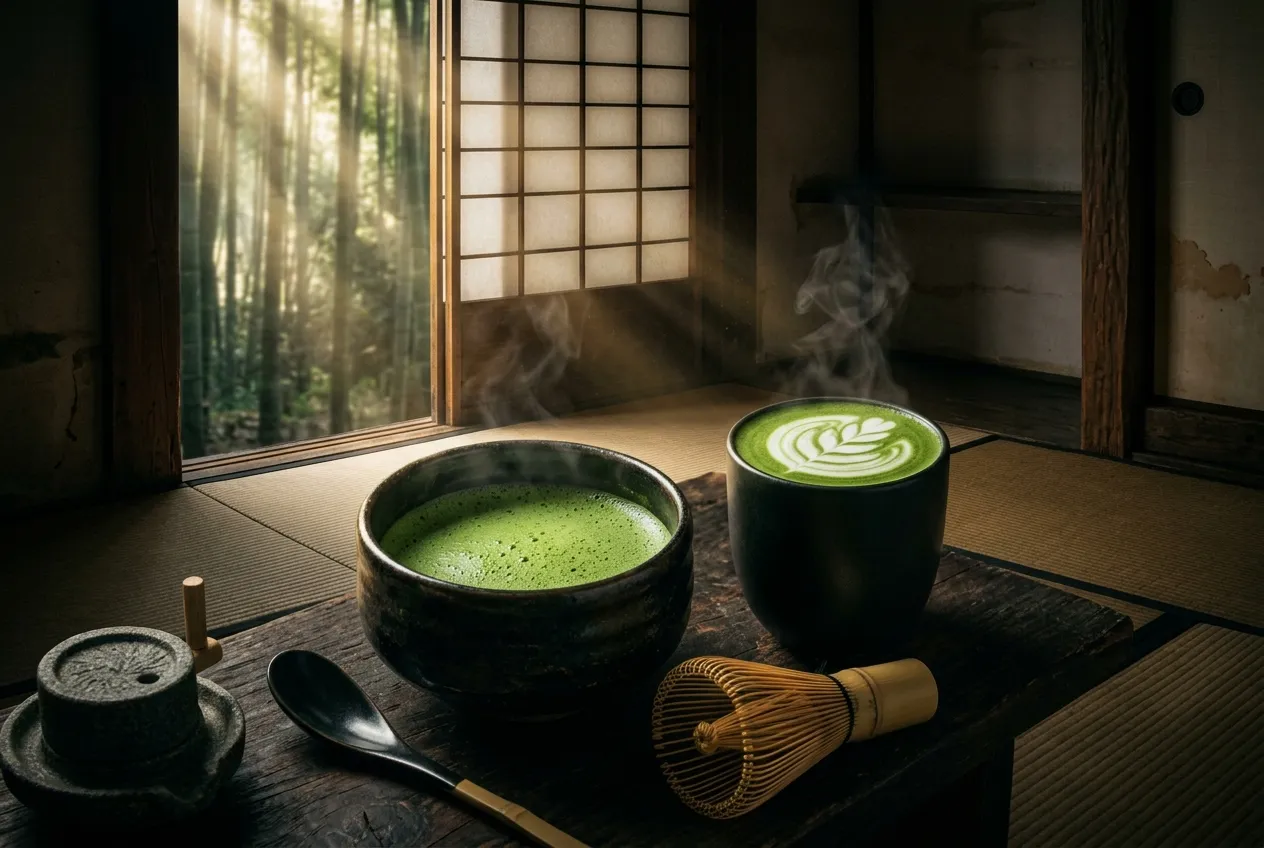
Hojicha Is the Roasted Tea Behind 2026's Caffeine-Anxious Summer
Hojicha, surging on Google in 2026, is a roasted Japanese green tea with low caffeine — the drink cafe-goers reach for when matcha is too much.
Hojicha, surging on Google in summer 2026, is a roasted Japanese green tea with low caffeine — the drink cafe-goers reach for when the matcha boom feels like too much. It was created in 1920s Kyoto as a way to make bancha tea drinkable by roasting it over charcoal.
What's happening
Hojicha is surging in 2026, per Google Summergeist, as the low-caffeine answer to the matcha boom [1]. As matcha lattes saturate cafe menus and some drinkers report caffeine jitters, hojicha offers the roasted, nutty, low-stimulant alternative — often served as a latte.
The history behind it
Hojicha is a roasted green tea created in 1920s Kyoto, when tea merchants roasted bancha (coarse late-season tea) over charcoal to make a cheaper, lower-caffeine, easy-drinking tea for everyday consumption [2]. The roasting turns the leaves brown and gives a toasty, caramel flavor with very little caffeine — historically a working-class cup, now a cafe trend [3].
Why it matters
The food-history value is that the 2026 low-caffeine cafe drink is a 1920s Kyoto thrift tea. A wellness-era trend is a century-old economy drink. For the full history of matcha and tea, see the articles below.
How to try it
Brew hojicha like a Japanese tea: about a teaspoon of the roasted leaves in water just off the boil, around 80 to 85 degrees Celsius, for 30 to 60 seconds. It is forgiving, because longer steeps do not turn bitter the way green tea does. For a hojicha latte, whisk a teaspoon of hojicha powder into a little hot water, then add steamed milk and a touch of sweetener. It is low-caffeine enough for late afternoon and evening. For the matcha and tea histories, read below.
📖 Read the full history
Trend Desk notes are timely. The durable history behind each trend lives in these articles and collections.
Comments
Community comments are coming soon. Check back later to join the discussion!