When Was the Hugo Spritz Invented? Origin and History (2005)
The Hugo spritz was invented in 2005 in Naturns, South Tyrol, by bartender Roland Gruber — a modern elderflower aperitivo, not an ancient Venetian classic.
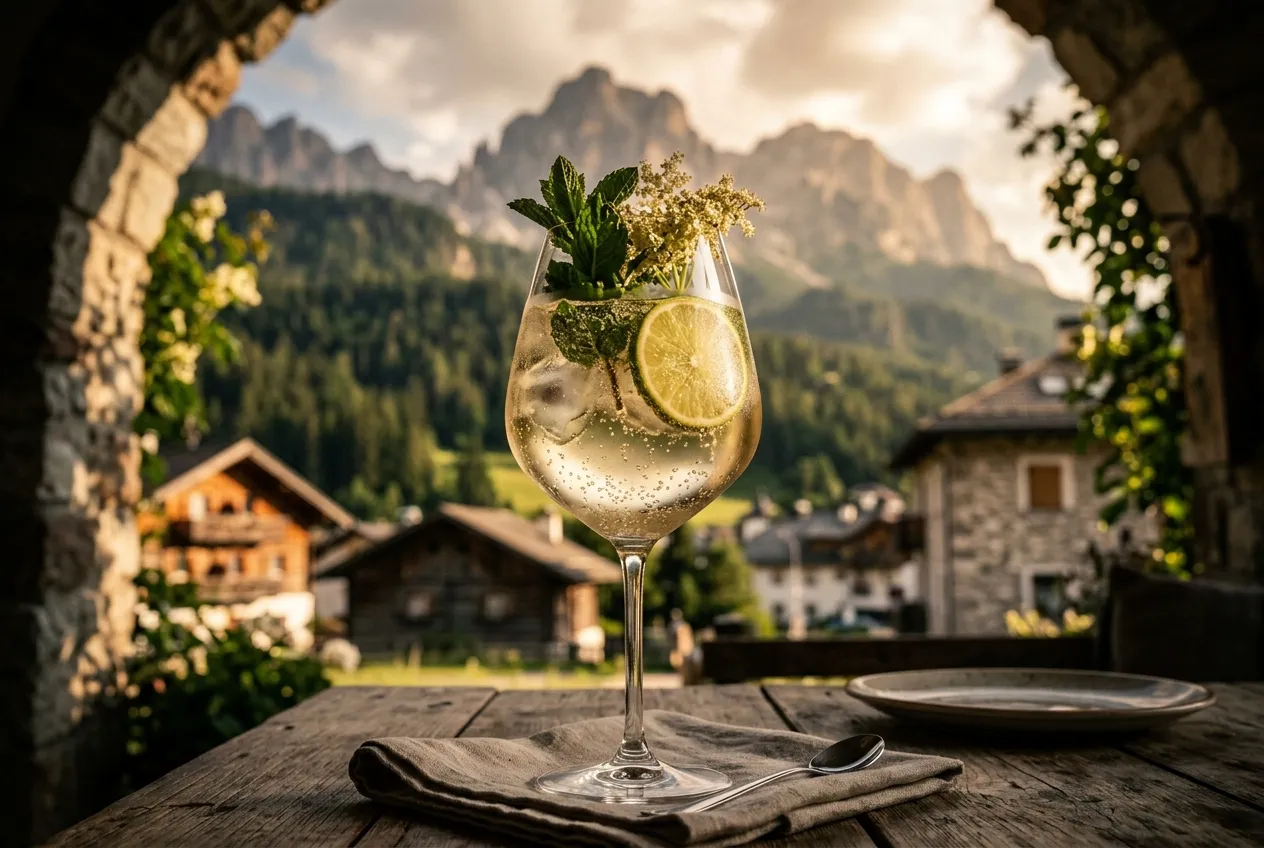
The Hugo spritz was invented in 2005 by bartender Roland Gruber (also known as A.K.) at the San Zeno bar in Naturns, South Tyrol, as a lighter alternative to the Aperol spritz. It is a Northern Italian aperitivo of prosecco, elderflower syrup, soda, mint, and citrus — not an ancient Venetian drink.
When was the Hugo spritz invented?
The Hugo spritz was invented in 2005. That date is the core answer behind searches for Hugo spritz origin and Hugo spritz history: the drink is about twenty years old, not a centuries-old Venetian formula [1][2].
It belongs to the wider spritz family — wine lengthened with soda — but the Hugo itself is a 21st-century South Tyrolean creation that later spread through Austria, Germany, Switzerland, and, more recently, English-language cocktail culture [1].
Who invented the Hugo spritz, and where?
Credit usually goes to bartender Roland Gruber (A.K.) at the San Zeno wine and cocktail bar in Naturns (Naturno), South Tyrol, northern Italy [1][2]. Gruber wanted a local alternative to the Aperol spritz that was selling in volume at the bar.
Early versions used lemon balm syrup (Melissa) with prosecco, soda, mint, and citrus. Elderflower syrup later became the standard because it was easier to source commercially — which is why most 2026 menus call Hugo an “elderflower spritz” even though that was not the original syrup [1][2].
Why is it called Hugo?
The name has no deep historical meaning. Gruber and friends brainstormed names; “Otto” was rejected, and Hugo stuck as a short, catchy pick [2]. The drink’s fame came from taste and timing, not from a legendary namesake.
That matters for food-history readers: a viral cocktail name can sound ancient when it is simply a good brandable word from a bar brainstorm in 2005.
Hugo spritz vs Aperol spritz
Both are ice-cold wine-glass aperitivos built on prosecco and soda. The difference is the flavor spine. Hugo is floral-sweet (elderflower or, originally, lemon balm), mint, and citrus — lighter and perfume-forward. The Aperol spritz is bittersweet orange — the default “orange spritz” most people already know.
Hugo was designed as an Aperol alternative, not a Venetian replacement for the whole spritz category. For a head-to-head 2026 framing, see our Hugo vs Aperol note; for elderflower as an ingredient, see the elderflower explainer [3].
How to make a simple Hugo spritz
In a wine glass over ice: about three parts prosecco, two parts soda water, and one part elderflower syrup (or a few dashes of the original-style lemon balm syrup if you have it). Add mint and a slice of lime or lemon; stir gently. It should taste floral and fresh, not bitter like Aperol.
A 2026 search spike for “how to make a Hugo spritz” does not rewrite the origin story — it only shows how fast a 2005 bar drink can become a global query [4].
📖 Read the full history
Trend Desk notes are timely. The durable history behind each trend lives in these articles and collections.
Comments
Community comments are coming soon. Check back later to join the discussion!