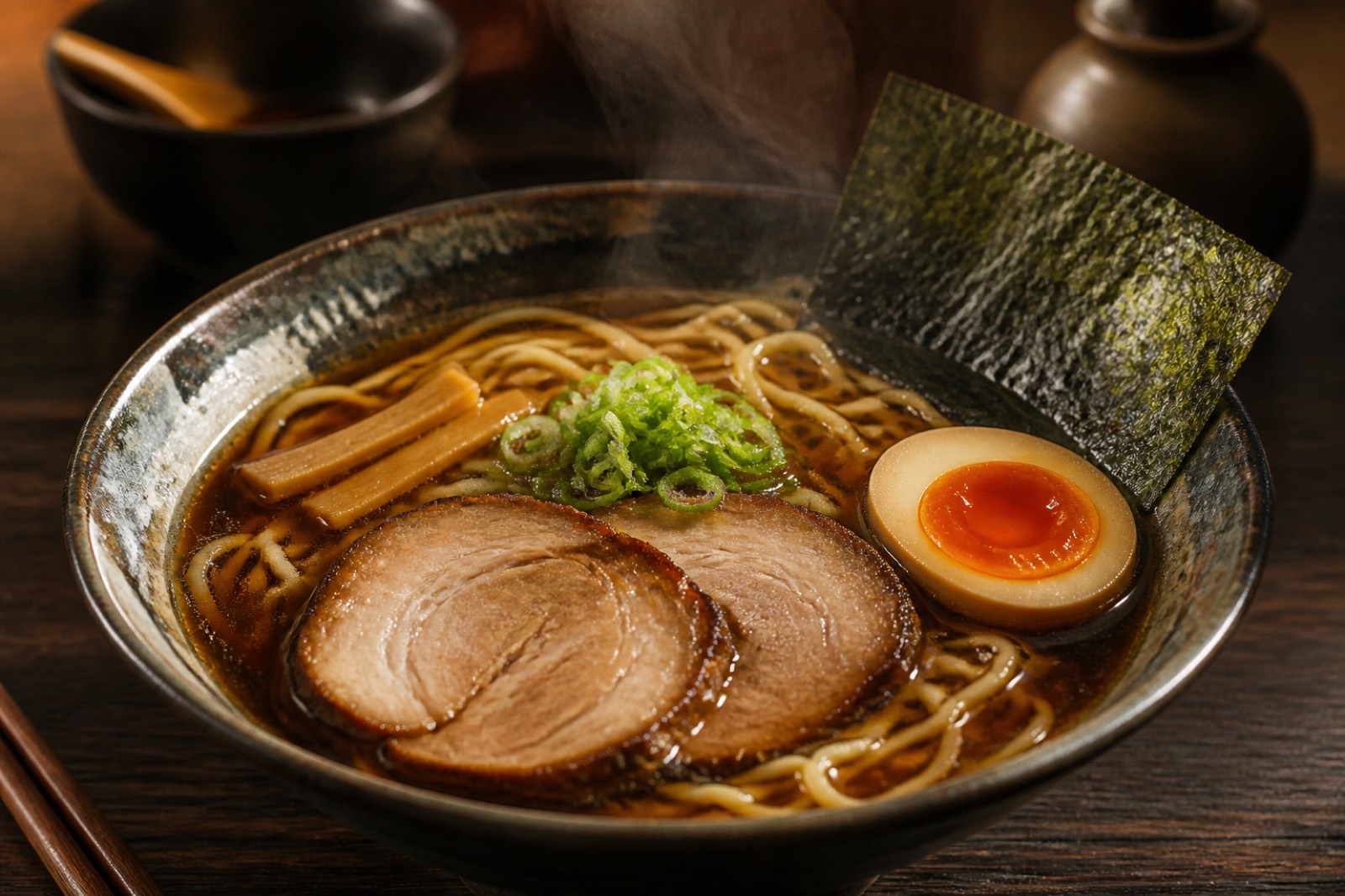
Instant Ramen Was Invented in Japan — and Remade How the World Eats Noodles
Instant ramen is a 2026 comfort and freezer-adjacent staple with a clear origin story: Momofuku Ando's 1958 Chicken Ramen in Japan, later Cup Noodles, then global factory noodles.
Instant ramen was invented in Japan in 1958 when Momofuku Ando launched Chicken Ramen — wheat noodles flash-fried so they rehydrate in hot water with a seasoning packet. Cup Noodles followed in 1971. Taiwan and other producers later built huge instant-noodle industries, but the core invention is Japanese postwar convenience technology sitting on older Chinese-style noodle-soup culture in Japan.
What's happening
Instant ramen remains one of the world's most eaten convenience foods, and 2026's freezer-fine-dining and comfort-food coverage keeps pulling "real" ramen and instant noodles into the same conversation [1]. Premium instant cups, Taiwanese and Korean spicy packets, and Japanese shoyu classics all share one industrial ancestor.
The search question is usually simple: who invented instant ramen, and is it "real" ramen?
The history behind it
Bowl ramen in Japan grew from Chinese-style wheat noodles adapted in Japanese cities; postwar hunger and wheat imports helped shop ramen become everyday food [2]. In 1958, Momofuku Ando's Nissin Foods launched Chicken Ramen: noodles flash-fried to remove moisture so they cook in minutes [3]. Cup Noodles (1971) added a polystyrene cup for office and travel eating [3].
Taiwan, South Korea, Indonesia, and others later became major instant-noodle producers and innovators in flavor. The invention story, though, starts in Japan — an industrial answer to speed, shelf life, and hunger.
Why it matters
The food-history value is that a dorm-room joke food is a landmark of twentieth-century food engineering. Instant ramen did not erase shop ramen; it globalized noodle soup as a packet. For the full ramen history, see below.
How to try it
Cook the noodles slightly under the package time, drain some seasoning water if it is too salty, and add a soft egg, scallions, or chili crisp. Compare a basic Japanese shoyu instant cup with a Taiwanese or Korean spicy packet to taste how regional factories remixed the same template. Instant is not shop broth — and it does not need to be. For how ramen became Japanese comfort food before the packet, read below.
📖 Read the full history
Trend Desk notes are timely. The durable history behind each trend lives in these articles and collections.
Comments
Community comments are coming soon. Check back later to join the discussion!