💡 Key Takeaways
- Ramen developed in Japan from Chinese wheat-noodle traditions introduced through migration and port-city restaurants in the late 19th and early 20th centuries.
- It became distinctly Japanese during the 20th century, especially after World War II, when wheat imports and street stalls made noodle soup everyday food.
- Momofuku Ando’s instant Chicken Ramen (1958) and Cup Noodles (1971) carried a Japanese convenience version of the dish worldwide.
Where did ramen originate — China or Japan?
Ramen developed in Japan from Chinese wheat-noodle traditions introduced through migration and port-city restaurants in the late 19th and early 20th centuries. It became distinctly Japanese during the 20th century, especially after World War II. The dish expanded dramatically in hungry postwar cities, and Momofuku Ando’s invention of instant ramen in 1958 eventually carried a Japanese version of it worldwide [1][4].
That is the short answer. Ramen is not an ancient Japanese temple food, and it is not simply “Chinese food served in Japan.” Chinese wheat-noodle soups supplied the ancestry. Japanese shops, broths, toppings, and later instant noodles made the dish a Japanese icon [1][3].
Was ramen originally Chinese?
Yes, in ancestry — no, as the finished national dish. Chinese wheat-noodle soups, including alkaline-dough lamian-style noodles, were already a restaurant and street-food family in China before Japanese ramen existed [3]. What Japan received was not a single inventor’s recipe. It was a format: springy wheat noodles in hot broth, sold quickly in cities.
Chinese cooks and migrants brought that format into Japanese port cities such as Yokohama, Kobe, and Nagasaki, then into Tokyo restaurants. Early bowls were often called shina soba, later chuka soba, names that advertised Chinese-style noodles rather than a Japanese folk origin [1]. Shops still sometimes signal that ancestry with Chinese-inspired décor, characters, or “chuka” branding. That is historical memory, not proof that today’s Hakata tonkotsu or Sapporo miso ramen is a Chinese regional dish unchanged.
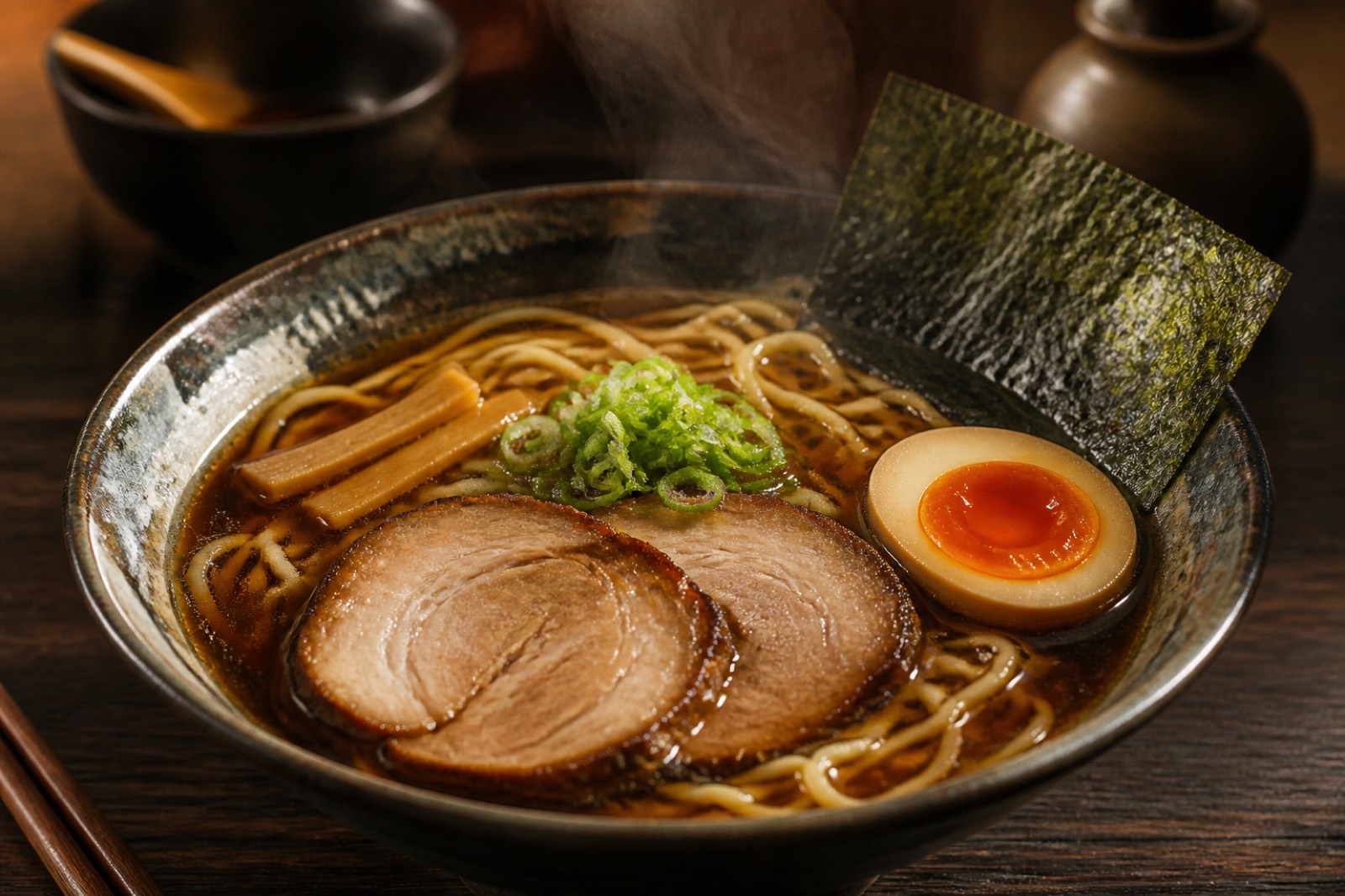
The Japanese adaptation is the point. Local tare — soy sauce, miso, salt — plus pork, eggs, nori, bamboo shoots, and long-simmered broths turned a Chinese-style noodle soup into ramen. Traditional Chinese wheat-noodle eating remained its own world of lamian, pulled noodles, and broths. Ramen is what happened after that world entered Japan and was rewritten by Japanese kitchens [1][3].
When was ramen introduced to Japan?
Ramen was introduced to Japan in the late 19th and early 20th centuries, not in a single year. Chinese-style noodle soups appear first in treaty-port and Chinatown restaurant worlds as Japan opened to wider trade and migration [1][3]. By the early 1900s the dish was urban Japanese restaurant food, still often labeled as Chinese-style soba.
1910 is the date most often cited for Tokyo popularization. Rairaiken, an Asakusa shop staffed with Chinese cooks, is widely treated as a landmark in turning shina soba into a Tokyo habit [1]. Treat that date as a useful timestamp for city-wide visibility, not as the invention of noodles. The wheat noodles, kansui spring, and broth format were already in motion before one Tokyo storefront made them famous.
Ramen history timeline
Chinese-style wheat-noodle soups appear in Japanese port cities and urban restaurants
Tokyo restaurants, including the often-cited Asakusa shop Rairaiken, help popularize shina soba
Postwar hunger, imported wheat, and street stalls expand ramen as everyday Japanese food
Momofuku Ando introduces instant Chicken Ramen in Japan
Cup Noodles puts instant ramen into a portable cup format
Regional shop styles and craft ramen become international culinary obsessions
How did ramen become popular after World War II?
Ramen became a Japanese everyday food after 1945 because hunger, imported wheat, and street stalls met a dish that was already known in cities [1][2]. Occupation-era flour supplies and black-market yatai made hot noodle soup cheap, filling, and fast. Workers, students, and rebuilding neighborhoods ate it as stamina food, not as a gourmet project.
As Japan recovered, shops specialized. Tokyo kept a soy-seasoned shoyu profile. Sapporo became famous for miso ramen suited to Hokkaido winters. Hakata developed pork-bone tonkotsu. Those regional identities are mid-century Japanese restaurant history built on the older Chinese-style format [1][3]. Postwar popularity is therefore a second origin: not the first bowl, but the moment ramen stopped being a port-city curiosity and became national comfort food.
Who invented instant ramen?
Momofuku Ando invented instant ramen in Japan in 1958, when Nissin launched Chicken Ramen — wheat noodles flash-fried so they rehydrate in hot water with a seasoning packet [4]. Instant ramen is not the same thing as shop ramen. It is a postwar industrial product sitting on the older noodle-soup habit: Ando’s answer to speed, shelf life, and a country that had stood in ramen lines [2][4].
Cup Noodles followed in 1971, putting the meal in a portable cup [4]. Taiwan, South Korea, Indonesia, and other producers later built huge instant-noodle industries and flavor systems of their own [2]. The core invention remains Japanese. Instant ramen made a Japanese convenience food planetary; it did not replace the shop bowl, and it did not make ramen “Chinese” or “American.” It globalized a Japanese industrial remix of a Chinese-ancestry soup.
How ramen became a Japanese cultural icon
Ramen became a Japanese cultural icon because Japan did not merely host a Chinese noodle soup. It renamed it, regionalized it, fed a postwar nation with it, and then packaged it. A ramen shop is a craft theater — hours of broth, chosen noodle thickness, tare, toppings — and also fast food. That double life, necessity and obsession, is why the dish reads as Japanese even when the noodle ancestry is Chinese [1][3].
Museums, regional pilgrimages, and later global craft shops all rest on that 20th-century naturalization. Instant packets remain the cheap midnight version of the same story. The history of ramen is a China-to-Japan transition, a 1910 Tokyo timestamp, a postwar wheat boom, and Ando’s 1958 packet.
In the news
Recent 2026 food-culture notes that reference this article.
- Jul 20, 2026Instant Noodles Are Getting Fancy — They Were Invented in 1958→
- Jul 8, 2026Instant Pho and the Authenticity Debate→
- Jun 10, 2026Instant Ramen Was Invented in Japan — and Remade How the World Eats Noodles→
- Jun 10, 2026Freezer Fine Dining Is a 2026 Grocery Trend — Built on Noodles, Dumplings, and Old Convenience Logic→
Evidence Explorer
Review the Source Trail
Inspect the article sources, scoped review credits, and copyable citation details without leaving the page.
Reviewed for Stated Scope
Sources Listed
Comments
Community comments are coming soon. Check back later to join the discussion!