Strawberry Matcha Is the 2026 Cafe Fusion — Built on a 1,000-Year-Old Tea
Strawberry matcha is one of FoodNavigator's breakout 2026 matcha fusions: powdered green tea layered with strawberry syrup or puree in a pink-and-green latte.
Strawberry matcha is a breakout 2026 cafe fusion: powdered green tea layered with strawberry syrup or puree into a pink-and-green latte. FoodNavigator flags strawberry matcha among the year's fastest-rising matcha pairings. The drink format is new; matcha itself is a powdered tea with Song dynasty Chinese roots and centuries of Japanese tea ceremony.
What's happening
Strawberry matcha is one of the defining cafe visuals of 2026: a clear glass layered with pink strawberry syrup or puree, milk, and a vivid green matcha top, built for the camera as much as the palate. FoodNavigator's 2026 flavour-trends coverage reports matcha popularity up sharply, with strawberry matcha among the fruit fusions growing fastest alongside banana, pistachio, and yuzu pairings [1].
The format is a latte first and a ceremony second. Cafes whisk culinary-grade matcha into milk, then stack it over strawberry for contrast — sweet fruit against grassy, slightly bitter tea.
The history behind it
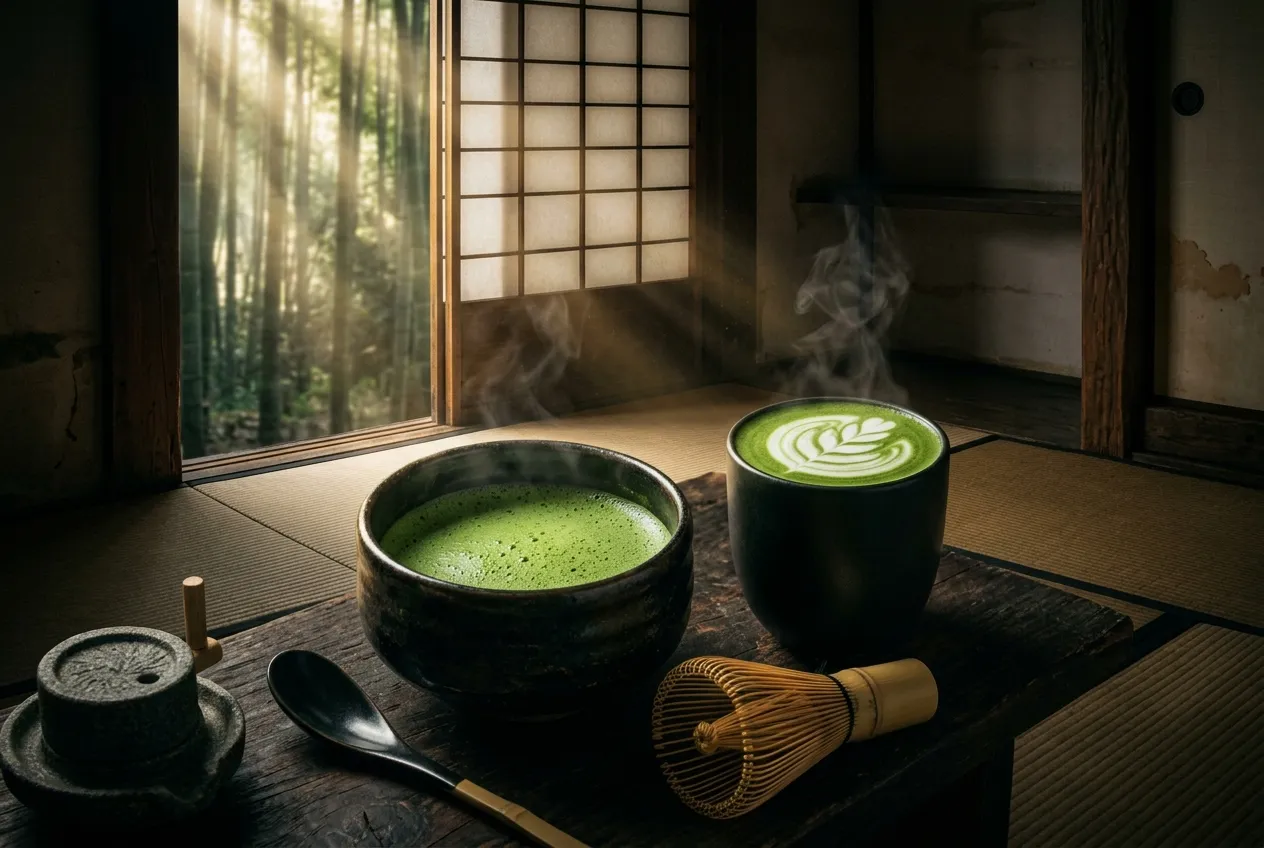
The strawberry layer is modern cafe engineering. The tea is not. Matcha is powdered green tea: shade-grown leaves (tencha) stone-milled so the whole leaf is drunk rather than steeped. Powdered tea emerged in Song dynasty China and traveled with Zen monks to Japan, where it became the basis of the Japanese tea ceremony over centuries of Uji cultivation and stone milling [2][3].
Strawberries, by contrast, are a New World–European hybrid story that only became a mass dessert fruit in the last few centuries. Pairing them with ceremonial powdered tea is a 21st-century cafe invention, not a traditional Japanese preparation.
Why it matters
The food-history value is that a viral pink-and-green latte is new attention on an old tea. Strawberry matcha looks like a 2026 invention because the fusion is new — but the green powder in the glass carries roughly a thousand years of cultivation and ritual. For the full matcha history and the wider fusion boom, see the articles and collection below.
How to try it
At home, whisk one to two grams of culinary matcha with a little hot water (around 70°C / 160°F, not boiling) until smooth, then froth with cold or warm milk. Pour over a spoonful of strawberry puree or reduced strawberry syrup in a clear glass so the layers show. Sweeten lightly if needed; real matcha is grassy and slightly bitter, and the fruit should balance it rather than bury it. Ceremonial grade is better drunk plain; save it for usucha and use culinary grade for lattes. For the full history of matcha and the Matcha Fusions collection, read below.
📖 Read the full history
Trend Desk notes are timely. The durable history behind each trend lives in these articles and collections.
Comments
Community comments are coming soon. Check back later to join the discussion!