💡 Key Takeaways
- Bread-like flatbreads appear in the archaeological record at Shubayqa 1 in Jordan about 14,400 years ago, before full-scale agriculture.
- Leavened bread became central to ancient Egyptian food systems and later to Roman grain politics, urban bakeries, and public order.
- Bread shaped religion, class, labor, industrial food, and the modern return to sourdough and heritage grains.
Bread Before Farming: The Earliest Evidence
Bread is a prepared food made by mixing ground grain or other starchy plant material with water, then baking, roasting, steaming, or otherwise heating the dough. Its oldest known evidence pushes the story back before agriculture. At Shubayqa 1 in northeastern Jordan, archaeologists identified charred bread-like remains made by Natufian hunter-gatherers about 14,400 years ago, roughly 4,000 years before farming became established in the region [2].
That discovery changed bread history. Bread was not simply the product of settled grain agriculture; it may have belonged first to seasonal gathering, grinding stones, hearths, and skilled preparation of wild cereals. Some historians and food writers argue that the desire for dependable grain harvests may have helped make farming attractive, though the safer framing is that bread and agriculture evolved together through repeated experiments with wild grains, storage, labor, and taste [1].
Egypt, Rome, and the Politics of Bread
Bread's history runs parallel to the rise of early states. In ancient Egypt, by the third millennium BCE, bakers were making leavened breads from grain doughs colonized by wild yeasts and bacteria. Tomb scenes, models, and archaeological remains show bakeries, beer-brewing, grinding, kneading, and loaves in many shapes. Bread and beer helped feed workers, households, temples, and officials, making grain processing part of everyday administration as well as diet [3].
In Rome, bread became political infrastructure. Professional bakers, known as pistores, supplied cities that depended on steady grain flows, while state grain distributions helped bind urban populations to imperial power. The eruption of Vesuvius in 79 CE preserved carbonized loaves at Pompeii, giving historians rare physical evidence for Roman baking.
Medieval Europe turned bread into a visible marker of class. Wealthier households ate fine white manchet bread, while poorer communities relied on darker mixed-grain loaves. Trenchers, thick slices of stale bread, could serve as edible plates. England's Assize of Bread, issued in the 13th century, regulated loaf weight and price because bread was too essential to leave entirely to market abuse [5].
Bread in Religion, Class, and Daily Life
Bread holds sacred status because it is both ordinary and symbolic. In Christianity, bread represents the body of Christ in the Eucharist. In Jewish tradition, challah marks Sabbath and holiday meals. Across parts of the Islamic world, bread is treated with special respect because it represents sustenance and divine provision. In many Slavic cultures, bread and salt are offered to welcome guests.
Bread also shaped language and hierarchy. The word companion comes from Latin roots meaning someone with whom one shares bread. Lord is often traced to Old English hlaford, a loaf-guardian or household provider. These words preserve a social truth: control over bread meant control over labor, hospitality, and survival.
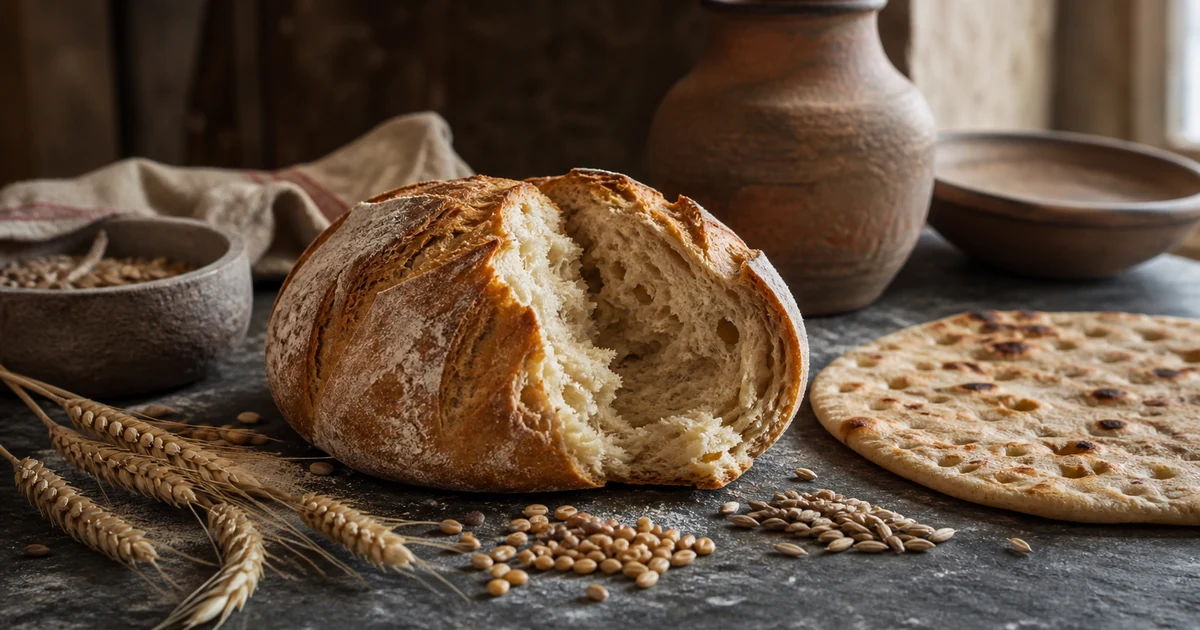
Across the world, bread takes forms shaped by local grain, climate, fuel, and tools: naan in South Asia, injera in Ethiopia and Eritrea, tortillas in Mesoamerica, pita in the Eastern Mediterranean, baguettes in France, rye breads in northern Europe, and flatbreads across pastoral and farming societies. Each form is a small archive of agriculture and daily life.
Industrial Bread and the Sourdough Revival
Modern bread changed quickly with roller milling, refined white flour, commercial yeast, mechanized mixing, industrial ovens, packaging, and sliced loaves. These innovations made bread cheaper, softer, longer-lasting, and more standardized, but they also separated many eaters from older rhythms of fermentation, local grain, and bakery craft.
The sourdough revival is partly a reaction to that industrial history. Bakers returned to starters, long fermentation, stone-ground flour, whole grains, and regional styles because they wanted flavor, texture, and a sense of continuity with older baking methods. Heritage grains such as einkorn, emmer, spelt, rye, and landrace wheats have also re-entered artisan bakeries and research conversations [1][3].
Bread remains powerful because it still carries the meanings it accumulated over 14,000 years: food, wages, ritual, class, comfort, and community. We still speak of earning our bread, breaking bread together, and bread-and-butter issues. Few foods make the link between survival and culture so visible.
In the news
Recent 2026 food-culture notes that reference this article.
Historical Timeline
Earliest evidence of grain processing found at Shubayqa, Jordan
Wheat cultivation begins in the Fertile Crescent
Egyptians discover leavened bread using wild yeast
Professional bakers guilds established in Rome
England passes the Assize of Bread, regulating weight and price
Bread shortages help trigger the French Revolution
Otto Rohwedder invents the first automatic bread-slicing machine
Sourdough baking surges during the COVID-19 pandemic
Evidence Explorer
Review the Source Trail
Inspect the article sources, scoped review credits, and copyable citation details without leaving the page.
Reviewed for Stated Scope
Sources Listed
Comments
Community comments are coming soon. Check back later to join the discussion!