💡 Key Takeaways
- Sugarcane was first developed from wild grasses in the region around New Guinea, but crystallized sugar became historically transformative after cane-processing knowledge developed in India.
- Islamic trade and agriculture carried sugar cultivation and refining westward into the Mediterranean, where medieval Europe treated sugar as a rare spice, medicine, and luxury.
- Atlantic sugar plantations made sweetness cheaper for consumers by tying Caribbean land, mills, shipping, capital, and enslaved African labor into a brutal commodity system.
- Sugar became modern when it stopped being rare: sweetened tea, jam, cakes, chocolate, industrial foods, and branded snacks turned a luxury into an everyday expectation.
Where Did Sugar Originate?
Sugar begins as a plant story before it becomes a story of empire. Sugarcane is a tall tropical grass, and Britannica places the first cultivated sugar crop in wild varieties from the East Indies, probably New Guinea [1]. Early cane was chewed for sweet juice, not sprinkled into tea. The world-changing step was not sweetness itself, but the ability to concentrate, dry, store, ship, and sell sweetness as crystals.
That second transformation is tied to the Indian subcontinent. Indian producers developed methods for boiling cane juice into crystallized sugar, turning a perishable crop into a durable commodity that could travel. This is why sugar history should be read in two phases: the botanical movement of cane, and the technical creation of crystallized sweetness [1][2].
How Sugar Went From Rare Medicine to Everyday Commodity
Sugar became a global commodity because crystallization made cane juice portable, plantation systems made production scalable, Atlantic slavery made it brutally profitable, and Europe's growing taste for sweetened tea, coffee, chocolate, jams, and processed foods turned sweetness into a daily habit [2][3][5].
Standard reference summaries often treat sugar mainly as a plant, chemical compound, processed sweetener, or crop technology. The deeper history is more unstable: sugar moved through medicine, luxury, Islamic refining, Mediterranean trade, Atlantic plantation slavery, industrial labor, and everyday consumer habit before becoming the ordinary pantry ingredient it is today.
That chain is the core of sugar history. Sugar was not always ordinary. For much of its early written history, it sat between medicine, spice, luxury, and elite display. It became modern when technical processing, imperial agriculture, coerced labor, shipping, and consumer demand made sweetness cheap enough to feel normal.
How India Turned Cane Juice Into Crystallized Sugar
Crystallized sugar changed the economics of sweetness. Honey could be gathered, traded, and stored, but cane crystals were more compact, standardized, and scalable. They could be packed, taxed, prescribed, gifted, and moved through long-distance trade. Sanskrit and later Arabic terms for sugar helped carry the word and the substance across languages, routes, and kitchens [2].
In early use, sugar was not just a dessert ingredient. It crossed boundaries between food, medicine, spice, and luxury. Physicians used it in syrups and preparations; cooks used it to balance bitterness, acidity, and spice; elites used it to signal access to distant trade goods. Its value came from rarity as much as taste.
Sugar in the Islamic Mediterranean and Medieval Europe
Islamic agricultural expansion helped move sugarcane cultivation and refining westward into Persia, the eastern Mediterranean, North Africa, Sicily, and Iberia. Sugar required water, heat, labor, fuel, presses, boiling houses, and technical knowledge. It was never a simple crop. It was a system [2].
Medieval Europeans encountered sugar through trade, medicine, crusade-era contact, and Mediterranean production. For centuries it remained expensive enough to be treated as a spice or medicinal substance rather than a normal household sweetener. The medieval sugar table was about status: molded subtleties, preserved fruits, spiced confections, and elite displays that announced access to distant supply chains.
Sugar, Caribbean Plantations, and Atlantic Slavery
The most violent phase of sugar history began when European powers moved cane into Atlantic island colonies. Columbus carried sugarcane to the Caribbean in 1493, and over the following centuries plantations spread through the Caribbean and parts of South America [3]. Plantation sugar required mills, boiling houses, barrels, shipping, credit, and relentless labor under brutal tropical conditions.
The human cost was catastrophic. The Smithsonian describes Caribbean islands as sugar-production machines powered by enslaved labor, with millions of enslaved Africans forced across the Atlantic into plantation systems [3]. UNESCO's Slave Route Project frames this history as part of the wider memory of the transatlantic slave trade and its enduring consequences [5]. Sugar made sweetness cheaper for European consumers by making life shorter, harder, and more violent for the people forced to produce it.
How Sugar Became an Everyday Industrial Habit
By the 1700s and 1800s, sugar shifted from elite luxury to everyday fuel for consumer society. Sidney Mintz argued that sugar became central to modern eating because it moved into the diets of working people through sweetened tea, jam, treacle, cakes, and cheap calories [2]. This was not a small culinary change. It tied plantation production to industrial labor, factory schedules, urban households, and the rise of mass consumption.
Sugar also changed other foods. Tea, coffee, chocolate, preserves, pastries, and later bottled drinks all became easier to sell when sweetness was cheap and predictable. Sugar did not just make foods taste sweet. It helped build habits, brands, breaks, snacks, and the modern expectation that pleasure should be available every day.
How Sugar Is Used Today
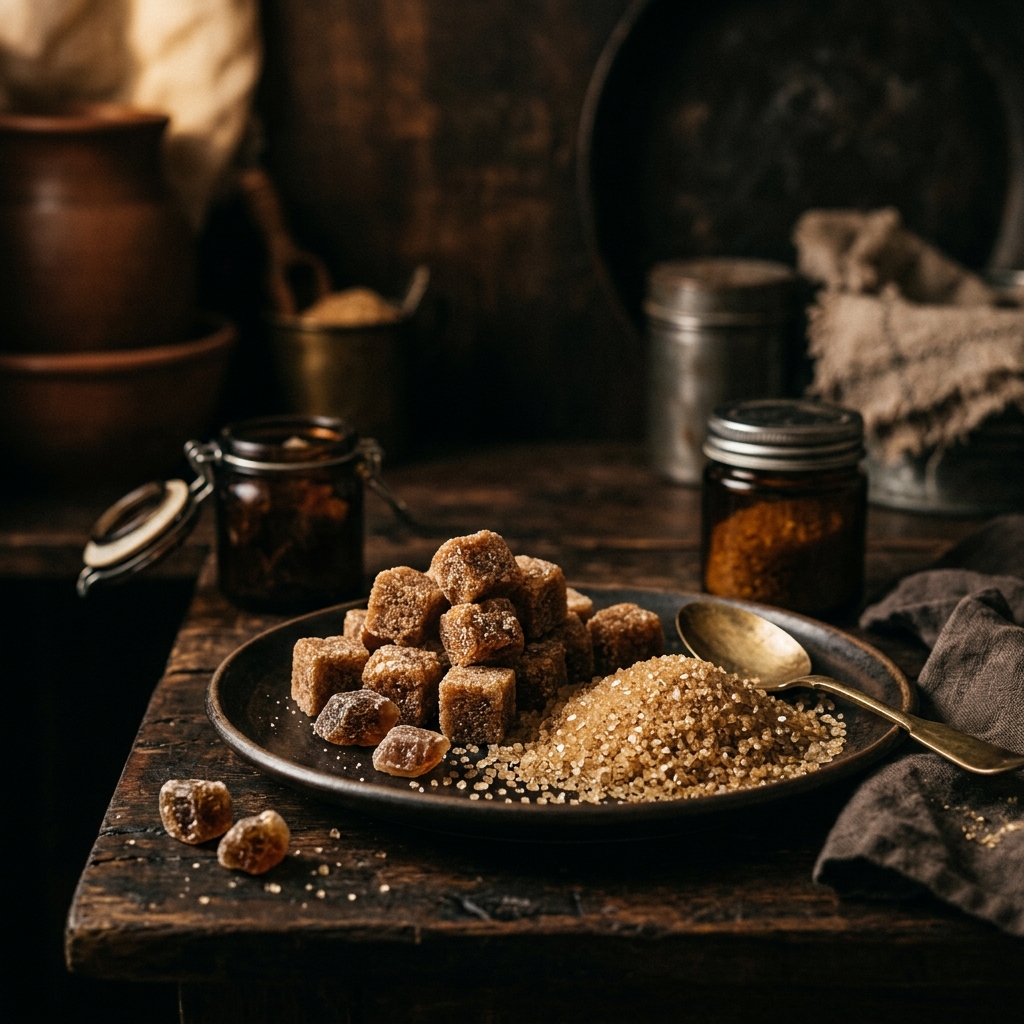
Today sugar appears as white granulated sugar, brown sugar, powdered sugar, syrups, molasses, jaggery, muscovado, demerara, confectionery, baked goods, preserves, sauces, soft drinks, and industrial sweeteners. Cane sugar remains important, but beet sugar, corn sweeteners, and global refining systems have made sweetness less seasonal and more invisible inside processed food [1][4].
The modern sugar story is still unsettled. It is a crop, a chemical, a comfort, a commodity, a labor history, a public-health debate, and a symbol of how consumer pleasure can hide the systems that produce it. Few ingredients show the full arc of food history so clearly: plant domestication, technical innovation, empire, slavery, capitalism, mass taste, and everyday habit.
In the news
Recent 2026 food-culture notes that reference this article.
- Jul 4, 2026The Dubai Pistachio Chocolate Bar Has 500 Years of Ottoman Roots→
- Jul 2, 2026Date Syrup vs Sugar: The Ancient Sweetener Making a Comeback→
- Jul 1, 2026Soda Fountains and American Pharmacies→
- Jul 1, 2026Dirty Soda Hub: Cream Sodas and Fountain Culture→
- Jul 1, 2026The Date Snickers Dupe Is Trending — and Dates Are a 6,000-Year-Old Fruit→
- Jun 30, 2026Ice Cream Soda Float History→
- Jun 30, 2026Mexican Coke and the Cane Sugar Myth→
- Jun 30, 2026Dirty Mountain Dew and the RTD Dirty Soda Wave→
- Jun 29, 2026Dirty Soda vs Italian Cream Soda→
- Jun 29, 2026Dirty Soda Explained: Utah Soda-Shop Culture→
- Jun 22, 2026Panela vs Jaggery vs Piloncillo→
- Jun 22, 2026Piloncillo: Mexican Unrefined Cane Sugar→
- Jun 21, 2026Real Cane Sugar Reframed in 2026→
- Jun 21, 2026Palm Sugar in Southeast Asian Desserts→
- Jun 21, 2026Molasses: American Baking and Rum History→
- Jun 21, 2026Stevia and Monk Fruit: Plant vs Lab Sweetness→
- Jun 21, 2026Agave Nectar: Mezcal's Sweet Cousin→
- Jun 20, 2026Jaggery vs Sugar vs Panela→
- Jun 9, 2026Jaggery Is the Mindful Sweetener of 2026 — Unrefined Cane With a Much Older South Asian Story→
Historical Timeline
Sugarcane is developed from wild grasses in the New Guinea region
Indian producers refine methods for boiling cane juice into transportable crystals
Islamic agricultural and trade networks spread sugar westward through the Mediterranean
Medieval Europeans treat sugar as a costly spice, medicine, and elite table display
Columbus carries sugarcane to the Caribbean on his second Atlantic voyage
Caribbean plantation zones turn sugar into a central Atlantic commodity
Beet sugar and industrial refining help make sugar cheaper and more ordinary in Europe
Evidence Explorer
Review the Source Trail
Inspect the article sources, scoped review credits, and copyable citation details without leaving the page.
Reviewed for Stated Scope
Sources Listed
Comments
Community comments are coming soon. Check back later to join the discussion!