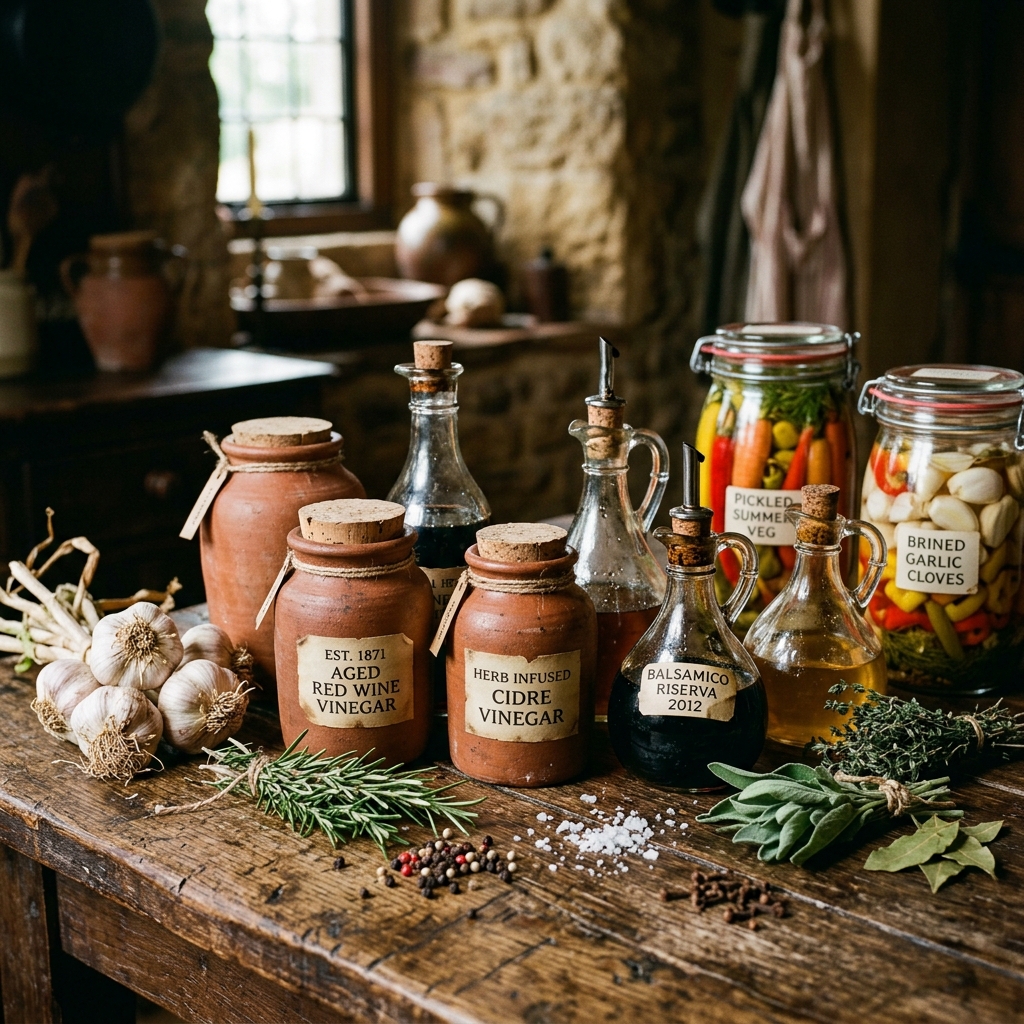
Apple Cider Vinegar Went From Folk Remedy to Grocery Aisle Staple
Apple cider vinegar is a 2026 wellness and cooking staple — cloudy "with the mother," shot in the morning, or mixed into shrubs — built on an old acetic-acid craft.
Apple cider vinegar moved from folk-remedy shelves into everyday grocery carts as a cooking acid, salad staple, and wellness shot — often sold cloudy "with the mother." The branding is contemporary; the substance is old. Vinegar is acetic acid from fermented alcohol, and cider vinegar is simply that process applied to apple cider.
What's happening
Apple cider vinegar (ACV) is a dual 2026 presence: a pantry acid for dressings and shrubs, and a wellness product sold with "the mother" — the cellulose-and-bacteria film of acetification — as a purity signal. Whole Foods' fiber and functional-drink forecasting keeps sharp, gut-adjacent beverages in the year's mix; ACV shots and vinegar sodas ride the same aisle [1].
The marketing often outruns the evidence. The culinary story does not need the hype.
The history behind it
Vinegar is one of humanity's oldest condiments: alcohol exposed to acetic-acid bacteria becomes sour and shelf-stable [2]. Apple-growing regions naturally produced cider vinegar alongside wine and malt vinegars; households used it for pickling, cleaning, and sharp drinks long before "wellness" was a category [3].
"The mother" is not a modern superfood invention — it is the visible culture of vinegar-making, filtered out of many clear commercial vinegars and left in others for flavor and appearance.
Why it matters
The food-history value is that a viral bottle is an old preserving technology wearing new labels. ACV's grocery boom reframes folk use as lifestyle, but the acid is the same acetic craft behind pickles and shrubs. For the full vinegar history, see the article below.
How to try it
Use ACV in vinaigrettes, quick pickles, and shrubs — fruit, sugar, and vinegar diluted with sparkling water — rather than as an undiluted daily shot, which can irritate teeth and throat. Choose pasteurized or unpasteurized based on taste preference; cloudy "with mother" is a style, not a medical certificate. Anyone with a medical condition should treat health claims cautiously and follow clinical advice. For the deeper history of vinegar as a food acid, read below.
📖 Read the full history
Trend Desk notes are timely. The durable history behind each trend lives in these articles and collections.
Comments
Community comments are coming soon. Check back later to join the discussion!