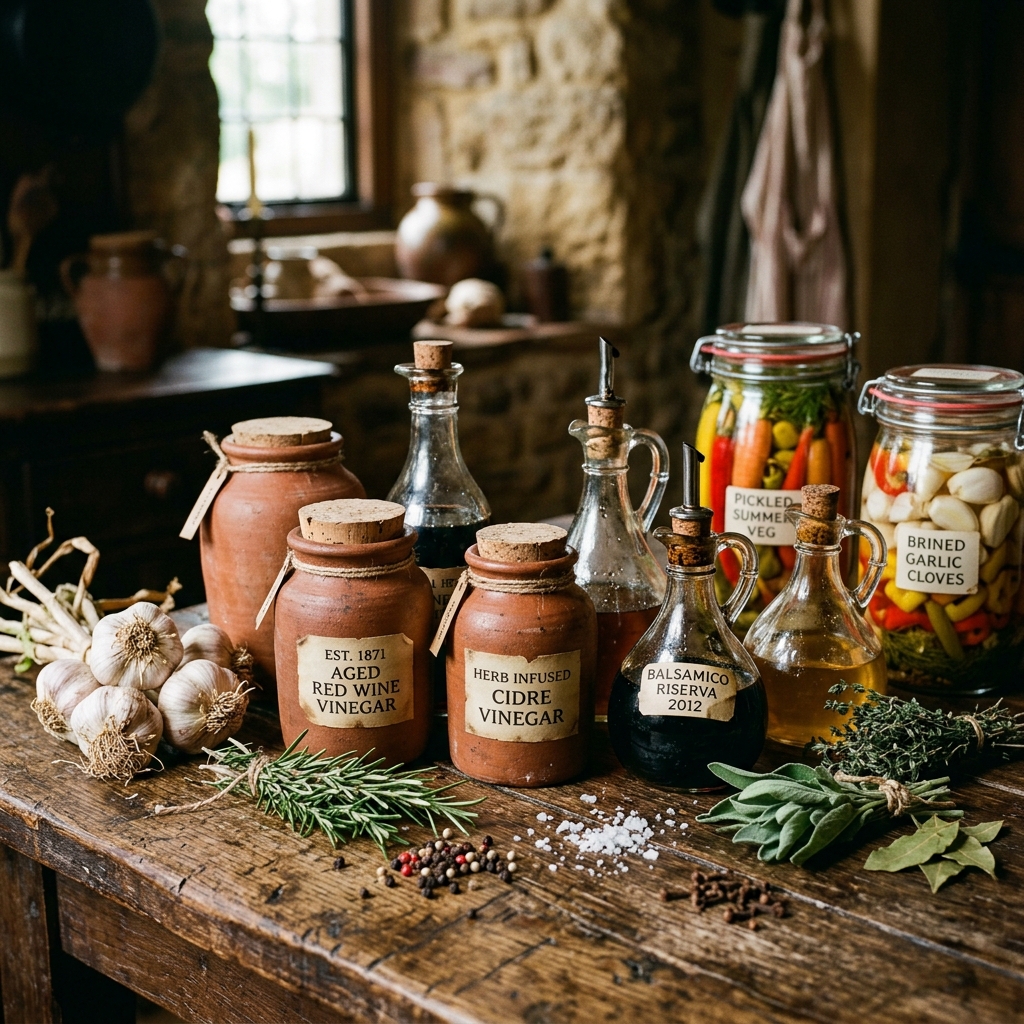
Balsamic of Modena: DOP Prestige, Grocery Labels, and the Real Thing
Balsamic vinegar sits at the top of the prestige aisle — but "Balsamic of Modena" labels range from aged traditional DOP to everyday industrial blends. Here is how to read the bottle.
Balsamic vinegar of Modena covers a wide shelf: traditional Aceto Balsamico Tradizionale aged for years in wooden casks under DOP rules, and everyday "Balsamic of Modena" IGP bottles that may blend cooked must with wine vinegar. The prestige is real for the traditional craft; grocery labels need a careful read so price and use match the bottle.
What's happening
Balsamic remains a prestige pour in 2026 kitchens — drizzled on strawberries, reduced into glazes, sold in tiny bottles at gift-shop prices. At the same time, supermarket shelves are crowded with inexpensive "balsamic" that behaves more like sweetened wine vinegar. Consumer and trade coverage has long flagged the gap between traditional Modena balsamic and industrial lookalikes [1].
The confusion is label literacy, not a single scandalous jar.
The history behind it
Traditional balsamic vinegar of Modena (and Reggio Emilia) is made by cooking grape must and aging it for years in a battery of wooden casks, concentrating sugars and acids into a dense, sweet-sour syrup [2]. Protected designations (DOP for the traditional product; IGP for broader Balsamic of Modena) try to map that craft onto modern trade. Ordinary wine vinegar is a different, faster acetic fermentation [3].
So "balsamic" in English became a prestige word that outran the cask-aged original.
Why it matters
The food-history value is that prestige acids have always invited imitation — and regulation. Reading DOP/IGP and ingredient lists is how a cook respects the Modena craft without treating every dark bottle as equivalent. For the wider vinegar story, see the article below.
How to try it
Use inexpensive balsamic for everyday salads and reductions; save a true traditional DOP for finishing cheeses, fruit, or a few drops on grilled meat — it is thick, sweet, and meant to be sipped by the drop. Check labels for cooked grape must versus wine vinegar plus caramel color. Store upright, sealed; traditional balsamic does not need refrigeration. For the full history of vinegar as a food acid, read below.
📖 Read the full history
Trend Desk notes are timely. The durable history behind each trend lives in these articles and collections.
Comments
Community comments are coming soon. Check back later to join the discussion!