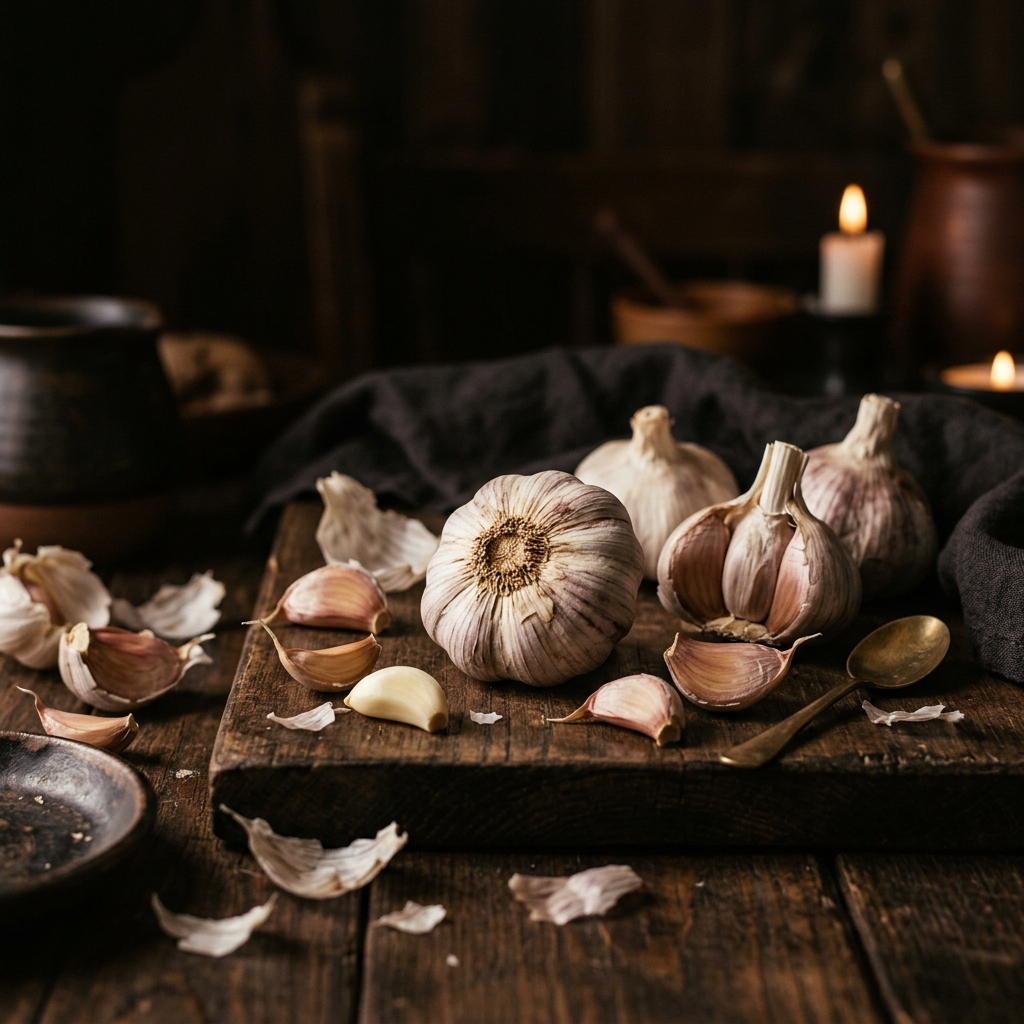
Black Garlic Is Everywhere — and the "Slow Maillard" Story Is Older Than the Wellness Jar
Black garlic is a 2026 pantry and tasting-menu staple: ordinary garlic aged until it turns soft, sweet, and black. The jar looks new; the chemistry is controlled aging, not a new plant.
Black garlic is ordinary garlic aged for weeks under controlled heat and humidity until cloves turn soft, sticky, and black-brown, with balsamic-sweet flavor and little raw pungency. The 2026 boom sells it as a wellness and fine-dining ingredient; the process is slow Maillard-style browning and caramelization of an ancient allium, not a new fermented superfood plant.
What's happening
Black garlic — soft, sticky, molasses-sweet cloves sold in jars and tasting menus — is a steady 2026 pantry and restaurant search. Whole Foods and flavour-trend coverage keep umami and traditional-fat / fermented-adjacent ingredients in the year's savory conversation, and black garlic sits beside miso, chili crisp, and aged vinegars as a "chef pantry" jar [1].
Claims online often call it fermented. The more precise kitchen story is controlled aging: heat and humidity drive browning reactions that remake garlic's sugars and amino acids.
The history behind it
Garlic (Allium sativum) is one of humanity's oldest seasonings, domesticated in Central Asia and carried through Egyptian, Mediterranean, and East Asian kitchens for millennia [2][3]. Black garlic is not a separate species. Producers hold whole bulbs at warm, humid conditions for weeks; enzymes and Maillard-type reactions darken the cloves, soften the texture, and mute the sharp allicin bite of raw garlic [4].
Commercial black garlic scaled in East Asia and then global fine dining in the 2000s–2010s. The 2026 jar is that technique meeting grocery and social-video aesthetics.
Why it matters
The food-history value is that a viral "new" ingredient is still garlic — remade by time and heat the way caramel remakes sugar. Wellness marketing should not outrun the chemistry: black garlic is aged allium, not a clinical prescription. For the full garlic history, see the article below.
How to try it
Buy peeled black-garlic cloves or a whole aged bulb. Mash into butter, smear on toast, fold into vinaigrettes, or finish roasted vegetables and steak — a little goes far because the flavor is concentrated and sweet-savory. Store sealed in a cool cupboard; once opened, refrigerate. Do not expect raw-garlic heat. For the 7,000-year story of the plant underneath the jar, read the garlic history below.
📖 Read the full history
Trend Desk notes are timely. The durable history behind each trend lives in these articles and collections.
Comments
Community comments are coming soon. Check back later to join the discussion!