Schmaltz Is the Ashkenazi Cooking Fat Behind the Traditional-Fat Comeback
Before olive oil was everywhere in Jewish-American kitchens, there was schmaltz: rendered chicken fat. The 2026 fat revival is putting it back on the table.
Schmaltz is rendered chicken or goose fat, the everyday cooking fat of Ashkenazi Jewish kitchens where butter and lard were restricted by kosher law. It flavors matzo balls, chopped liver, and onions; gribenes are the crisp byproduct. The 2026 traditional-fat boom puts schmaltz beside tallow and ghee as an old fat with a specific cultural job.
What's happening
As traditional fats trend in 2026, schmaltz appears in chef writing and home-cooking revival pieces alongside tallow and ghee — less as a meme jar, more as a named heritage fat [1]. Jewish delis and home cooks never fully abandoned it; the wider food press is catching up.
The story is cultural recovery, not a new rendering invention.
The history behind it
In Ashkenazi foodways, kosher rules barred cooking meat with dairy butter and also barred pork fat. Rendered poultry fat — schmaltz — filled the gap for frying onions, enriching soups, and spreading on bread [2][3]. Making it produces gribenes, crisp cracklings that are a snack in their own right.
Eastern European Jewish migration carried the fat into American kitchens, where vegetable oil later displaced it in many households.
Why it matters
The food-history value is that fat choice is law, climate, and identity — not only taste. Schmaltz shows how a community engineered flavor inside religious constraints. Compare it with beef tallow and chicken histories below.
How to try it
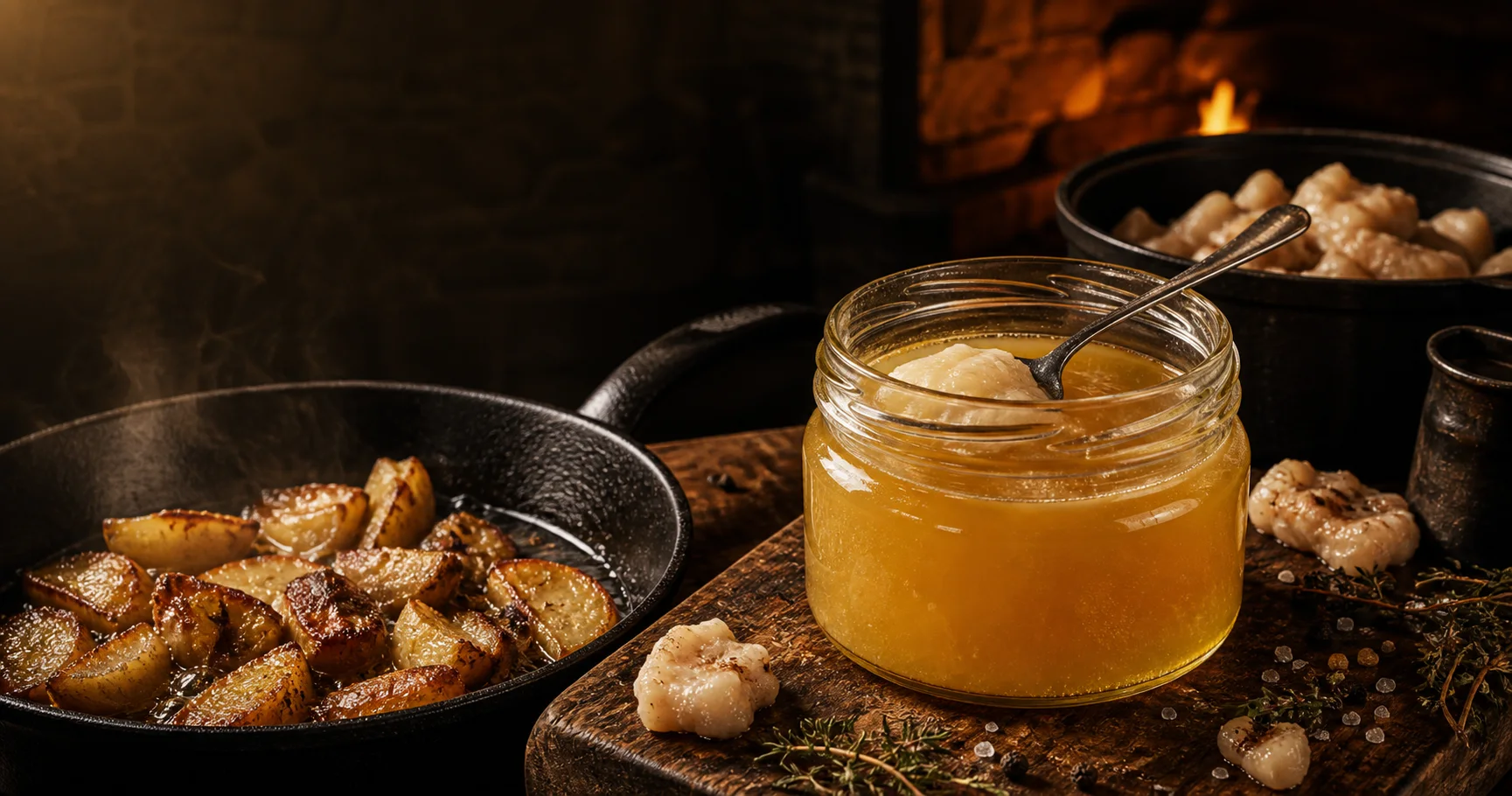
Render chicken skin and fat gently until the solids crisp; strain the golden fat and save the gribenes with salt. Use schmaltz to soften onions for chopped liver or to enrich matzo-ball batter. It is poultry fat with a specific cultural grammar — treat it that way. For related fat and bird histories, read below.
📖 Read the full history
Trend Desk notes are timely. The durable history behind each trend lives in these articles and collections.
Comments
Community comments are coming soon. Check back later to join the discussion!