
The Spam Dog Is 2026's Weirdest Summer Trend — and Spam Is WWII History in a Can
The Spam dog, Google Summergeist's surprise 2026 hot-dog trend, rests on Spam — a canned meat born in 1937 that fed WWII GIs and built Pacific food culture.
The Spam dog — a grilled slice of Spam in a hot-dog bun — is Google Summergeist's surprise 2026 hot-dog trend, with Spam the top trending topic searched alongside hot dog. Spam is a canned meat born at Hormel in 1937 that fed WWII GIs and built Pacific food culture from Hawaii to Korea and the Philippines.
What's happening
The Spam dog is Google Summergeist's surprise 2026 hot-dog trend, with Spam the top trending topic searched alongside hot dog this summer [1]. The format is simple — a grilled Spam slice in a bun — but it rides both the wider hot-dog summer and the nostalgia canned-meat wave.
The history behind it
Spam was introduced by Hormel in 1937 as a canned cooked pork product, and its big break was World War II: the U.S. military bought tens of millions of pounds, shipping Spam to GIs across the Pacific, where it entered local food cultures in Hawaii, Guam, Korea, the Philippines and Okinawa [2]. Spam musubi, fried Spam with rice wrapped in nori, became a Hawaiian staple. The 2026 Spam dog is the latest format for an 88-year-old canned meat [3].
Why it matters
The food-history value is that a 2026 viral hot dog is WWII ration history in a new bun. The "weird" trend is a 1937 canned meat meeting a new format. For the full history of the hot dog and Spam, see the articles below.
How to try it
To make a Spam dog, slice Spam about a quarter-inch thick, pan-fry the slices until crisped on both sides, and nestle one in a hot-dog bun with mustard and a swipe of mayo or a pineapple-jalapeno relish. A light teriyaki or soy glaze on the Spam pushes it toward musubi territory. It is salty, so balance it with something sweet or acidic. For the full histories of Spam and the hot dog, read below.
📖 Read the full history
Trend Desk notes are timely. The durable history behind each trend lives in these articles and collections.
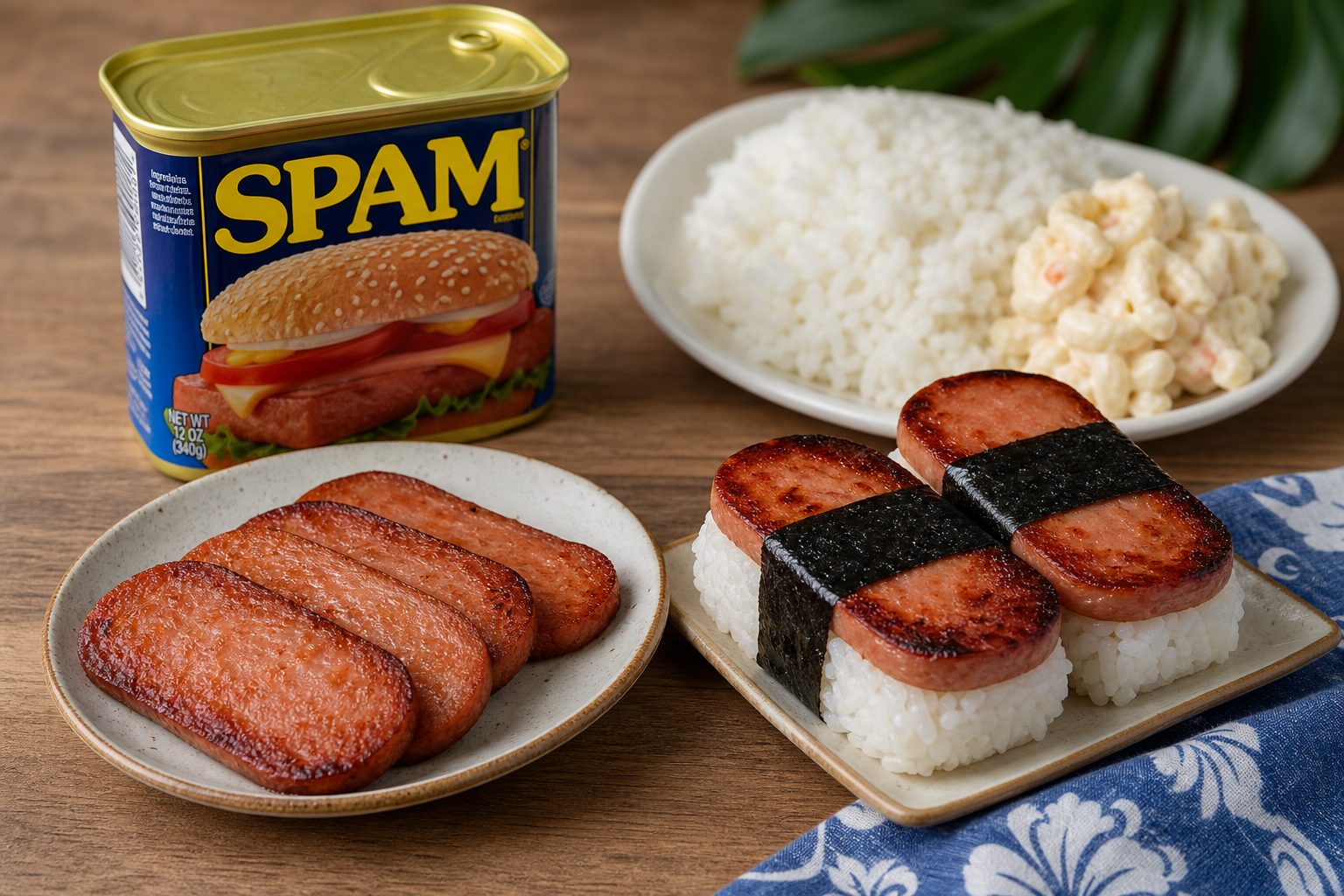
Spam
The canned cooked pork born at Hormel in 1937, carried across the Pacific by WWII military logistics, and turned into Hawaiian, Korean, and Filipino food identity
Hot Dog
The German-American sausage-in-a-bun shaped by immigration, Coney Island spectacle, ballparks, branding, and patriotic reinvention

Pork
The controversial meat with a complex cultural history
Comments
Community comments are coming soon. Check back later to join the discussion!