
Why Is Spam So Popular in Hawaii? A WWII Story
Spam is beloved in Hawaii because of WWII: the U.S. military shipped millions of pounds of the canned meat to the Pacific, and it never left the local diet.
Spam is popular in Hawaii because of World War II. The U.S. military shipped tens of millions of pounds of canned Spam to the Pacific theater, and the meat — shelf-stable, cheap, protein-dense — stayed in the islands after the war, becoming a Hawaiian staple in Spam musubi, fried Spam with rice, and Spam and eggs.
What's happening
As the Spam dog trends in 2026, one of the fastest-rising Spam questions is "why is spam popular in Hawaii" [1]. The search reflects a new audience encountering Spam musubi and Hawaiian plate lunches and asking how a canned meat became island food.
The history behind it
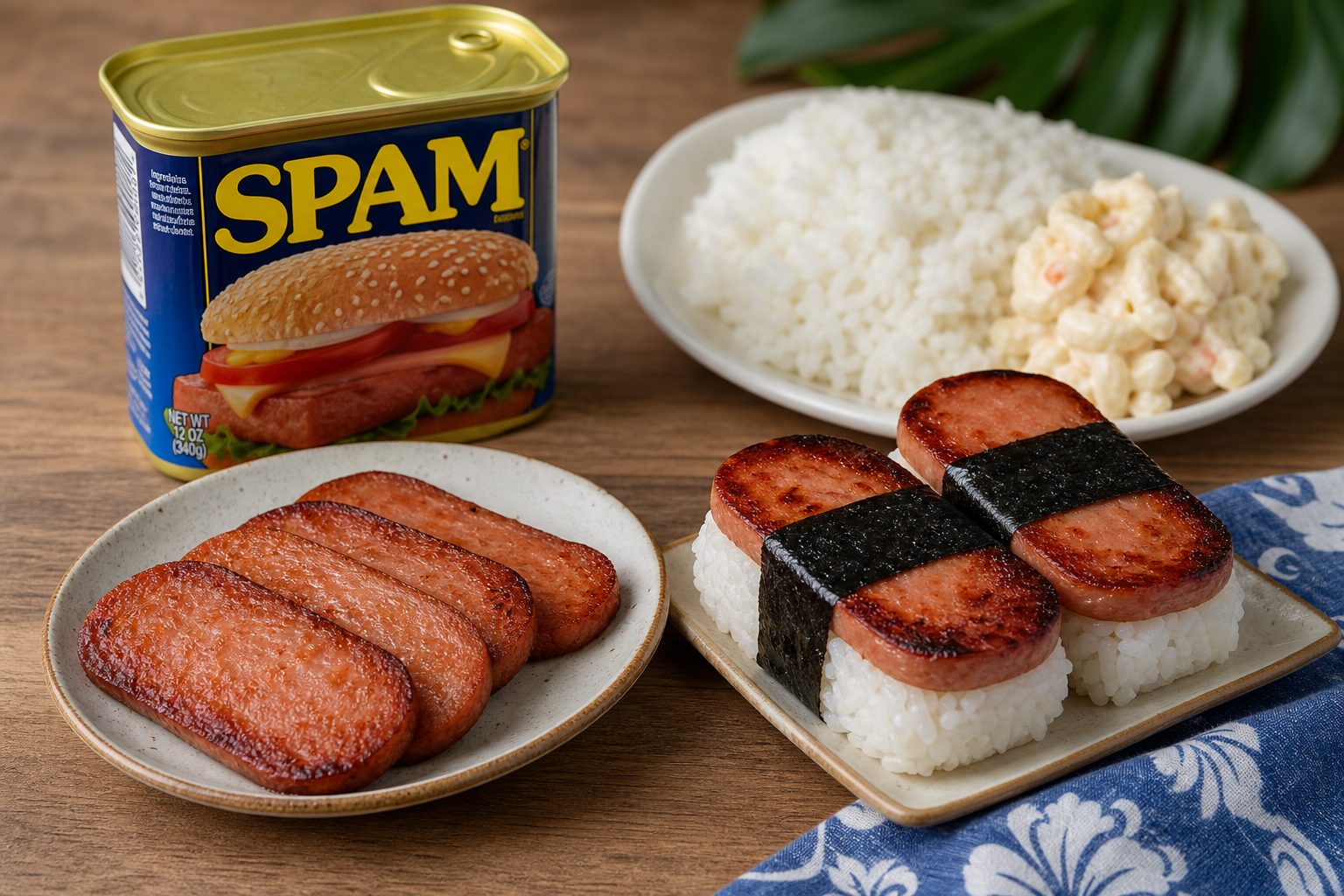
The answer is military logistics. During WWII, Hormel shipped tens of millions of pounds of Spam to the Pacific because it was shelf-stable, needed no refrigeration, and traveled well by ship [2]. In Hawaii, far from the mainland and reliant on wartime supply chains, Spam filled a protein gap and stayed after the war — folded into musubi (Spam on rice wrapped in nori), fried with eggs, and served in plate lunches [3]. Korea, the Philippines and Okinawa have parallel Spam stories from the same military supply lines.
Why it matters
The food-history value is that a 2026 search question is answered by WWII military logistics. Hawaiian Spam culture is a wartime supply chain that became cuisine. For the full history of Spam and the hot dog, see the articles below.
How to try it
The classic Hawaiian entry is Spam musubi. Slice Spam, fry it briefly with a little soy and sugar or teriyaki, then press it onto a block of rice and wrap a strip of nori around the middle. A musubi mold helps, but an empty Spam can lined with plastic wrap works too. Eat it warm, as a snack or breakfast. For the full histories of Spam and the hot dog, read below.
📖 Read the full history
Trend Desk notes are timely. The durable history behind each trend lives in these articles and collections.
Spam
The canned cooked pork born at Hormel in 1937, carried across the Pacific by WWII military logistics, and turned into Hawaiian, Korean, and Filipino food identity
Hot Dog
The German-American sausage-in-a-bun shaped by immigration, Coney Island spectacle, ballparks, branding, and patriotic reinvention

Pork
The controversial meat with a complex cultural history
Comments
Community comments are coming soon. Check back later to join the discussion!