U.S. purchase guide

Which Harissa Paste Should You Buy? Authentic Tunisian Options in the U.S.

Three U.S.-available harissa pastes compared by chile base, ingredient list, jar size, unit price, origin claims, and the dishes each format suits.
Published Updated Market: United StatesBy
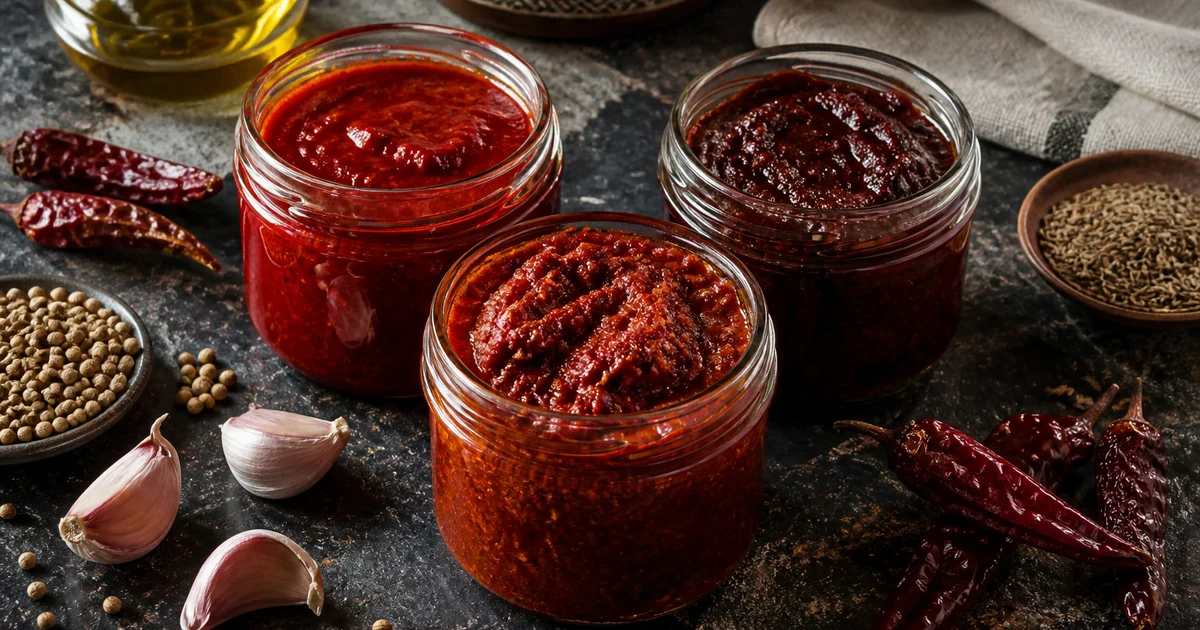
Three unlabelled jars of red harissa paste beside dried chiles, garlic, coriander, and caraway
Harissa labels can describe very different products, from whole sun-dried chile paste to looser red-pepper sauces. Image: The Foods That Shaped Us Research Desk. Image terms. Request permission.

Purchase verdict

For a thick Tunisian-style paste built from whole sun-dried chiles, Zwita is the clearest documented fit in this comparison. Mina costs less per ounce and uses red peppers for a looser everyday sauce, while New York Shuk offers a chile-forward U.S.-made paste without claiming Tunisian production. These are label-based distinctions, not a blind taste ranking.

Quick choices

Observed prices are U.S. snapshots from August 28, 2026. Seller links are direct and non-affiliate.

Product choices, documented use, observed U.S. price, package size, unit price, and seller
ProductDocumented fitObserved priceSeller
Zwita Smoky Traditional HarissaThick whole sun-dried chile paste; 6 oz jarFor shoppers seeking a product explicitly presented by its maker as traditional Tunisian harissa made from whole sun-dried chiles.$11.956 oz$1.99 per ozAvailable when checkedCheck ZwitaVerified 2026-08-28
Mina Spicy HarissaRed chile and red bell pepper sauce; 10 oz jarFor an everyday jar with a lower observed unit price and a red-pepper base that can be spooned into sauces, grains, eggs, and marinades.$8.0010 oz$0.80 per ozAvailable when checkedCheck MinaVerified 2026-08-28
New York Shuk Signature HarissaMedium chile paste; 10 oz / 255 g jarFor shoppers who want a U.S.-made chile paste with cumin and coriander and do not need a product marketed as Tunisian-made.$12.9510 oz / 255 g$1.30 per ozAvailable when checkedCheck New York ShukVerified 2026-08-28

Where to buy in the U.S.

These direct, non-affiliate seller pages were checked on August 28, 2026. Stock, shipping, taxes, and checkout prices can vary by location and date.

How products were selected

  • We selected products with a manufacturer-controlled U.S. product page, a readable ingredient list, a stated package size, and a price observed on August 28, 2026.
  • The comparison separates documented format and label claims from sensory judgments. The Research Desk has not completed a side-by-side taste test of these jars.
  • Unit prices use the observed single-jar price before shipping, tax, subscriptions, bundles, or checkout discounts.

Product evidence

documented only

Zwita Smoky Traditional Harissa

Thick whole sun-dried chile paste; 6 oz jar

Check seller

For this use: For shoppers seeking a product explicitly presented by its maker as traditional Tunisian harissa made from whole sun-dried chiles.

Ingredients documented
Water, sun-dried chiles, fresh garlic, extra-virgin olive oil, white wine vinegar, coriander, sea salt, and caraway.
Stated origin / claims
The maker identifies the product as traditional Tunisian harissa and describes Tunisian family production context.
Suitable uses
Couscous and stews; Sandwiches and eggs; Diluting into marinades or sauces
Allergens to check
Check the current package and facility statement.

Documented advantages

  • Whole sun-dried chile base is stated clearly
  • Coriander and caraway appear on the ingredient list
  • Direct U.S. ordering was shown at verification

Limitations

  • Highest observed unit price in this comparison
  • Contains white wine vinegar
  • Smoky variant may not suit an unsmoked recipe

documented only

Mina Spicy Harissa

Red chile and red bell pepper sauce; 10 oz jar

Check seller

For this use: For an everyday jar with a lower observed unit price and a red-pepper base that can be spooned into sauces, grains, eggs, and marinades.

Ingredients documented
Red chile pepper, red bell pepper, garlic, extra-virgin olive oil, vinegar, and salt.
Stated origin / claims
OU Kosher; Non-GMO claim; Vegan claim; Gluten-free claim
Suitable uses
Sauces and marinades; Grain bowls; Eggs and roasted vegetables
Allergens to check
Check the current package and facility statement.

Documented advantages

  • Lowest observed unit price in this comparison
  • Short ingredient list
  • 10 oz jar is larger than the Zwita jar

Limitations

  • Red bell pepper changes the composition from a whole dried-chile paste
  • No Tunisian production claim
  • Looser formats behave differently in recipes calling for concentrated paste

documented only

New York Shuk Signature Harissa

Medium chile paste; 10 oz / 255 g jar

Check seller

For this use: For shoppers who want a U.S.-made chile paste with cumin and coriander and do not need a product marketed as Tunisian-made.

Ingredients documented
Dried chile peppers, lemon juice, garlic, non-GMO sunflower oil, coriander seeds, cumin, and salt.
Stated origin / claims
The maker states that the product is made in the United States.; Vegan claim; No added sugar claim
Suitable uses
Roasted vegetables; Meat or fish marinades; Soups and sandwiches
Allergens to check
Check the current package and facility statement.

Documented advantages

  • Dried chiles lead the ingredient list
  • 10 oz jar
  • Cumin and coriander are disclosed

Limitations

  • Uses sunflower oil rather than olive oil
  • Cumin-forward formula differs from Zwita
  • No Tunisian production claim

What to check on the label

  • Read the first ingredients. Whole dried chiles, fresh peppers, and rehydrated chile powder produce different concentrations and textures.
  • Look for coriander, caraway, garlic, oil, vinegar, and salt rather than assuming every jar follows one fixed recipe.
  • Treat traditional or authentic as claims that require a specific producer, place, and formulation explanation.
  • Check allergens and vinegar type when cooking for dietary or religious requirements.

What changes from one harissa jar to another

Harissa is a category, not one standardized texture. A thick paste made from rehydrated sun-dried chiles can carry less free water than a sauce built partly from fresh red pepper. That difference matters in a couscous broth, where paste can be diluted deliberately, and in a sandwich, where a loose sauce may spread more easily.

Oil, acid, and spice choices also change how a jar behaves. Olive oil and sunflower oil do not make one product automatically better, but they are objective distinctions. The same is true of white wine vinegar, lemon juice, cumin, caraway, and coriander. Choose against the dish and the label rather than a generic idea of harissa.

How to choose harissa for a specific recipe

For a recipe that expects concentrated paste, begin with a whole dried-chile product and add liquid separately. For a quick bowl, eggs, or a marinade, a looser jar can be convenient because it disperses without much mixing. If smoke would dominate the dish, choose an unsmoked variant even when the smoked product otherwise matches the ingredient profile.

Heat labels are not comparable across brands. Mild, medium, and spicy are producer descriptions, not a shared laboratory scale. Until the jars are tested side by side, this guide does not rank their heat or flavor.

The history behind the purchase

Harissa is closely tied to Tunisian food culture and to the movement of chile peppers into the Mediterranean after the Columbian Exchange. The full Harissa history article traces that longer story; this guide deals only with present-day U.S. labels, formats, prices, and purchase use cases.

Read the full history of Harissa

Recipes that make the choice matter

These recipes show where format, concentration, allergens, or package choice changes the cooking method.
Sources and price records

  1. [1]Smoky Traditional Harissa. Zwita (2026).
  2. [2]Mina Spicy Harissa. Mina (2026).
  3. [3]Signature Harissa. New York Shuk (2026).
🏛️

Written by The Foods That Shaped Us Research Desk

The Foods That Shaped Us Research Desk is the publication byline for collaboratively maintained food-history articles, Case Files, Trend Desk analysis, and original Recipe Desk development. Historical work is grounded in cited sources. Recipes use measured formulations and receive an editorial consistency, safety-note, and image-provenance review before release.

Source-led editorial process·Read our Editorial Standards