
U.S. purchase guide

Which Matcha Should You Buy for Lattes? U.S. Powders Compared

Three Japanese matcha powders compared by stated use, package size, gram price, harvest or grade language, organic claims, and how much control each gives a latte maker.
Published Updated Market: United StatesBy
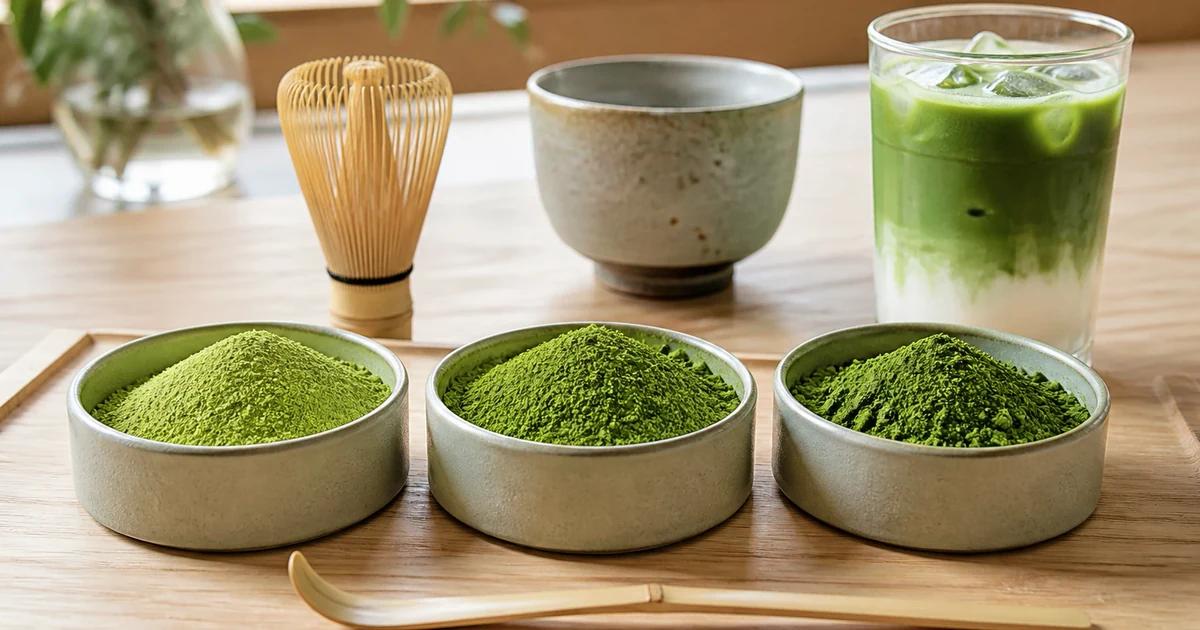
Three bowls of differently shaded green matcha powder beside a bamboo whisk and an iced matcha latte
For lattes, package size, gram price, intended use, and freshness after opening can matter more than ceremonial marketing language. Image: The Foods That Shaped Us Research Desk. Image terms. Request permission.

Purchase verdict

For a small latte-focused tin, Ippodo Ikuyo and Jade Leaf Barista Edition both explicitly support milk drinks; Jade Leaf had the lower observed gram price. Aiya Organic Culinary Grade costs less per gram in a 100 g bag and is positioned for food and beverages. These labels define intended use, not a universal quality ladder, and this guide has not taste-tested them together.

Quick choices

Observed prices are U.S. snapshots from August 28, 2026. Seller links are direct and non-affiliate.

Product choices, documented use, observed U.S. price, package size, unit price, and seller
ProductDocumented fitObserved priceSeller
Ippodo Tea Ikuyo Matcha20 g tin; matcha explicitly recommended by the maker for lattesFor someone who wants a small Kyoto tea-company tin explicitly positioned for straight preparation and milk drinks.$17.0020 g$0.85 per gAvailable when checkedCheck Ippodo Tea U.S.Verified 2026-08-28
Jade Leaf Matcha Organic Ceremonial Matcha Barista Edition30 g tin; barista-edition matcha for lattesFor a latte-specific 30 g tin with organic and Japanese-origin claims at a lower observed gram price than Ikuyo.$18.3930 g$0.61 per gAvailable when checkedCheck Jade Leaf MatchaVerified 2026-08-28
Aiya America Organic Culinary Grade Matcha100 g bag; culinary matcha for food and beveragesFor frequent latte or kitchen use where a larger bag and lower observed gram price matter more than a small presentation tin.$38.60100 g$0.39 per gAvailable when checkedCheck Aiya AmericaVerified 2026-08-28

Where to buy in the U.S.

These direct, non-affiliate seller pages were checked on August 28, 2026. Stock, shipping, taxes, and checkout prices can vary by location and date.

How products were selected

  • We selected Japanese matcha sold through official U.S. pages that explicitly supports latte, barista, culinary, food, or beverage use.
  • Sale prices are labelled as observations and can change. Gram prices use the stated package size and visible single-package price.
  • Color, aroma, bitterness, foam, and performance in the same milk ratio have not been tested side by side, so no sensory winner is declared.

Product evidence

documented only

Ippodo Tea Ikuyo Matcha

20 g tin; matcha explicitly recommended by the maker for lattes

Check seller

For this use: For someone who wants a small Kyoto tea-company tin explicitly positioned for straight preparation and milk drinks.

Ingredients documented
Matcha green tea.
Stated origin / claims
Blended and packaged in Japan by Ippodo Tea in Kyoto.
Suitable uses
Hot matcha latte; Iced matcha latte; Traditional whisked matcha
Allergens to check
Check the current package and facility statement.

Documented advantages

  • Maker explicitly recommends it for lattes
  • Small tin limits time sitting open
  • Direct tea-company product page

Limitations

  • Highest observed gram price in this comparison
  • Small tin is consumed quickly by frequent latte drinkers
  • Sensory claims were not independently tested here

documented only

Jade Leaf Matcha Organic Ceremonial Matcha Barista Edition

30 g tin; barista-edition matcha for lattes

Check seller

For this use: For a latte-specific 30 g tin with organic and Japanese-origin claims at a lower observed gram price than Ikuyo.

Ingredients documented
100% matcha green tea, according to the product page.
Stated origin / claims
Shade-grown Japanese matcha; first-harvest claim.; Organic claim
Suitable uses
Hot and iced lattes; Sweetened cafe-style drinks; Whisked matcha
Allergens to check
Check the current package and facility statement.

Documented advantages

  • Latte use is explicit
  • 30 g package is larger than Ikuyo
  • Observed sale gram price was below Ikuyo

Limitations

  • Observed price was a sale and may change
  • Ceremonial wording is not a universal regulated U.S. grade
  • No side-by-side milk test was completed

documented only

Aiya America Organic Culinary Grade Matcha

100 g bag; culinary matcha for food and beverages

Check seller

For this use: For frequent latte or kitchen use where a larger bag and lower observed gram price matter more than a small presentation tin.

Ingredients documented
Organic matcha green tea.
Stated origin / claims
Japanese matcha sold through Aiya America.; USDA Organic claim
Suitable uses
Lattes and smoothies; Baking; Sauces and desserts
Allergens to check
Check the current package and facility statement.

Documented advantages

  • Lowest observed gram price in this comparison
  • Largest package
  • Culinary and beverage use is explicit

Limitations

  • Large bag needs disciplined airtight, cool, dark storage
  • Not positioned as a small premium drinking tin
  • A larger purchase is poor value if it goes stale

What to check on the label

  • Look for Japan as the stated origin rather than relying only on a green package or Japanese-style design.
  • Treat ceremonial, premium, barista, and culinary as producer positioning; compare actual intended use and package information.
  • Calculate price per gram and estimate how quickly the opened package will be used.
  • Check whether an observed price is a temporary sale, subscription price, or bundle price.

Why latte matcha is not one fixed grade

Milk and sweetener can soften bitterness and mute delicate aroma, so a latte does not automatically require the most expensive small tin. A producer may blend a powder to remain recognizable in milk, while a culinary product may offer economical color and tea character for frequent use.

The words ceremonial and culinary are useful only when read alongside origin, intended use, freshness guidance, and the producer’s description. They are not one universal U.S. grading law.

How package size changes value

Price per gram rewards large bags mathematically, but matcha changes after opening as it is exposed to oxygen, heat, light, and moisture. A smaller tin can be the more rational purchase for an occasional drinker even when its gram price is higher.

Choose the package against realistic use. A daily latte routine can justify 100 g; a weekly drink may be better served by 20 or 30 g. This is a freshness calculation, not a taste ranking.

The history behind the purchase

Matcha developed from powdered-tea traditions and became closely associated with Japanese tea practice. The modern latte is a separate cafe format. The Matcha history article traces production and cultural context; this guide compares contemporary U.S. packages for milk drinks.

Read the full history of Matcha

Sources and price records

  1. [1]Ikuyo Matcha. Ippodo Tea (2026).
  2. [2]Organic Ceremonial Matcha Barista Edition. Jade Leaf Matcha (2026).
  3. [3]Organic Culinary Grade Matcha. Aiya America (2026).
🏛️

Written by The Foods That Shaped Us Research Desk

The Foods That Shaped Us Research Desk is the publication byline for collaboratively maintained food-history articles, Case Files, Trend Desk analysis, and original Recipe Desk development. Historical work is grounded in cited sources. Recipes use measured formulations and receive an editorial consistency, safety-note, and image-provenance review before release.

Source-led editorial process·Read our Editorial Standards