U.S. purchase guide
Which Miso Should You Buy for Soup, Dressing, and Everyday Cooking?
Three miso pastes compared by color, ferment time language, soy versus supermarket packaging, tub size, unit price, and the uses their labels can support.
Purchase verdict
Choose miso by color and ferment style before brand. Miso Master Traditional Red is a one-year North Carolina aka paste; Miso Master Mellow White is a 30-day shiro paste at a lower observed unit price. Hikari Organic White is a Japanese supermarket tub with the lowest observed unit price. None has been taste-tested here.
Quick choices
Observed prices are U.S. snapshots from August 29, 2026. Seller links are direct and non-affiliate.
Product evidence
Choose miso by ferment style, then by tub
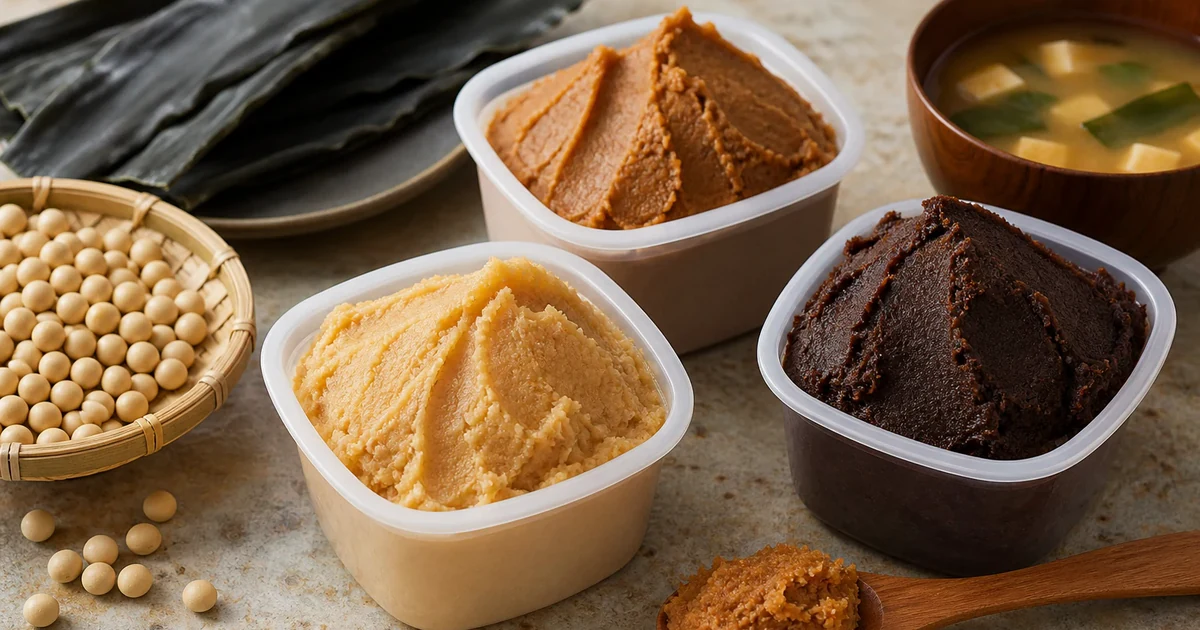
Red miso aged through seasons is a different pantry object from a 30-day white miso, even when both list soybeans, rice koji, and salt. Hikari’s organic white tub occupies the supermarket white-miso job at a lower observed unit price. Miso Master’s two 16 oz tubs let you compare red and white from one producer without changing the artisan process story.
Sodium, sweetness, and aroma still vary inside one color name. Those attributes require a controlled kitchen comparison and are not inferred from price here.
When the cheaper tub is the right tub
Hikari’s 13.2 oz price per ounce is the lowest in this set, but only if white miso is the recipe. A red-miso glaze is a different purchase. A household that makes miso soup weekly can finish 16 oz; an occasional cook may waste less with the smaller Japanese tub.
Direct-to-consumer miso often ships on limited weekdays and should be refrigerated on arrival. Grocery refrigerated cases avoid that shipping constraint and introduce ZIP-code stock instead.