U.S. purchase guide
How to Buy Saffron Without Paying for Mislabelled Threads
A label-first comparison of whole saffron threads, package size, gram price, origin statements, stock status, and the limits of visual authenticity checks.
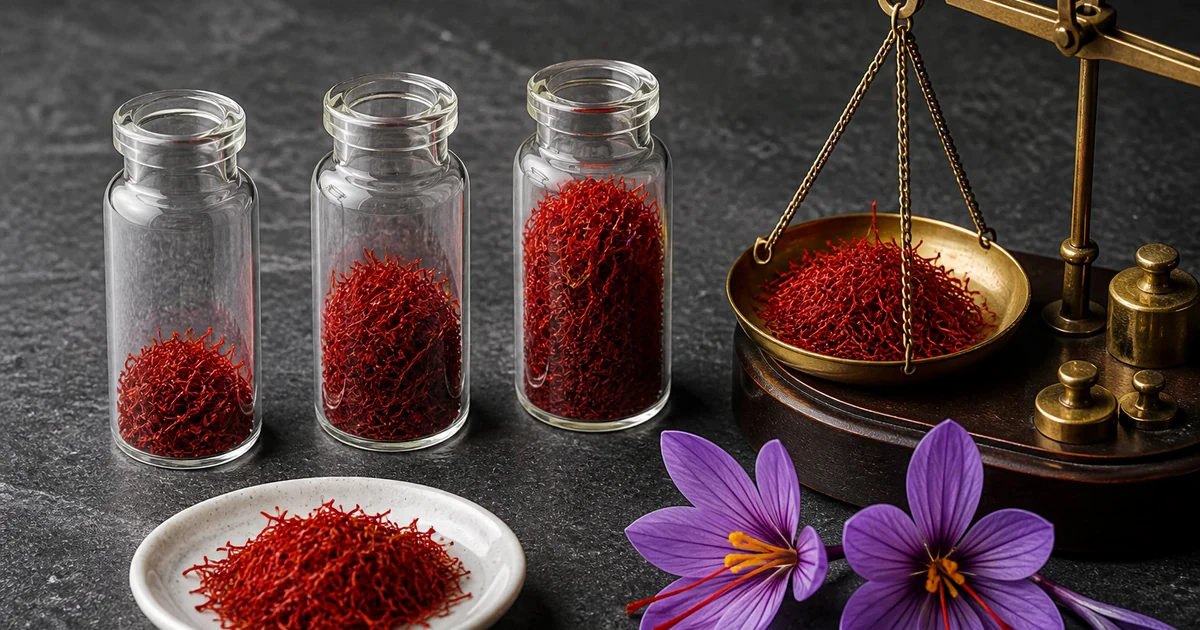
Purchase verdict
Buy whole threads from a seller that identifies the botanical product, net weight, and stated origin, then compare price per gram rather than package price. Rumi and The Spice House were available when checked; Burlap & Barrel displayed a lower gram price but was unavailable. A reputable label reduces uncertainty, but only appropriate testing can establish purity.
Quick choices
Observed prices are U.S. snapshots from August 28, 2026. Seller links are direct and non-affiliate.
Product evidence
What saffron price can and cannot tell you
Price per gram makes packages comparable, but it does not prove quality. A low price can signal a bargain, weak sourcing, an old batch, or a misleading product; a high price can reflect labor, packaging, origin, marketing, or scarcity. The useful question is whether the seller provides enough identity and traceability evidence to justify the amount charged.
Shipping and discounts are excluded because they vary by order and location. The observed figures are snapshots, not permanent market prices.
Why whole threads reduce, but do not remove, uncertainty
Scientific reviews document saffron substitution with other plant material, non-stigma flower parts, dyes, moisture, and other additions. Whole threads preserve more visible structure than powder, which is one reason they are a more legible starting point for a shopper.
Visual checks remain screening tools. ISO 3632 specifies requirements for dried saffron, and laboratory authentication can use chromatography, spectroscopy, microscopy, or DNA-based methods. This guide does not promise that a photograph or kitchen trick can certify a retail sample.