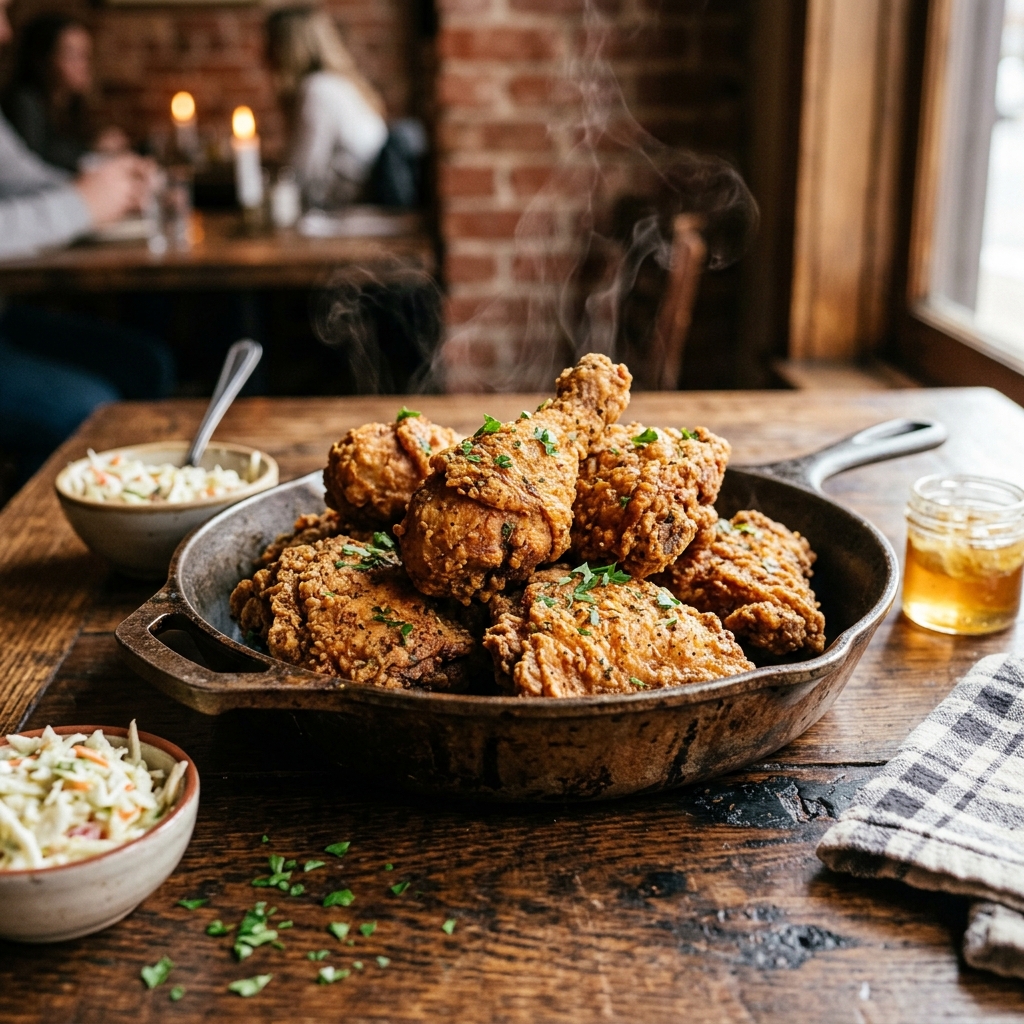
Who Invented Southern Fried Chicken?
Cultural and brand storytelling review: Ahmed Baakli — Reviewed against cited public sources for: Scottish immigration history, Southern plantation cooking, and post-emancipation Black entrepreneurship.
Review lanes show the scope checked for this case file. Active standalone case files present source-led historical context.
Is fried chicken a purely Southern European invention?
Verdict: No. While Scottish immigrants brought the method of frying chicken in lard, it was enslaved West African cooks who introduced seasoning, battering, and deep-frying techniques that defined the Southern classic.
Why it matters: The story shows how a simple cooking method was transformed by West African culinary traditions under slavery, and later became a tool of economic independence for formerly enslaved women.
The Bland Scottish Frying Tradition
Before the 18th century, most European cultures roasted or boiled chicken. Scottish settlers, however, brought a unique cooking tradition to the American South: frying chicken parts in hot hog lard. While this technique successfully cooked the meat and created a crisp exterior, it lacked any seasoning or spices. The Scottish fried chicken was plain, unbattered, and considered a secondary household food.
The West African Spice Revolution
The transformation of fried chicken into a culinary masterpiece occurred in plantation kitchens. Enslaved West African cooks, who managed the kitchens of wealthy Southern landowners, took the basic Scottish frying technique and revolutionized it. Drawing on West African traditions of frying foods (like bean fritters, or akara, in palm oil) and their mastery of spices, they introduced cayenne pepper, paprika, black pepper, and garlic to the flour. They also developed the technique of coating the chicken in seasoned flour or batter before frying, creating a protective barrier that kept the meat juicy.
The Gordonsville Chicken Vendors
Following emancipation, fried chicken became a vital path to economic self-sufficiency for formerly enslaved Black women. In Gordonsville, Virginia, Black women known as "chicken vendors" set up stands at the railway station. They carried platters of hot, freshly fried chicken on their heads, selling it through the open windows of passing trains to hungry passengers. Gordonsville became known as the "Fried Chicken Capital of the World," showing how a plantation food was reclaimed as a symbol of economic freedom.