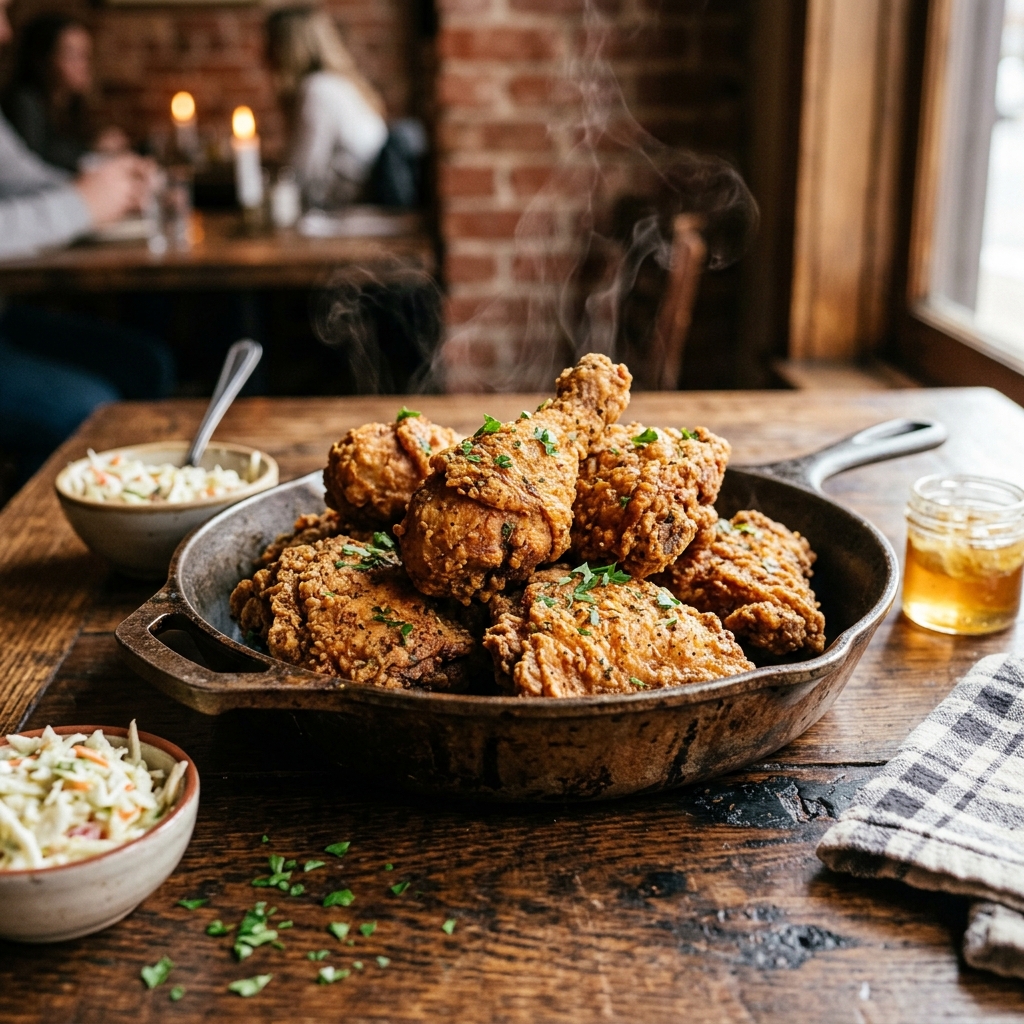
Crispy, golden-brown Southern fried chicken in a cast iron skillet on a rustic wooden table.

The Great Batter Battle — History, Origins & Cultural Impact

How Scotland and West Africa Accidentally Created Southern Fried Chicken

📍 Southern United States📅 18th Century5 min read
Published: ·Updated: ·
Advertisement
The Great Batter Battle — History, Origins & Cultural Impact

What is the history of the bland scottish frying tradition for the great batter battle?

Before the 18th century, most European cultures roasted or boiled chicken. Scottish settlers, however, brought a unique cooking tradition to the American South: frying chicken parts in hot hog lard. While this technique successfully cooked the meat and created a crisp exterior, it lacked any seasoning or spices. The Scottish fried chicken was plain, unbattered, and considered a secondary household food.

Advertisement

What is the history of the west african spice revolution for the great batter battle?

The transformation of fried chicken into a culinary masterpiece occurred in plantation kitchens. Enslaved West African cooks, who managed the kitchens of wealthy Southern landowners, took the basic Scottish frying technique and revolutionized it. Drawing on West African traditions of frying foods (like bean fritters, or akara, in palm oil) and their mastery of spices, they introduced cayenne pepper, paprika, black pepper, and garlic to the flour. They also developed the technique of coating the chicken in seasoned flour or batter before frying, creating a protective barrier that kept the meat juicy.

What is the history of the gordonsville chicken vendors for the great batter battle?

Following emancipation, fried chicken became a vital path to economic self-sufficiency for formerly enslaved Black women. In Gordonsville, Virginia, Black women known as "chicken vendors" set up stands at the railway station. They carried platters of hot, freshly fried chicken on their heads, selling it through the open windows of passing trains to hungry passengers. Gordonsville became known as the "Fried Chicken Capital of the World," showing how a plantation food was reclaimed as a symbol of economic freedom.

Historical Timeline

1747

Hannah Glasse publishes the first English recipe for fried chicken in The Art of Cookery.

1700s

Scottish immigrants settle in the Southern colonies, bringing their practice of frying chicken in lard.

1800s

Enslaved West African cooks introduce red pepper, cayenne, and batter-dipping techniques, revolutionizing the dish.

1881

Abby Fisher, a formerly enslaved woman, publishes the first known African American recipe for fried chicken.

🎉 Fun Historical Facts

  • Scottish immigrants fried chicken in pure lard without any seasoning, which was considered extremely bland by local cooks.
  • Enslaved women in the South used fried chicken as a tool of economic independence, selling it to train passengers at stops like Gordonsville, Virginia.
  • Double-dredging—dipping chicken in buttermilk and flour twice—creates the signature craggy crust that seals in moisture.

📚 Sources & References

  1. [1]Toni Tipton-Martin. The Jemima Code: Two Centuries of African American Cookbooks. University of Texas Press (2015).
    Find Book
  2. [2]Frederick Douglass Opie. Hog and Hominy: Soul Food from Africa to America. Columbia University Press (2008).
    Find Book
  3. [3]Anne L. Bower. African American Foodways: History and Culture. University of Illinois Press (2007).
    Find Book

Articles are reviewed internally for source quality, historical context, clarity, and relevance. Our references may include academic books, university-press publications, museum records, archaeological studies, peer-reviewed journals, historical archives, official cultural institutions, and established food-history works. Case file links point to supporting evidence.

Evidence Explorer

Review the Source Trail

Inspect the article sources, scoped review credits, and copyable citation details without leaving the page.

Case File Link

Is fried chicken a purely Southern European invention?

Cultural and brand storytelling review: Scottish immigration history, Southern plantation cooking, and post-emancipation Black entrepreneurship.

Read this case file
View all food-history case files

Sources Listed

[1] Toni Tipton-Martin. The Jemima Code: Two Centuries of African American CookbooksUniversity of Texas Press (2015)

[2] Frederick Douglass Opie. Hog and Hominy: Soul Food from Africa to AmericaColumbia University Press (2008)

[3] Anne L. Bower. African American Foodways: History and CultureUniversity of Illinois Press (2007)

Advertisement
🏛️

Written by The Foods That Shaped Us Research Desk

The Foods That Shaped Us Research Desk is the publication byline for legacy and collaboratively maintained food-history articles. Articles are researched and edited through a publication-led process, grounded in cited sources, and reviewed for historical context, source quality, and clarity.

Comments

Community comments are coming soon. Check back later to join the discussion!
Related Foods