💡 Key Takeaways
- Sourdough is a fermented bread system made from flour and water, powered by naturally occurring yeasts and lactic acid bacteria.
- The oldest known bread-like remains predate farming, but they should not be treated as direct proof of sourdough.
- For much of bread history, natural leavens, retained dough, and starter cultures helped people make raised bread before industrial baker's yeast.
- Sourdough mattered because it turned grain into bread with rise, acidity, flavor, better keeping quality, and regional identity.
- Modern sourdough returned through artisan baking, home baking, fermentation culture, and resistance to fast industrial bread.
What Is Sourdough?
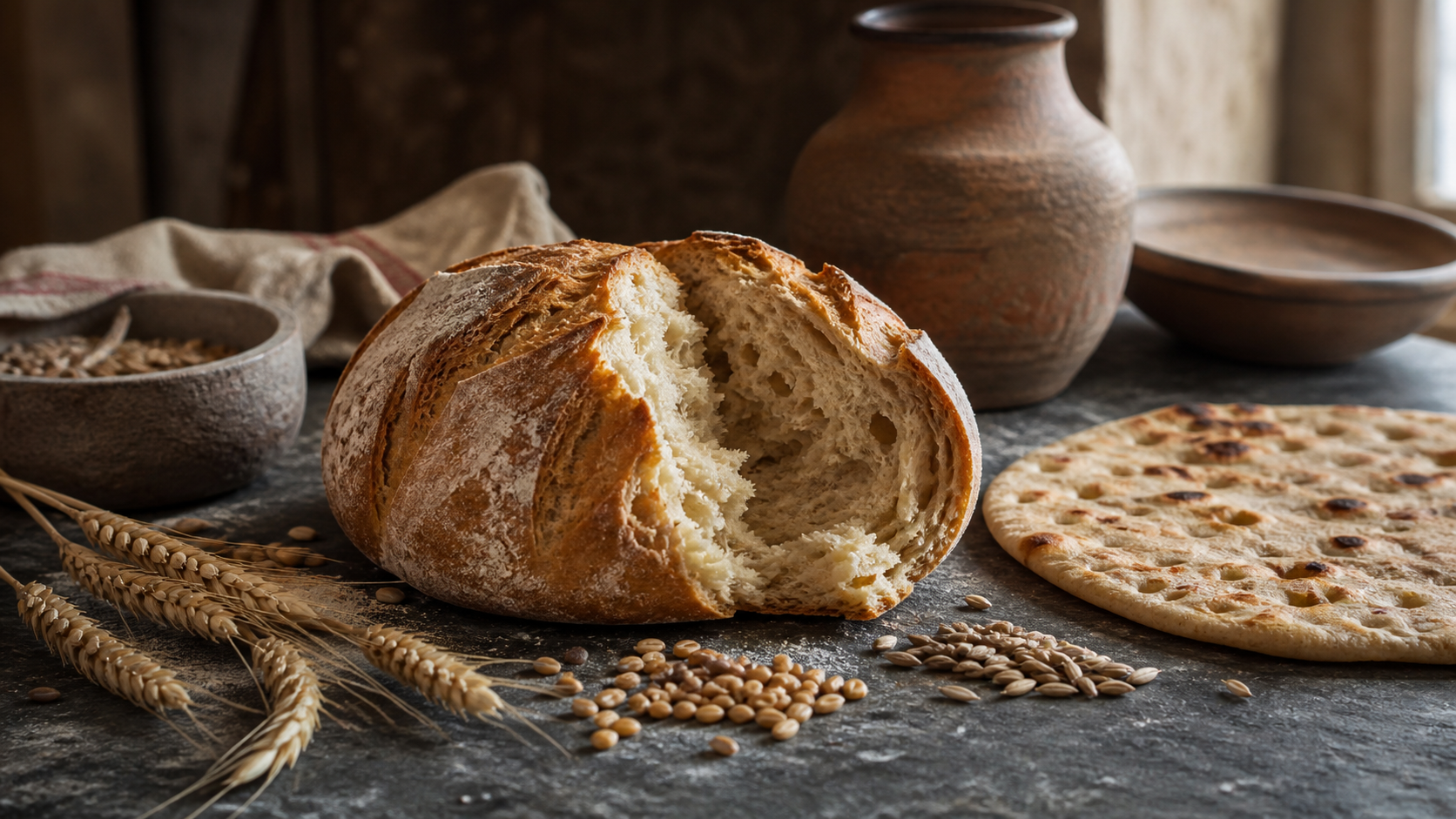
Sourdough is bread leavened by a living culture of flour, water, wild yeasts, and lactic acid bacteria rather than by isolated commercial baker's yeast alone. The starter is the maintained culture; the bread is the baked result. Yeasts create carbon dioxide that lifts dough, while lactic acid bacteria produce organic acids that shape flavor, aroma, texture, and keeping quality [3][4].
That distinction matters. Sourdough is not just a rustic loaf or a modern bakery style. It is a natural-leavening system: flour and water become a managed microbial habitat, and repeated feeding lets bakers carry fermentation from one batch to the next. In food-history terms, sourdough belongs beside bread, wheat, barley, beer, and vinegar as a technology for making crops more useful through time, microbes, and human care.
Where Did Sourdough Originate?
Sourdough has no single inventor and no clean birthplace. Its origin belongs to the broader history of grain domestication, grinding stones, dough, ovens, retained ferments, and natural leavening across ancient bread cultures. The safest map points toward the ancient Near East, Egypt, and Mediterranean grain systems, where bread and beer became central foods and where repeated dough-making made natural fermentation useful [2][5].
The famous 14,400-year-old bread-like remains from Shubayqa 1 in northeastern Jordan are crucial evidence for early breadmaking, but they are not proof of sourdough [1]. They show that people were grinding and baking wild cereals before farming. Sourdough history begins more securely when repeated bread production, old dough, and maintained leavens made it possible to preserve microbial activity across batches. In other words, Shubayqa helps explain early bread; later grain cultures explain sourdough as a living leavening system.
How Did Ancient Bread Become Fermented?
Fermentation probably entered bread through ordinary repetition. Flour and water left warm long enough are exposed to microbes from grain, hands, vessels, tools, bakery spaces, and the surrounding environment. When a batch rose well or tasted better, part of that dough could be held back and mixed into the next batch. This retained dough, sometimes called old dough, let bakers carry yesterday's leavening power into tomorrow's bread [3][4].
Ancient Egypt gives one of the clearest windows into this world. Bread and beer were linked grain technologies, not separate modern categories. Microscopic study of Egyptian baking and brewing remains shows sophisticated grain processing and fermentation knowledge, including methods that connected dough, malt, beer, heat, and leavening [2]. Beer barm, old dough, starters, and ambient fermentation all belong to this older world of practical microbial management before anyone could name microbes.
What Microbes Make Sourdough Rise?
A sourdough starter is a small ecosystem. Wild yeasts ferment sugars and release carbon dioxide, inflating the dough's gluten network. Lactic acid bacteria produce lactic and acetic acids, lowering pH, sharpening flavor, and helping the bread keep longer [3][4]. Enzymes in flour and microbes also break down starches and proteins, creating sugars, aroma compounds, and the conditions that make slow fermentation taste different from fast bread.
Modern microbiology has made the old baker's intuition visible. Starter communities are shaped by flour type, water, temperature, salt, hydration, feeding rhythm, and bakery practice [3][4]. Sourdough is therefore not one microbe and not one flavor. It is a relationship among organisms and habits. Wild yeast matters, but lactic acid bacteria are just as important; without them, sourdough would rise, but it would not have the same acid balance, aroma, preservation logic, or cultural identity.
Why Did Sourdough Feed Civilizations Before Commercial Yeast?
Before purified commercial yeast, bakers needed continuity. Natural leavens, retained dough, beer barm, and household starters gave communities a repeatable way to raise bread without buying isolated yeast. That was not a small convenience. In many societies, bread was a daily calorie system, a wage food, a ritual offering, and a marker of household competence [2][5].
Sourdough and related leavens mattered because they made grain more useful. Fermentation gave bread volume, flavor, acidity, and better keeping quality. It also created a form of stored knowledge: a starter survived because someone remembered to feed it, protect it, read it, and pass it forward. This is why sourdough belongs in the history of food infrastructure. A maintained leaven was part ingredient, part tool, and part household archive.
Why Did Industrial Yeast Replace Sourdough?
Sourdough never disappeared everywhere, but industrial breadmaking moved it away from the center of many modern food systems. In the 19th and 20th centuries, microbiology, compressed baker's yeast, roller milling, factory bakeries, wrapped loaves, and fast production schedules changed what bread businesses needed. Commercial yeast made dough rise quickly and predictably. For mass production, that reliability was valuable.
The tradeoff was historical as much as technical. Industrial yeast separated bread from some older rhythms of waiting, feeding, local flour, bakery memory, and long fermentation. White flour and factory loaves were cheaper, softer, and easier to standardize, but they also made sourdough seem old-fashioned in many places. Sourdough survived where regional bread cultures, rye traditions, small bakeries, and household starters kept natural leavening alive.
Why Did Sourdough Return in Modern Baking Culture?
The modern sourdough revival came through artisan bakeries, regional bread traditions, food writing, fermentation culture, home baking, and a reaction against fast industrial bread. San Francisco sourdough became one famous regional symbol, shaped by local bakery identity, Gold Rush memory, and the mythology of resilient starter cultures [7]. Later, artisan bakers made long fermentation, blistered crusts, open crumb, whole grains, and living starters signs of craft.
The 2020s gave sourdough another cultural life. When packaged yeast was scarce and people spent more time at home, starters became social objects: named, photographed, traded, neglected, revived, and discussed online. The trend was modern, but the logic was old. People were rediscovering that a small living culture could turn flour and water into bread if they learned its timing.
How Is Sourdough Used Today?
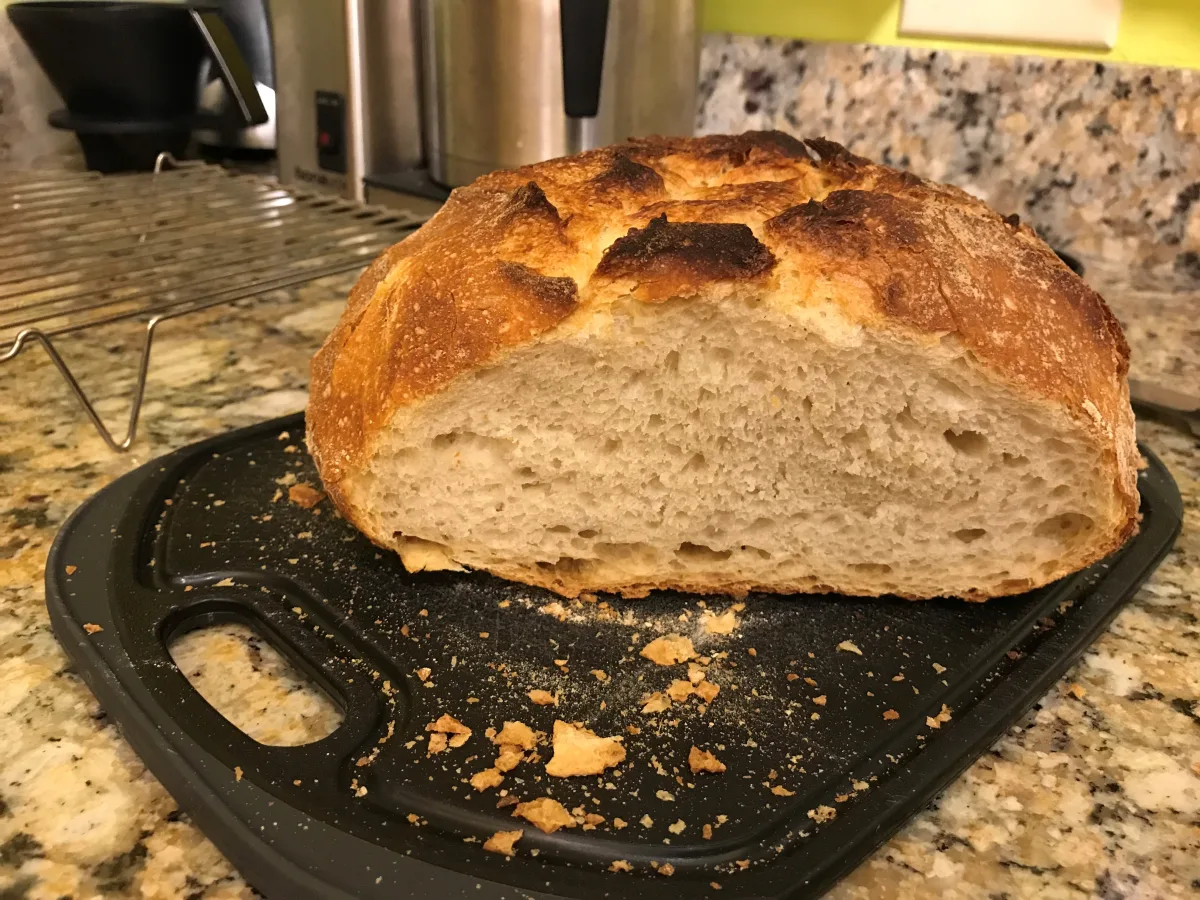
Today sourdough appears as country loaves, rye breads, baguettes, pizza dough, flatbreads, pancakes, crackers, enriched breads, sandwich loaves, and whole-grain boules. Bakers use wheat, rye, spelt, einkorn, barley blends, and local grains to shape flavor and texture. Some want dramatic open crumb and blistered crust; others want dense rye, mild sandwich bread, or tangy flatbread.
For The Foods That Shaped Us, sourdough is one of the clearest bridges between ancient bread and modern culture. It connects wheat and barley to beer, fermentation to preservation, household skill to bakery craft, and slow microbial life to a fast-food world. Sourdough is ancient in its logic and modern in its revival. Its power is that people learned to keep a food culture alive long before they knew what a microbe was.
Historical Timeline
Bread-like remains at Shubayqa 1 in northeastern Jordan show early grain-based bread before farming, but not confirmed sourdough
Farming societies expand grain grinding, dough making, ovens, storage, and repeated bread production
Bread and beer cultures develop sophisticated grain fermentation practices
Bakers preserve leavening power through old dough, starters, brewery ferments, and household leavens
Microbiology and commercial yeast production begin changing breadmaking
Industrial yeast, roller milling, factory bread, and fast baking reduce reliance on traditional sourdough in many places
Artisan bakeries revive long fermentation, crusty loaves, regional grains, and starter culture
Pandemic home baking, social media, and fermentation communities make sourdough a global symbol of slow food and kitchen self-reliance
Evidence Explorer
Review the Source Trail
Inspect the article sources, scoped review credits, and copyable citation details without leaving the page.
Reviewed for Stated Scope
Sources Listed
Comments
Community comments are coming soon. Check back later to join the discussion!