Did Otzi the Iceman Eat Sourdough?
Source and factual review: Mehdi Iarab — Reviewed against cited public sources for: Neolithic archaeology, archaeobotanical stomach audits, and Alpine mummy records.
Review lanes show the scope checked for this case file. Active standalone case files present source-led historical context.
Did Otzi the Iceman eat sourdough bread?
Verdict: Yes. Stomach analyses of the 5,300-year-old mummy revealed particles of baked einkorn flatbread, confirming that Neolithic Alpine communities baked fire-roasted, wild-fermented bread.
Why it matters: It pushes the history of processed, portable carbohydrates back thousands of years, showing that bread was a vital survival technology before the dawn of modern agriculture.
The Iceman's Final Meal
When hikers discovered the naturally mummified body of Ötzi the Iceman in the Italian Alps in 1991, they unlocked a time capsule of prehistoric human life. Microbiological analysis of Ötzi's stomach and intestinal tract revealed his final meals before his death around 3300 BCE. Alongside red deer and ibex meat, scientists found distinct, finely ground particles of einkorn wheat (Triticum monococcum) that showed signs of thermal processing—proving that Ötzi had consumed a baked grain flatbread shortly before climbing the glacier.
The Neolithic Baking Technology
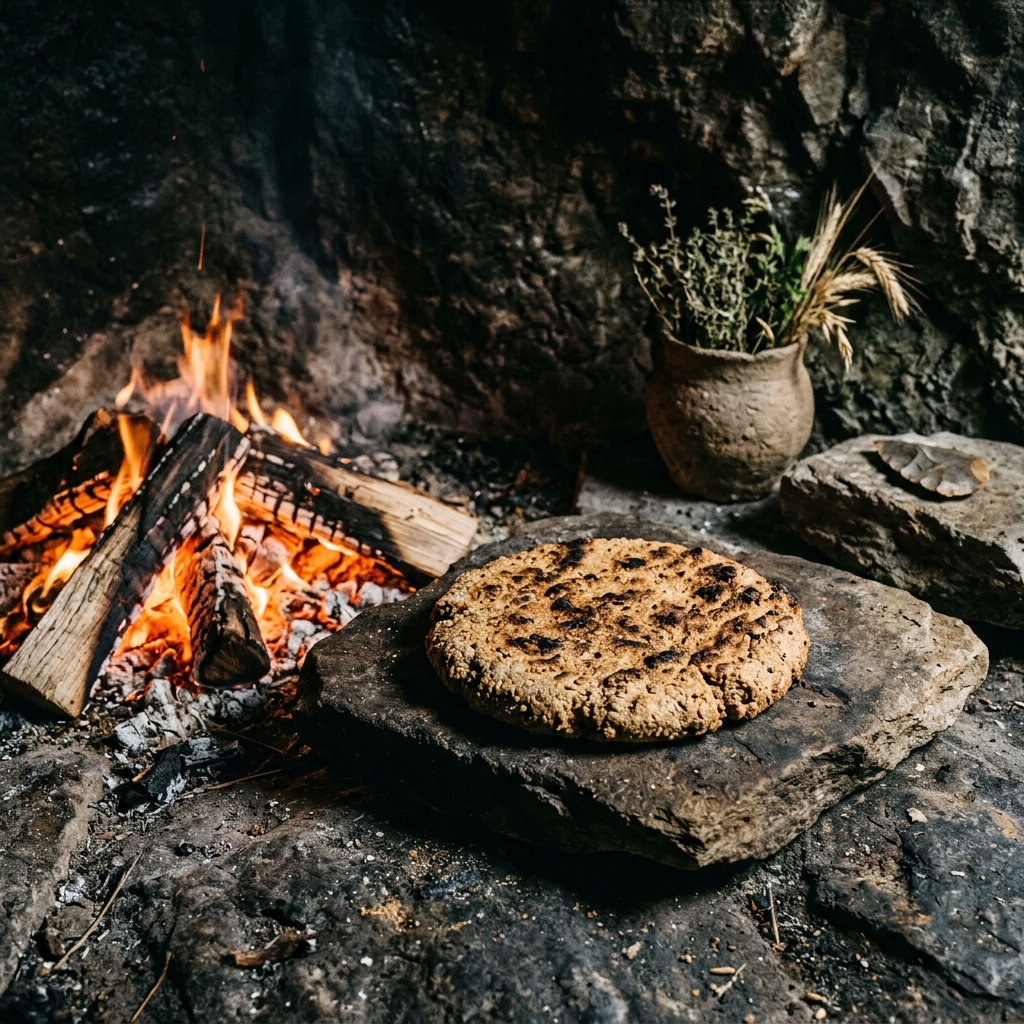
Neolithic baking was primitive but highly effective. Prehistoric bakers ground wild einkorn and emmer grains between flat stones, mixed the flour with water, and patted the dough into thin flatbreads. Without ovens, they baked these flatbreads directly on flat rocks preheated by campfires or directly on hot wood coals. The resulting bread was dense, dry, and durable, allowing hunters and travelers to carry shelf-stable carbohydrates across long distances.
Recreating the Neolithic Sourdough
Modern archaeobotanical finds, such as the charred bread remains discovered at the Parkhaus Opéra site in Zürich, show that Neolithic flatbreads sometimes underwent wild fermentation. Wild yeasts present on the hulls of ancient einkorn grains would naturally ferment the dough if left to rest. Recreating this prehistoric bread today requires using heirloom einkorn flour, fermenting it with wild Alpine yeast starters, and baking it on open embers to capture the smoky, dense character of the oldest bread on Earth.