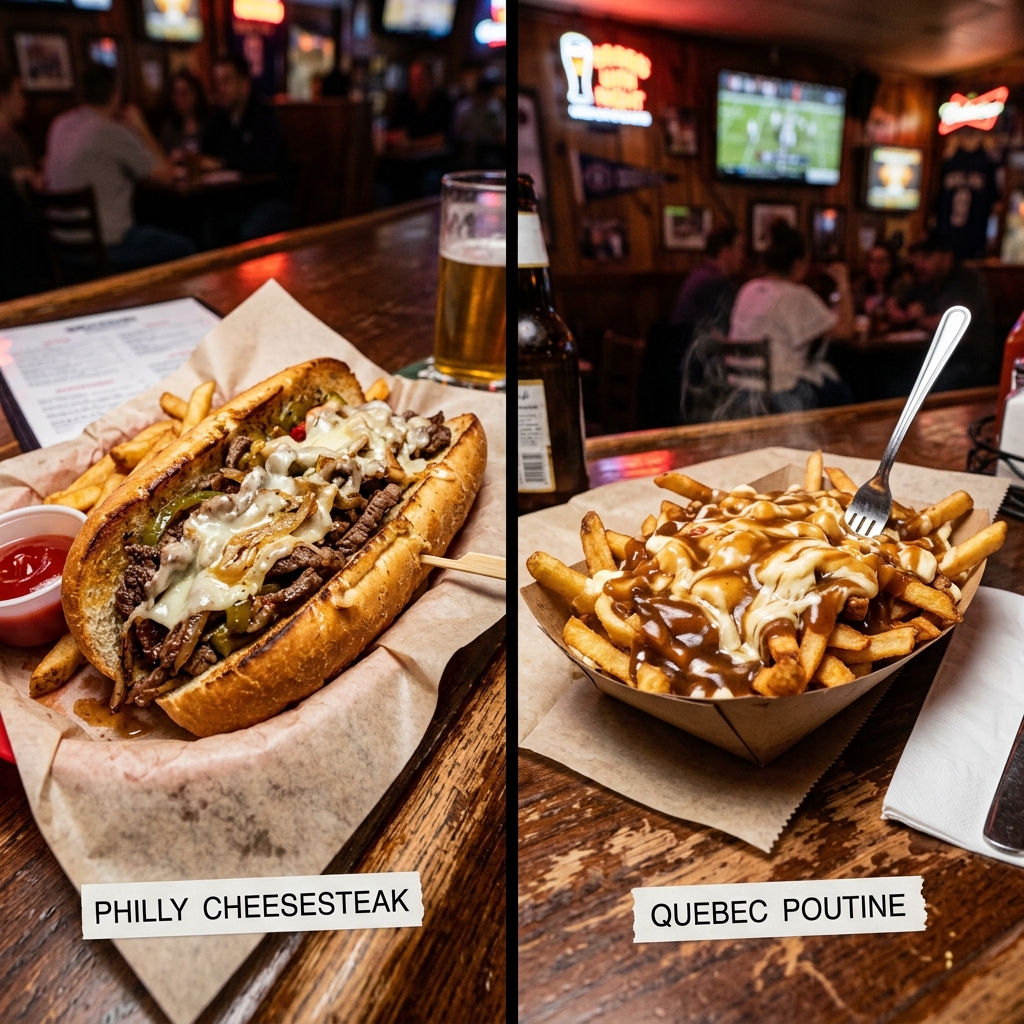
The Working-Class Origins of Cheesesteaks and Poutine
Market and economic context review: Amine Naini — Reviewed against cited public sources for: Italian immigration in Philadelphia, Quebecois economic history, and gastro-diplomacy.
Review lanes show the scope checked for this case file. Active standalone case files present source-led historical context.
Were cheesesteaks and poutine always celebrated national dishes?
Verdict: No. Both dishes began as cheap, blue-collar street foods created by marginalized groups (South Philly Italian immigrants and rural Quebecois diners) that were initially ridiculed by high-class culinary elites before being co-opted as national cultural icons.
Why it matters: It reveals the political trajectory of street food, where dishes climb from blue-collar survival and class stigma into tools of soft power and gastro-diplomacy.
The Italian Pushcart of Philadelphia
The Philadelphia cheesesteak began as a hot dog vendor's personal lunch. In 1930, Pat Olivieri was running a hot dog stand in South Philadelphia. Tired of eating hot dogs, he bought some chopped beef from a local butcher, grilled it on his flat top, and stuffed it into an Italian roll. A passing taxi driver smelled the steak, asked for one, and told Olivieri to stop selling hot dogs and start selling steak sandwiches. The dish quickly became a hit among local taxi drivers and working-class residents, eventually adding melted provolone or Cheez Whiz to become the iconic Philly Cheesesteak.
Quebec's Working-Class Poutine Rebellion
In 1957, Fernand Lachance was running a small café in Warwick, Quebec, when a regular customer asked him to throw a handful of fresh cheese curds into a bag of hot french fries. Lachance reportedly replied in French: "Ça va faire une maudite poutine!" ("That will make a damn mess!"). The mess was a massive success. In the early 1960s, other diners added beef gravy to keep the mixture warm and melt the cheese curds, creating a high-calorie, cheap meal for local paper mill workers. For decades, English-speaking Canada ridiculed poutine as a low-class Quebecois anomaly, before eventually co-opting it as a national Canadian symbol.
Street Food as Gastro-Diplomacy
Today, the cheesesteak and poutine are prime examples of gastro-diplomacy—how nations use food to project soft power and foster cultural identity. During international sporting events like the World Cup, these dishes serve as culinary battleflags. They show how once-marginalized, blue-collar street foods, created by immigrant communities and rural diners, are transformed into celebrated symbols of national pride on the global stage.