The Italian Pushcart of Philadelphia
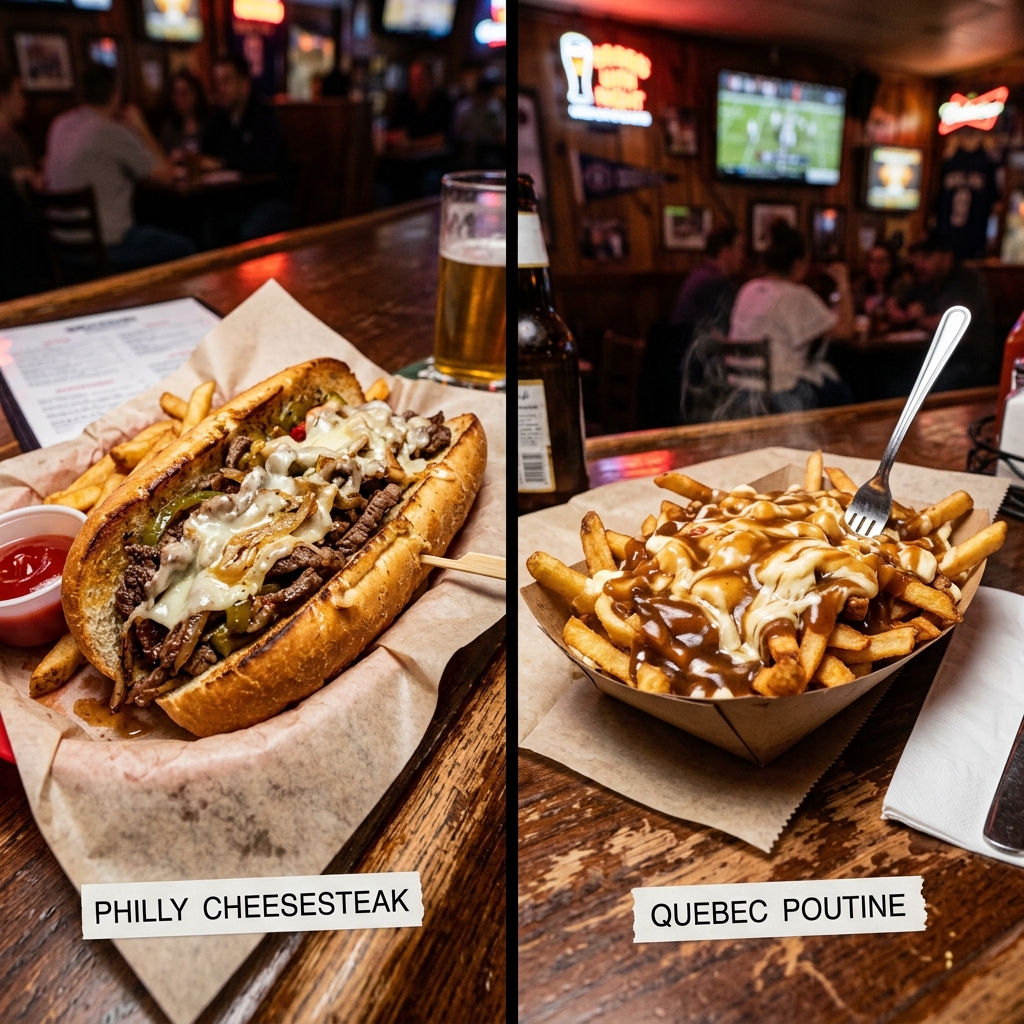
The Philadelphia cheesesteak began as a hot dog vendor's personal lunch. In 1930, Pat Olivieri was running a hot dog stand in South Philadelphia. Tired of eating hot dogs, he bought some chopped beef from a local butcher, grilled it on his flat top, and stuffed it into an Italian roll. A passing taxi driver smelled the steak, asked for one, and told Olivieri to stop selling hot dogs and start selling steak sandwiches. The dish quickly became a hit among local taxi drivers and working-class residents, eventually adding melted provolone or Cheez Whiz to become the iconic Philly Cheesesteak.
Quebec's Working-Class Poutine Rebellion
In 1957, Fernand Lachance was running a small café in Warwick, Quebec, when a regular customer asked him to throw a handful of fresh cheese curds into a bag of hot french fries. Lachance reportedly replied in French: "Ça va faire une maudite poutine!" ("That will make a damn mess!"). The mess was a massive success. In the early 1960s, other diners added beef gravy to keep the mixture warm and melt the cheese curds, creating a high-calorie, cheap meal for local paper mill workers. For decades, English-speaking Canada ridiculed poutine as a low-class Quebecois anomaly, before eventually co-opting it as a national Canadian symbol.
Street Food as Gastro-Diplomacy
Today, the cheesesteak and poutine are prime examples of gastro-diplomacy—how nations use food to project soft power and foster cultural identity. During international sporting events like the World Cup, these dishes serve as culinary battleflags. They show how once-marginalized, blue-collar street foods, created by immigrant communities and rural diners, are transformed into celebrated symbols of national pride on the global stage.
Historical Timeline
Pat Olivieri, an Italian hot dog vendor in Philadelphia, grills chopped beef on his cart, inventing the Philly Cheesesteak.
Fernand Lachance in Warwick, Quebec, agrees to put cheese curds and hot fries in a paper bag, creating Poutine.
Quebec diners add hot brown gravy to keep the fries warm, finalizing the modern poutine recipe.
Global street foods face off in international culinary debates during major tournaments, acting as tools of gastro-diplomacy.
Evidence Explorer
Review the Source Trail
Inspect the article sources, scoped review credits, and copyable citation details without leaving the page.
Sources Listed
Comments
Community comments are coming soon. Check back later to join the discussion!