💡 Key Takeaways
- Starch residues on stone tools from Jiskairumoko in southern Peru confirm potato use by at least 3,400 BCE, though genetic evidence suggests domestication began near Lake Titicaca around 8,000 BCE.
- The Irish Potato Famine (1845–52) killed roughly one million people and drove another million to emigrate, reducing Ireland's population by 25% in seven years.
- Modern smashed potatoes are not ancient, but their appeal builds on older potato traditions: boiling, roasting, mashing, frying, salting, and turning a survival crop into comfort food.
Where did potato originate?
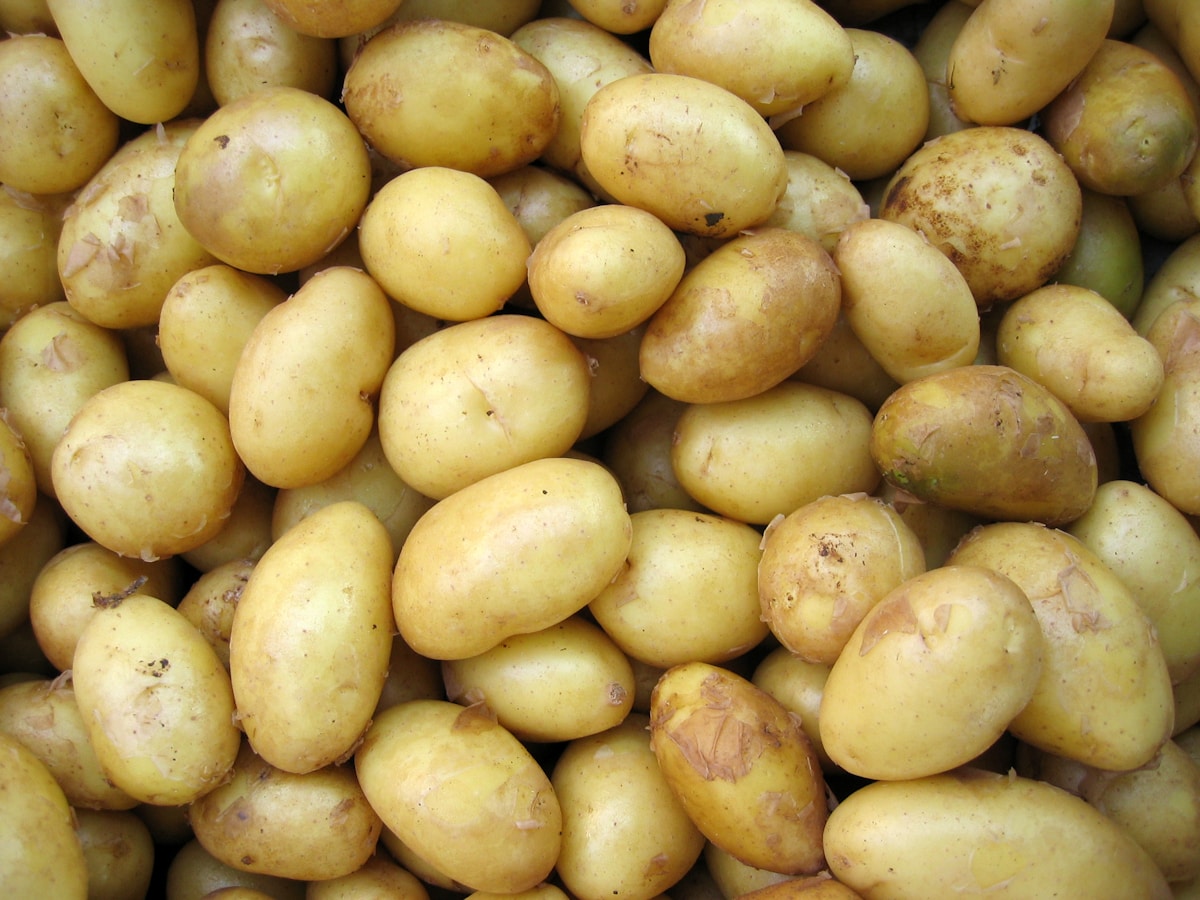
The potato began as a high-altitude survival crop in the Andes, not as a side dish. Around Lake Titicaca, between present-day Peru and Bolivia, Indigenous farmers selected wild tubers that could survive cold nights, thin air, poor soils, and short growing seasons. The International Potato Center places domestication roughly 8,000 years ago in this Andean world, where today thousands of native potato varieties still show extraordinary differences in color, shape, texture, bitterness, and altitude tolerance [1].
What made the potato uniquely valuable was its ability to feed people where maize, wheat, and many other crops struggled. Pre-Inca farmers developed chuno, a freeze-dried potato made by exposing tubers to frost, pressing out moisture, and drying them in the sun. Chuno could be stored for years, turning a fragile tuber into insurance against drought, frost, war, and failed harvests [2]. By the time the Inca Empire consolidated in the 15th century, potatoes helped sustain the road-building, army-feeding infrastructure that held together a civilization stretching thousands of kilometers along the Andes.
How did potato evolve over time?
Spanish conquistadors encountered the potato in the 1530s during the conquest of Peru. The earliest European written record appears in 1537, by the chronicler Pedro Cieza de León, who described "a kind of earth nut" growing near Quito. By the 1570s, potatoes arrived in Spain via the Canary Islands, but Europeans initially regarded the tuber with deep suspicion. Because it belonged to the nightshade family (Solanaceae), alongside the poisonous belladonna and mandrake, many considered it toxic, ugly, or even Satanic because it reproduced underground rather than from visible seed [2][3].
Adoption in Europe was slow and often required royal intervention. In France, the pharmacist Antoine-Augustin Parmentier — himself nourished on potatoes as a Prussian prisoner of war — campaigned tirelessly, convincing Louis XVI to wear potato flowers as a boutonniere and staging an elaborate guarded potato field near Paris in 1785 to provoke curious theft and planting. In Prussia, Frederick the Great issued the "Kartoffelbefehl" (Potato Order) of 1756, mandating cultivation.
The crop truly transformed when it reached Ireland. The moist, temperate climate and acidic soils proved ideal; by the 1840s, one-third of the Irish population depended heavily on potatoes, especially the Lumper. When Phytophthora infestans arrived in the 1840s, it devastated successive harvests. An estimated one million people died and another million emigrated — the worst famine in 19th-century Europe and a catastrophe that reshaped Irish identity, fuelled Irish-American diaspora culture, and influenced British politics for generations [4].
Why is potato culturally important?
In the Andes, potatoes remain entwined with spiritual life. The Quechua word "Pachamama" (Earth Mother) is invoked at planting and harvest; offerings of chicha (corn beer) and llama fat are made to ensure a good crop. Highland potato diversity is not just agricultural. It is cultural memory stored in tubers, fields, names, and farming knowledge [1].
In Europe, the potato quietly revolutionised demographics. Historians like William McNeill have argued that the potato's superior caloric yield per hectare enabled the population boom of 18th- and 19th-century northern Europe, providing the labour force that powered the Industrial Revolution. In Russia, Catherine the Great promoted potato cultivation from the 1760s; by the late 19th century, vodka distilled from potatoes was Russia's most consumed spirit [3].
The potato also created iconic dishes that define national cuisines: French frites, British fish and chips, Spanish tortilla española, Indian aloo gobi, Peruvian causa limeña, American hash browns, and countless forms of mashed, boiled, roasted, salted, fried, and street-cart potatoes. Van Gogh's "The Potato Eaters" (1885) remains one of art history's most powerful depictions of rural poverty and sustenance [5].
Modern Renaissance
The potato is now the world's fourth most important food crop, with annual production exceeding hundreds of millions of tonnes. China and India are the largest producers, having expanded cultivation dramatically since the 1960s. The International Potato Center in Lima maintains a major collection of cultivated varieties and wild relatives, safeguarding genetic diversity against future disease threats [1].
Modern breeding focuses on late blight resistance, drought tolerance for climate adaptation, and nutritional improvement. The same crop that once protected Andean communities from frost and hunger is now studied as a climate-resilient staple for a hotter, more unstable food system [2].
The viral appeal of crispy smashed potatoes is modern, but the logic is old. Smashed potatoes do not come from an ancient Andean recipe; they are a recent social-media-friendly format built on older techniques of boiling, roasting, salting, crushing, and crisping tubers. That is why they feel so familiar. They compress the potato's long transformation — survival crop, empire food, famine food, street food, comfort food — into one browned, salty, shareable bite [7].
The potato was also the first vegetable grown in space: NASA and the University of Wisconsin cultivated tubers aboard the Space Shuttle Columbia in 1995, and potato remains a leading candidate for controlled-environment agriculture. On Earth, a heritage revival celebrates the staggering diversity of Andean varieties — purple, yellow, red, fingerling, and dozens more — that supermarkets are only beginning to stock. From ancient altiplano to orbital greenhouse, the humble tuber continues to outperform expectations.
In the news
Recent 2026 food-culture notes that reference this article.
- Jul 18, 2026Smashed Potatoes Are Viral — the Potato Behind Them Is Centuries Older→
- Jul 2, 2026Beef Tallow Is Up 106% in 2026 — and It Is Riding 1,000 Years of Rendered-Fat History→
- Jun 28, 2026History of Frozen Food: Birdseye and Beyond→
- Jun 26, 2026Pierogi and Latke Snackification→
- Jun 17, 2026Duck-Fat Fries Went From Bistro Flex to American Menu Default→
Historical Timeline
Wild potatoes first domesticated near Lake Titicaca in the Andes
Inca predecessors develop freeze-dried chuño for long-term storage
Spanish conquistadors bring potatoes to Europe via the Canary Islands
Phytophthora infestans triggers the Irish Potato Famine
Potato becomes the first vegetable grown in space aboard the Space Shuttle Columbia
Evidence Explorer
Review the Source Trail
Inspect the article sources, scoped review credits, and copyable citation details without leaving the page.
Reviewed for Stated Scope
Sources Listed
Comments
Community comments are coming soon. Check back later to join the discussion!