💡 Key Takeaways
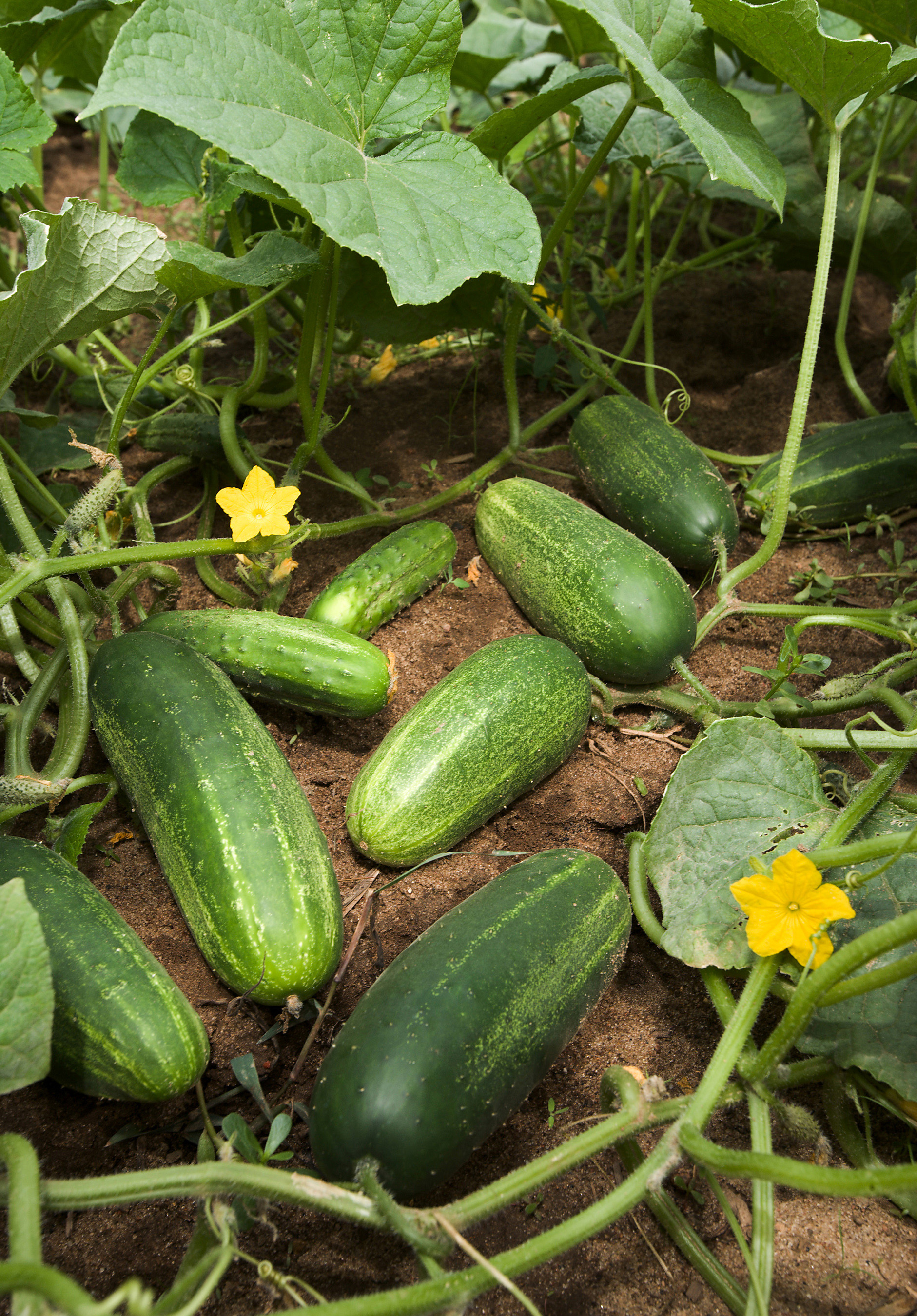
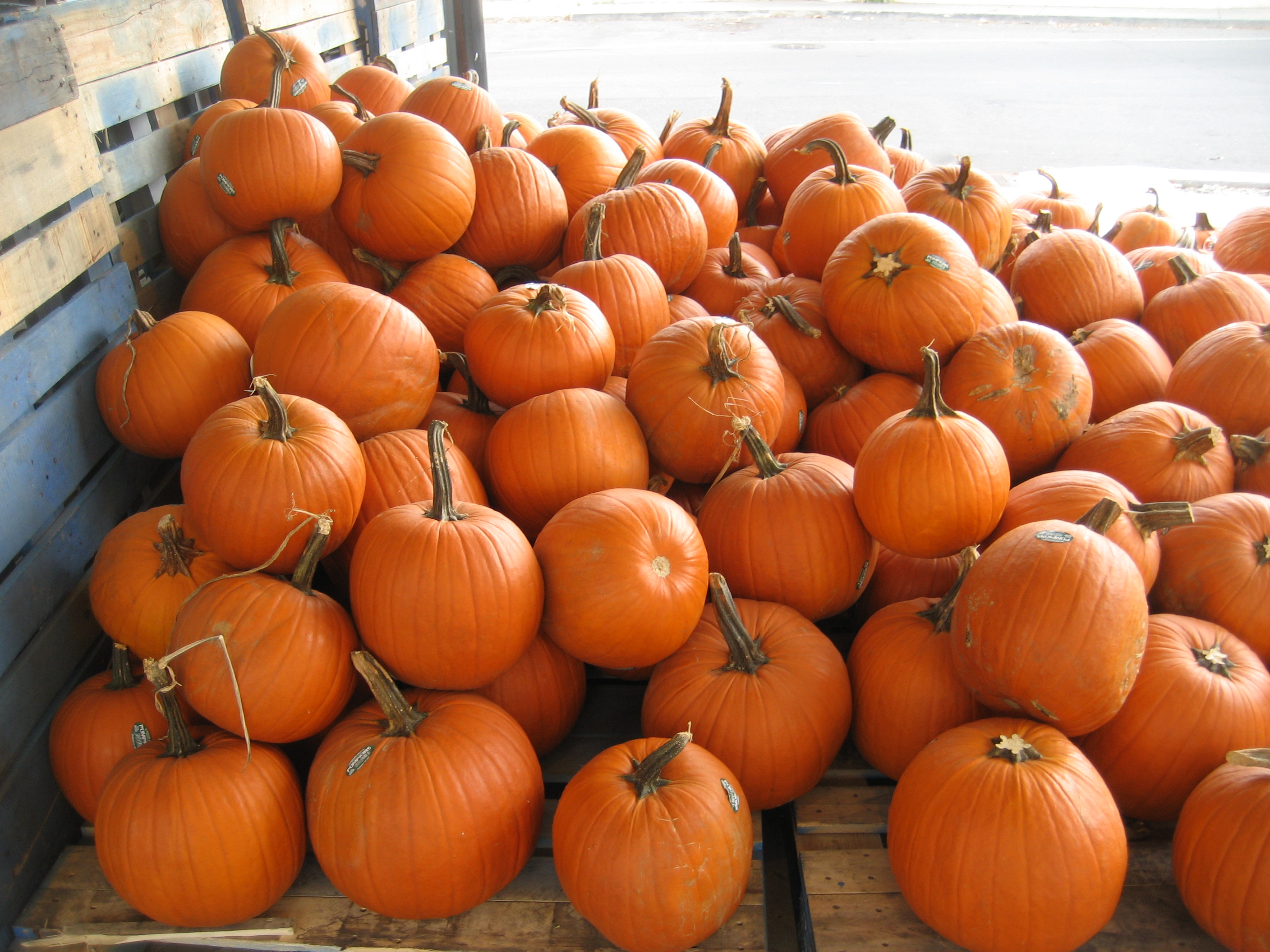
- Loofah, also spelled luffa, is a gourd in the Cucurbitaceae family, related to cucumber, melon, pumpkin, and squash.
- Young luffa fruits are eaten as vegetables in many Asian foodways, while mature dried fruits become the fibrous scrubbers sold as loofah sponges.
- A wet bathroom loofah can harbor bacteria or mold if it stays damp, but the plant itself is a useful natural fiber when dried, cleaned, and replaced responsibly.
Where Does Loofah Come From? (Origin & Botany)
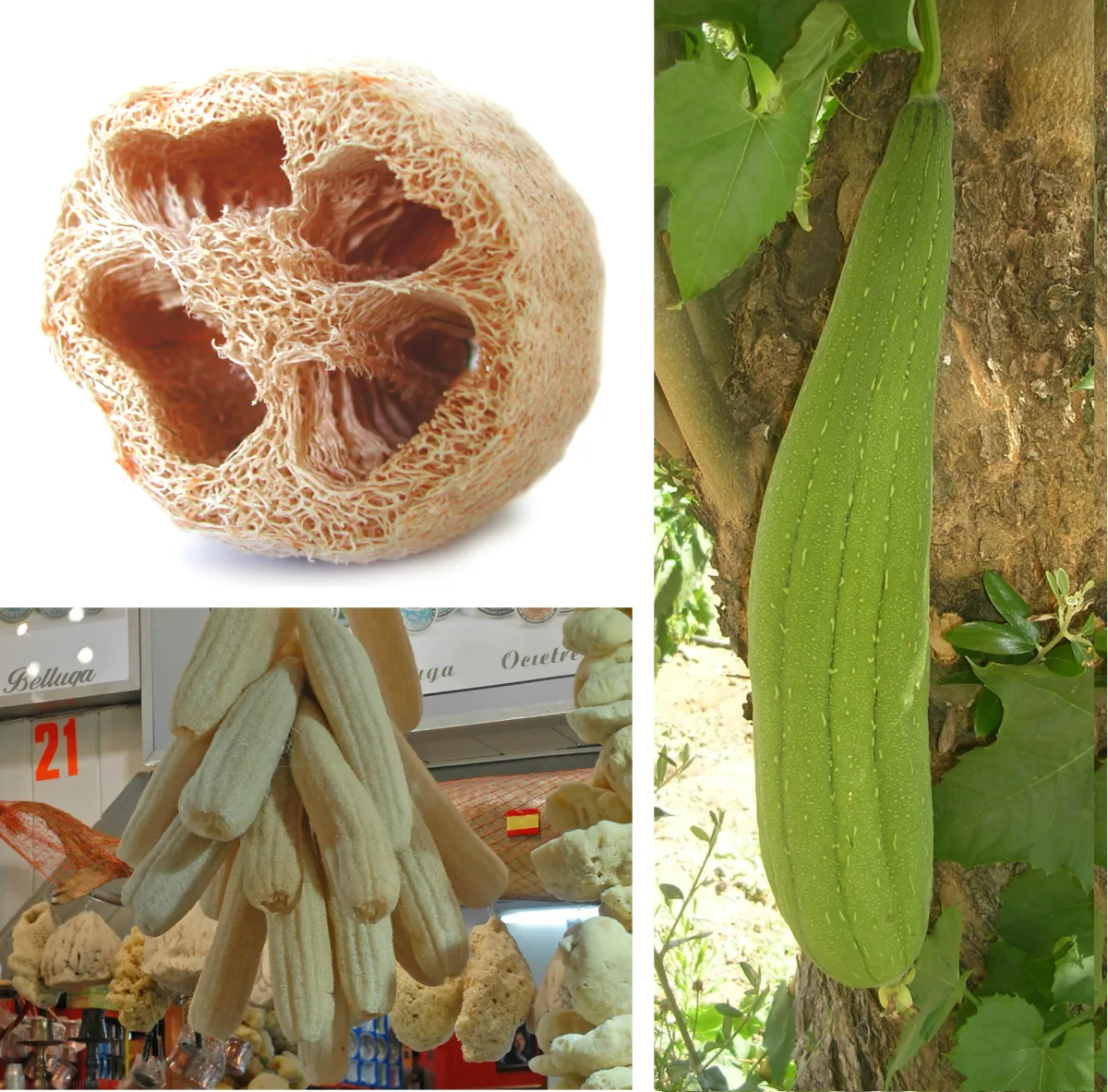
Loofah, also spelled luffa, is the fruit of climbing gourd vines in the genus Luffa, especially Luffa aegyptiaca and Luffa acutangula. It belongs to the Cucurbitaceae family, the same broad botanical family as cucumber, melon, pumpkin, squash, and many gourds [1][3]. The surprise is that a loofah is both food and fiber. When harvested young, the fruit is tender enough to cook as a vegetable. When left to mature, dry, and cure on the vine, its flesh breaks down around a tough internal network of fibers. After peeling, washing, and drying, that network becomes the natural scrubber sold as a loofah sponge [1][2].
Its likely center of early cultivation lies in South and Southeast Asia, where luffa gourds have long belonged to vegetable gardens, household cooking, and practical plant-fiber use. Loofah matters because it collapses categories: fruit, vegetable, tool, sponge, scrubber, and modern sustainability object.
Is a Loofah a Fruit or a Sponge?
The loofah question sounds like a riddle: is it a fruit or a sponge? Botanically, it is a fruit, because it develops from the flower of a vine and contains seeds. In everyday household language, loofah often means the dried fibrous interior of that mature fruit. Both meanings are correct, but they describe different stages of the same plant.
Young luffa fruits are green, soft, and cucumber-like inside. Mature fruits become dry, light, and fibrous, with flat dark seeds embedded inside the sponge-like structure [3]. This is why loofah is such a good food-history subject. A plant bred and grown as a gourd vegetable also became a cleaning technology. Its usefulness depends entirely on timing: early harvest for the kitchen, late harvest for the bath or sink.
From Garden to Kitchen: Cooking with Luffa Gourds
Young luffa is eaten across parts of South Asia, Southeast Asia, and East Asia, often under names such as sponge gourd, ridge gourd, angled luffa, Chinese okra, or local-language equivalents. Cooks peel or trim tender fruit and use it in stir-fries, soups, curries, stews, egg dishes, and vegetable braises. In Chinese home cooking, tender si gua is often stir-fried with softly scrambled eggs so the gourd releases a light, sweet broth around the curds. In South Asian kitchens, ridge gourd may be simmered into coconut-rich curries or cooked with lentils, spices, and garlic. Its mild flavor lets it absorb broth, ginger, fermented sauces, or coconut gravies.
Agricultural extension sources describe luffa as a tropical or warm-season vine with yellow flowers, tendrils, and elongated fruits [1][2][3]. In food history, that makes it part of the garden-gourd world rather than an exotic bathroom novelty. Before it became a packaged scrubber, loofah was a crop: grown on trellises, harvested by stage, and understood by cooks who knew the difference between tender and fibrous.
How Luffa Gourds Transform Into Natural Scrubbers
A mature loofah becomes useful because the dried fruit leaves behind a network of strong vascular fibers. Growers usually let the gourd mature and dry until the skin can be removed, then shake out seeds, wash away remaining pulp, and dry the fiber [1][2]. The result is porous, lightweight, abrasive enough to scrub, and biodegradable.
That fiber made loofah useful for bathing, dishwashing, cleaning, exfoliating, and craft work. In the 20th century, loofah sponges became common bathroom objects, sometimes detached from any awareness that they came from a vine. In the 21st century, that plant origin has become newly attractive. A loofah sponge can be framed as a natural alternative to plastic scrubbers, though its sustainability depends on cultivation, transport, use, and replacement habits rather than the word natural alone.
Are Natural Loofah Sponges Safe and Hygienic?
Loofah hygiene deserves a calm, accurate explanation. The dried plant fiber is not dangerous by itself. The problem is use conditions: a bathroom loofah that stays wet, warm, and full of soap residue and skin cells can support bacteria or mold. A 1994 Journal of Clinical Microbiology study found that loofah sponges could act as reservoirs for potentially pathogenic bacteria and recommended regular decontamination [4].
The practical lesson is simple rather than scary. Rinse a loofah well, dry it thoroughly between uses, keep it out of damp corners, avoid using it on broken or freshly shaved skin, clean it periodically, and replace it regularly. Today loofah is used as an edible gourd, garden curiosity, bath scrubber, dish scrubber, soap holder, craft material, and symbol of low-waste household culture. Its best story is not fear. It is the strange usefulness of a fruit that can feed you young and scrub your sink when old.
Historical Timeline
Luffa gourds are cultivated in South and Southeast Asian foodways as edible young vegetables and useful fiber plants
Young luffa fruits are cooked like gourds or cucumbers, while mature fruits are dried and peeled for fibrous household use
European botanists classify Luffa within the broader gourd family as global plant exchange expands botanical collections
Dried loofah sponges become common bath, dishwashing, and cleaning products in international markets
A Journal of Clinical Microbiology study documents that damp loofah sponges can support bacterial growth if not cleaned and dried
Loofah gains renewed attention as a biodegradable plant fiber in sustainability, gardening, and low-waste household culture
Evidence Explorer
Review the Source Trail
Inspect the article sources, scoped review credits, and copyable citation details without leaving the page.
Sources Listed
Comments
Community comments are coming soon. Check back later to join the discussion!