💡 Key Takeaways
- The olive tree (Olea europaea) was first domesticated in the eastern Mediterranean around 6,000 BCE, in the region spanning modern Syria, Turkey, and Palestine.
- Minoan Crete (3000-1100 BCE) was the first great olive oil civilization, with massive storage jars (pithoi) found in palace complexes.
- The olive branch remains the universal symbol of peace.
Where did olive oil originate?
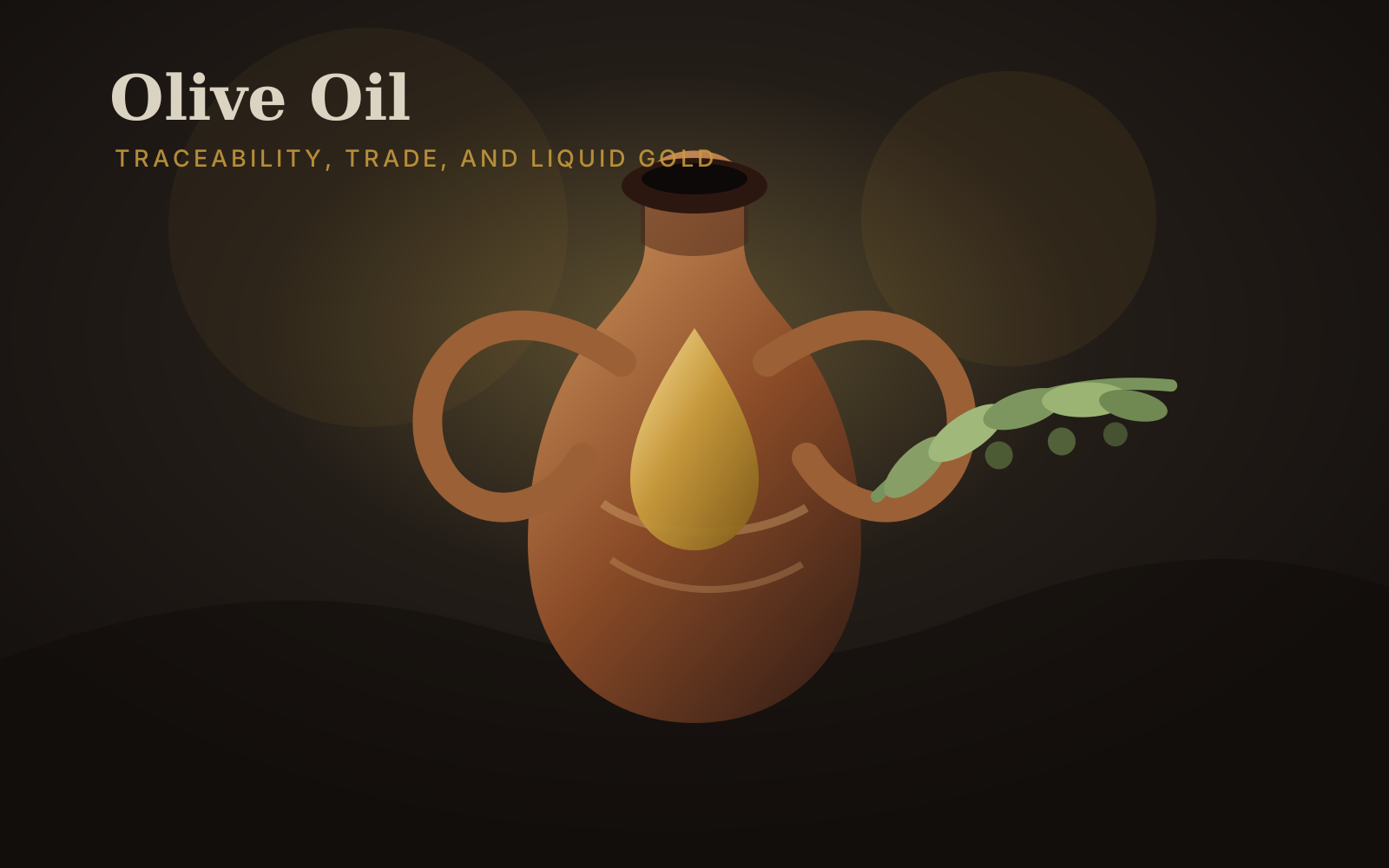
The olive tree (Olea europaea) was first domesticated in the eastern Mediterranean around 6,000 BCE, in the region spanning modern Syria, Turkey, and Palestine. Wild olives grew throughout the Mediterranean basin, but it was in this cradle that humans first learned to cultivate them systematically and extract their precious oil [1].
Olive oil was far more than food — it was medicine, fuel for lamps, a base for perfumes, a lubricant for machinery, and a sacred anointing substance. The very word "Messiah" means "the anointed one," referring to olive oil [2].
How did olive oil evolve over time?
Minoan Crete (3000-1100 BCE) was the first great olive oil civilization, with massive storage jars (pithoi) found in palace complexes. The Greeks made olive oil central to their identity — Athena won patronage of Athens by gifting the city an olive tree. Olympic victors received amphorae of premium olive oil as prizes [1].
Rome industrialized olive oil production on a massive scale. The Monte Testaccio in Rome is an artificial hill made entirely of broken olive oil amphorae — an estimated 53 million vessels, mostly from Spain. Roman armies carried olive oil for cooking, lighting, and hygiene [2].
The Arab conquests spread advanced olive cultivation techniques across North Africa and into Spain, paving the way for famous regional specialties like the spice-infused harissa chili paste in Tunisia. Medieval monasteries maintained olive groves throughout southern Europe. When Spain colonized the Americas, olive trees traveled with them to California, Mexico, Peru, and Argentina [3].
Why is olive oil culturally important?
The olive branch remains the universal symbol of peace. In Judaism, Christianity, and Islam, olive oil holds sacred significance. Greek, Italian, Spanish, and Middle Eastern cuisines are unimaginable without it. The Mediterranean diet, recognized by UNESCO as an Intangible Cultural Heritage, centers on olive oil as its primary fat source [1].
Today, the global olive oil market exceeds $16 billion. Extra virgin olive oil — cold-pressed, unrefined — is prized for its health benefits, including heart-healthy monounsaturated fats and powerful antioxidants. Modern science continues to validate what Mediterranean cultures have known for millennia [2].
In the news
Recent 2026 food-culture notes that reference this article.
Historical Timeline
Olive trees first cultivated in the eastern Mediterranean
Olive oil production becomes central to Minoan Crete economy
Olympic victors crowned with olive wreaths
Rome imports millions of liters of olive oil from Spain and North Africa
Spanish colonists bring olive trees to the Americas
Evidence Explorer
Review the Source Trail
Inspect the article sources, scoped review credits, and copyable citation details without leaving the page.
Reviewed for Stated Scope
Sources Listed
Comments
Community comments are coming soon. Check back later to join the discussion!