💡 Key Takeaways
- Black pepper (Piper nigrum) is native to the Malabar Coast of Kerala in southwestern India, where it has been cultivated for at least 4,000 years.
- Pepper reached Egypt by at least 1200 BCE — peppercorns were found in the mummified remains of Ramesses II.
Where did pepper originate?
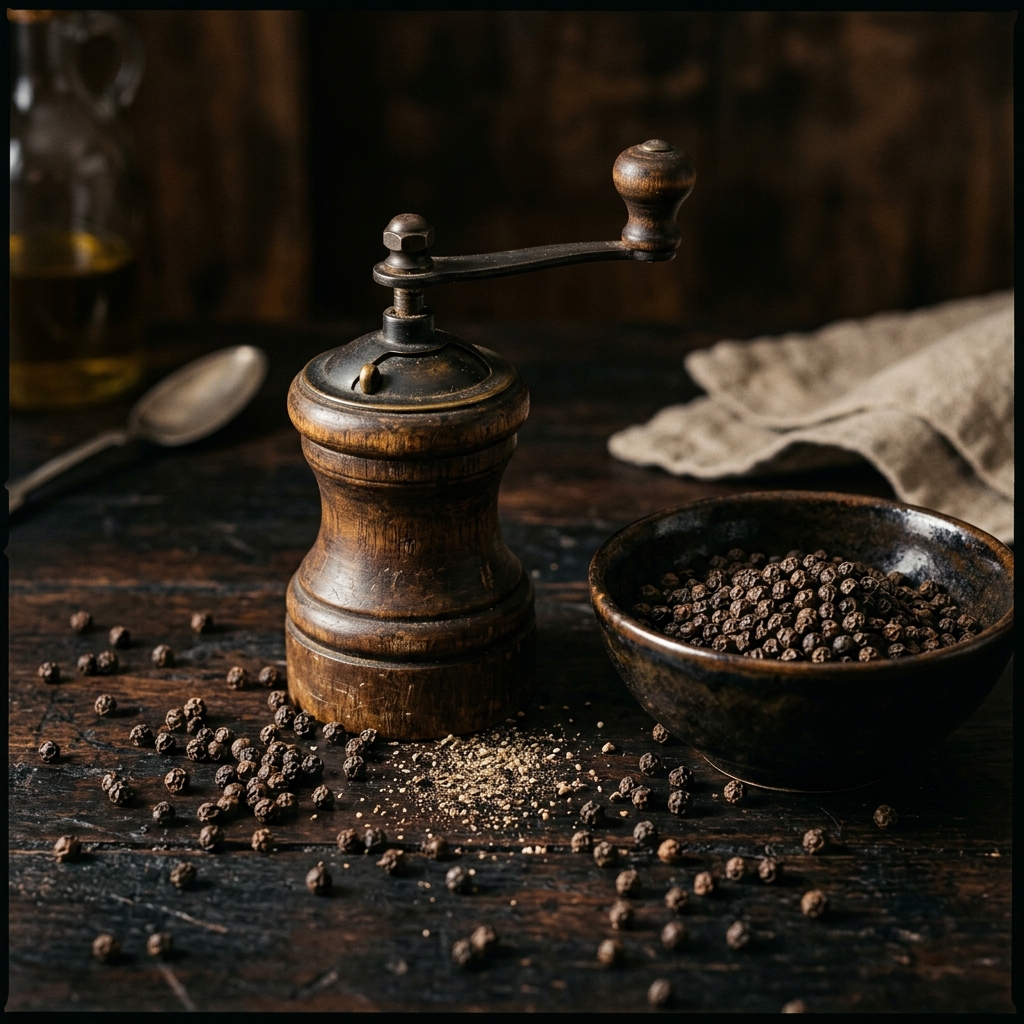
Black pepper (Piper nigrum) is native to the Malabar Coast of Kerala in southwestern India, where it has been cultivated for at least 4,000 years. The tropical vine thrives in the warm, humid climate, producing clusters of small berries that are dried to become the wrinkled black peppercorns we know today [1].
Pepper was India's most valuable export for millennia. Ancient Tamil literature refers to pepper as "black gold," and the Malabar Coast was known to Roman traders as the "Pepper Coast." The spice's pungent heat, caused by the compound piperine, made it irresistible to cultures worldwide.
How did pepper evolve over time?
Pepper reached Egypt by at least 1200 BCE — peppercorns were found in the mummified remains of Ramesses II. Greek and Roman traders sailed monsoon winds across the Indian Ocean to buy pepper directly from Indian merchants. The Roman Empire consumed pepper voraciously; Pliny the Elder complained about the enormous sums flowing to India for spices [1].
When Rome fell, pepper became even more scarce and precious in Europe. Medieval merchants traded peppercorns individually. The phrase "peppercorn rent" — meaning a nominal payment — reflects how even a single peppercorn had recognized value. Venetian and Genoese merchants grew fabulously wealthy controlling the pepper trade through Middle Eastern intermediaries [2].
The desire to bypass these middlemen and access pepper directly was a primary motivation for the Age of Exploration. Vasco da Gama's 1498 voyage around Africa to India was explicitly a pepper mission. The Portuguese, then the Dutch, and finally the British fought wars over pepper-producing regions.
Why is pepper culturally important?
Pepper is the world's most traded spice, found on virtually every dinner table globally. It was the original reason Europeans sought a sea route to Asia, directly leading to the Age of Exploration, colonialism, and the modern global economy.
In Ayurvedic medicine, pepper is considered a warming spice that aids digestion. Traditional Chinese medicine uses white pepper for similar purposes. In cuisine, pepper is universal — one of the few spices that crosses virtually every culinary tradition.
Modern Pepper
Today, Vietnam is the world's largest pepper producer, followed by Indonesia, India, and Brazil. The global pepper market exceeds $4 billion annually. Specialty peppers — Tellicherry, Kampot, Sarawak, and long pepper — have joined single-origin coffee and chocolate as gourmet obsessions.
Scientists have discovered that piperine enhances the bioavailability of other nutrients, particularly curcumin in turmeric, by up to 2,000%. This ancient spice continues to reveal new properties and applications in the modern world.
In the news
Recent 2026 food-culture notes that reference this article.
Historical Timeline
Pepper cultivated in Kerala, India
Pepper traded along Indian Ocean routes
Ancient Greeks encounter pepper via Alexander the Great
Alaric demands 3,000 pounds of pepper as ransom for Rome
Vasco da Gama reaches India seeking pepper and spices
Dutch East India Company dominates pepper trade
Evidence Explorer
Review the Source Trail
Inspect the article sources, scoped review credits, and copyable citation details without leaving the page.
Reviewed for Stated Scope
Sources Listed
Comments
Community comments are coming soon. Check back later to join the discussion!