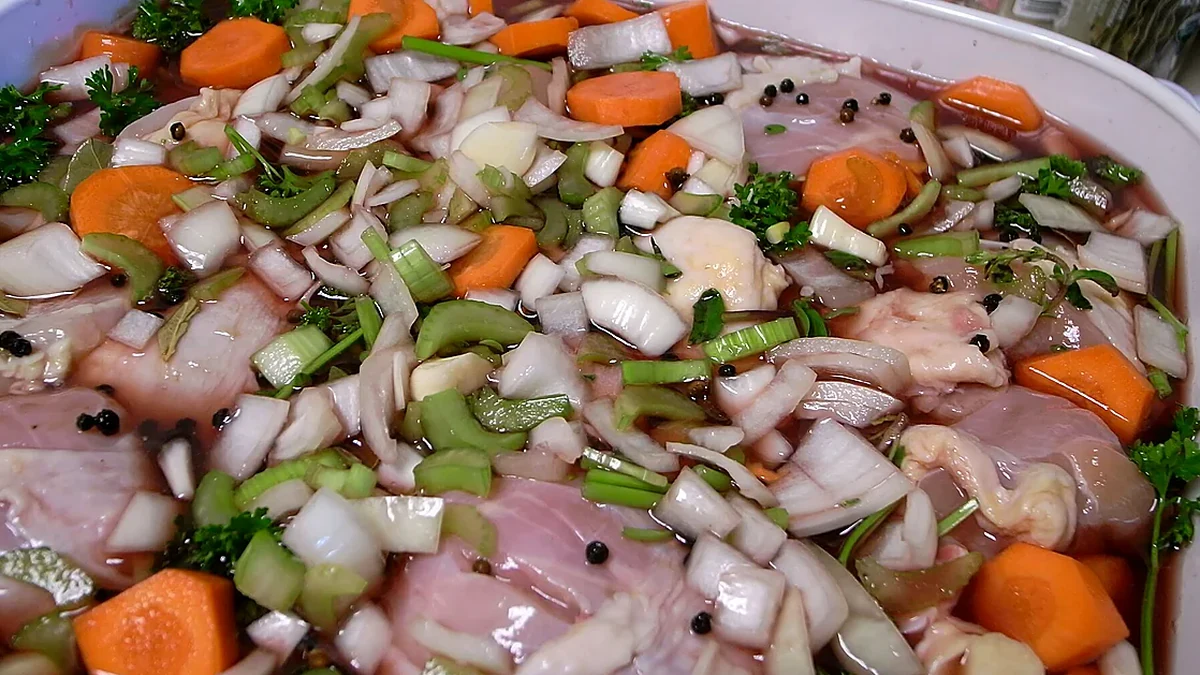
Dinner recipe
Coq Au Vin Recipe
A practical, source-aware recipe for coq au vin, with the history kept close to the method.
Jump to recipeDeveloped by the Recipe Desk. This original editorial recipe uses measured ingredients, explicit timing and yield, allergen notes, storage guidance, and step-by-step visual cues. Use the stated doneness and texture cues because ingredients, ovens, and kitchen equipment vary.
Ingredients
- 2 tablespoons vegetable oil, divided
- 5 skin-on, bone-in chicken legs (thigh and drumstick)
- Kosher salt and freshly ground black pepper
- 12 ounces thick-cut bacon, cut crosswise into 1/3-inch slices
- 3 carrots, peeled, chopped
- 3 celery stalks, minced
- 1 onion, minced
- 4 cups dry red wine, such as Burgundy, divided
- 1/2 cup tomato paste
- 1 quart low-sodium chicken broth
- 12 sprigs thyme
- 6 sprigs rosemary
- 1 pound assorted wild mushrooms, such as oyster and maitake, cleaned, cut into bite-size pieces (about 8 cups)
Method
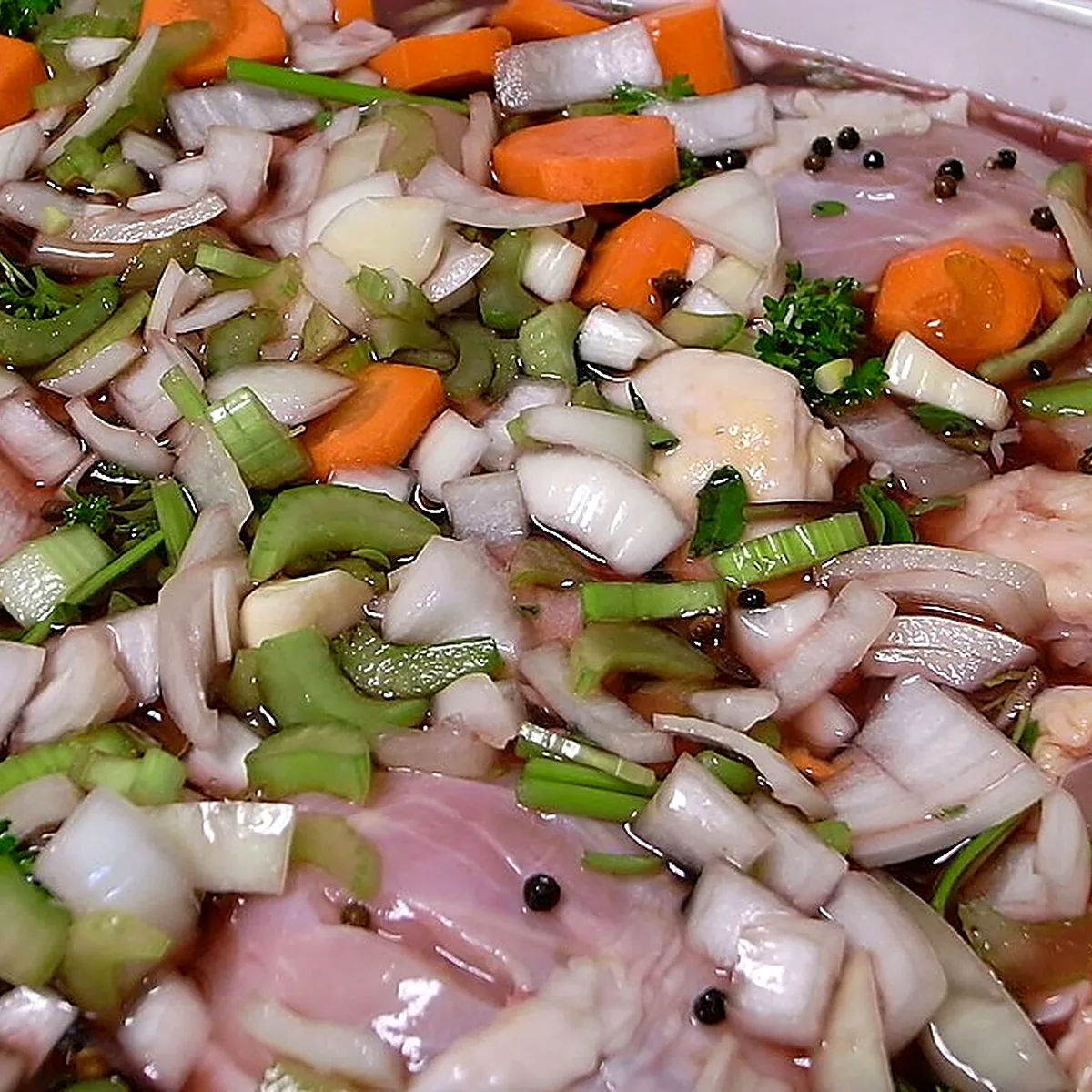
Step 1: Step 1 for Coq Au Vin. 1Step 1
Preheat oven to 350°. Heat 1 tablespoon oil in an ovenproof pot over medium-high heat. Season chicken with salt and pepper. Cook chicken in batches until browned, 5-6 minutes per side. Transfer to a plate.
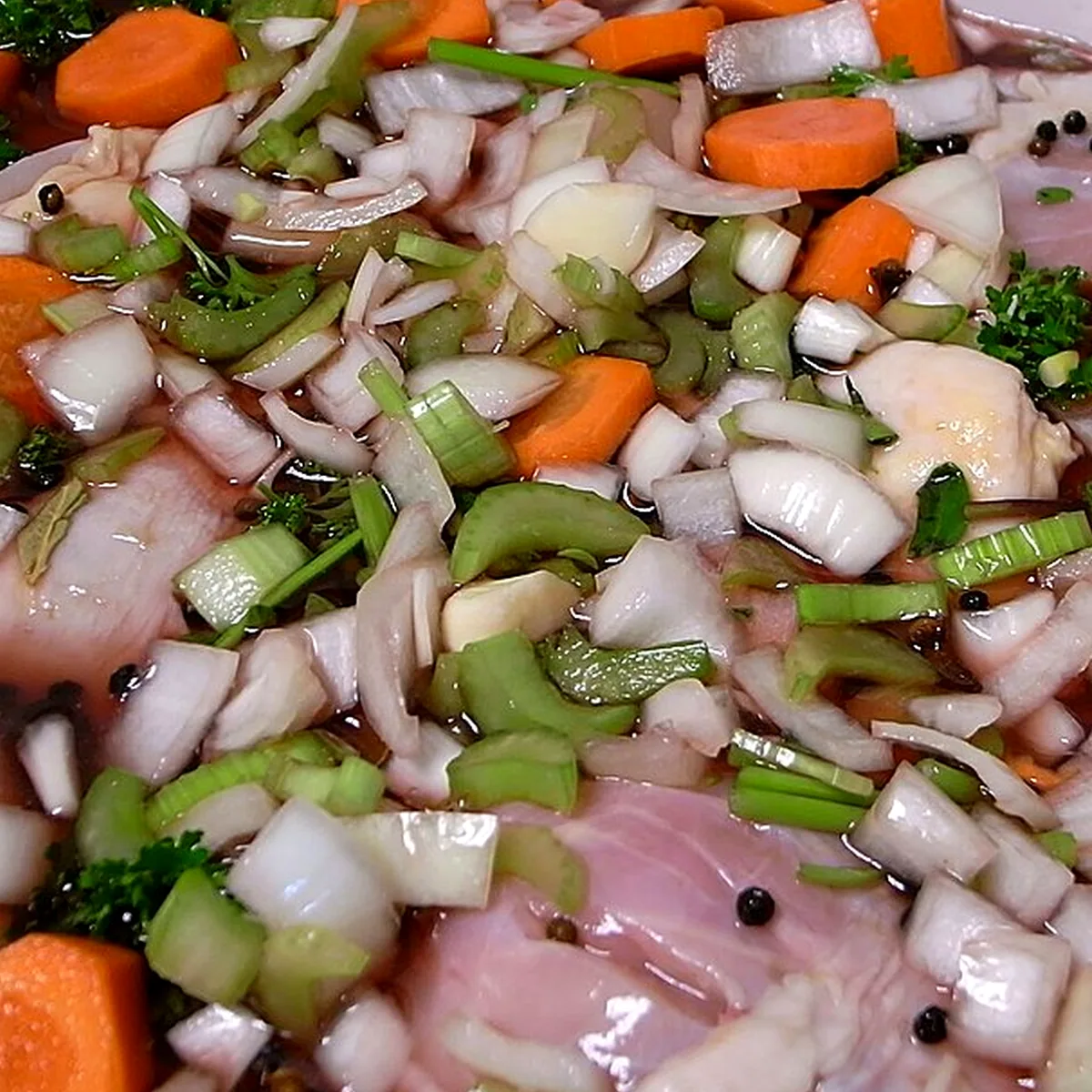
Step 2: Step 2 for Coq Au Vin. 2Step 2
Add bacon to pot; cook until rendered. Add carrots, celery, and onion; cook until onion is translucent, 7-8 minutes. Stir in 1 cup wine and tomato paste; simmer for 2-3 minutes. Add remaining 3 cups wine. Boil until wine is reduced by half, 15-20 minutes. Return chicken to pot.
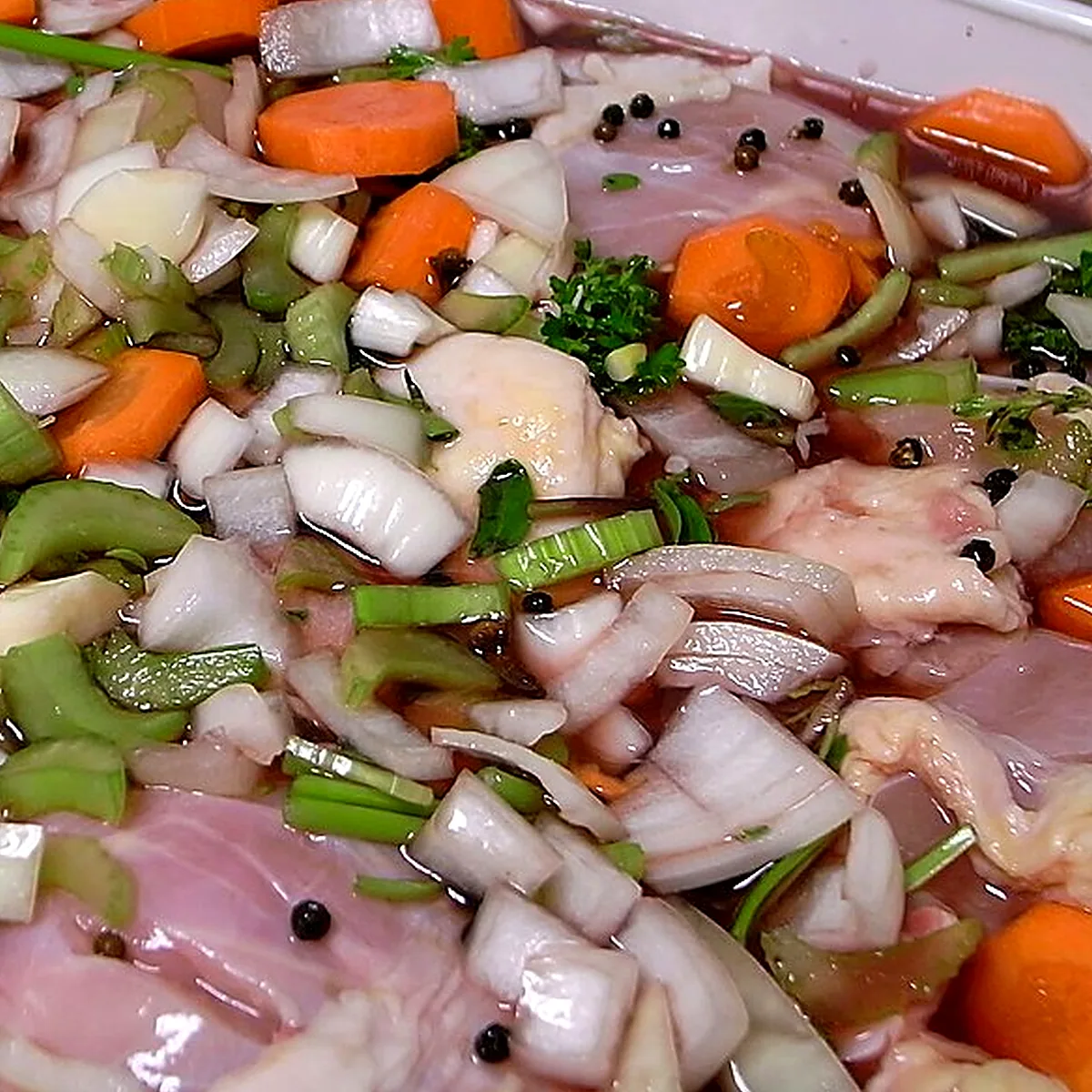
Step 3: Step 3 for Coq Au Vin. 3Step 3
Add broth. Tie thyme and rosemary sprigs together; add to pot. Bring to a boil and cover pot. Transfer pot to oven and braise until chicken is tender, about 1 1/4 hours.
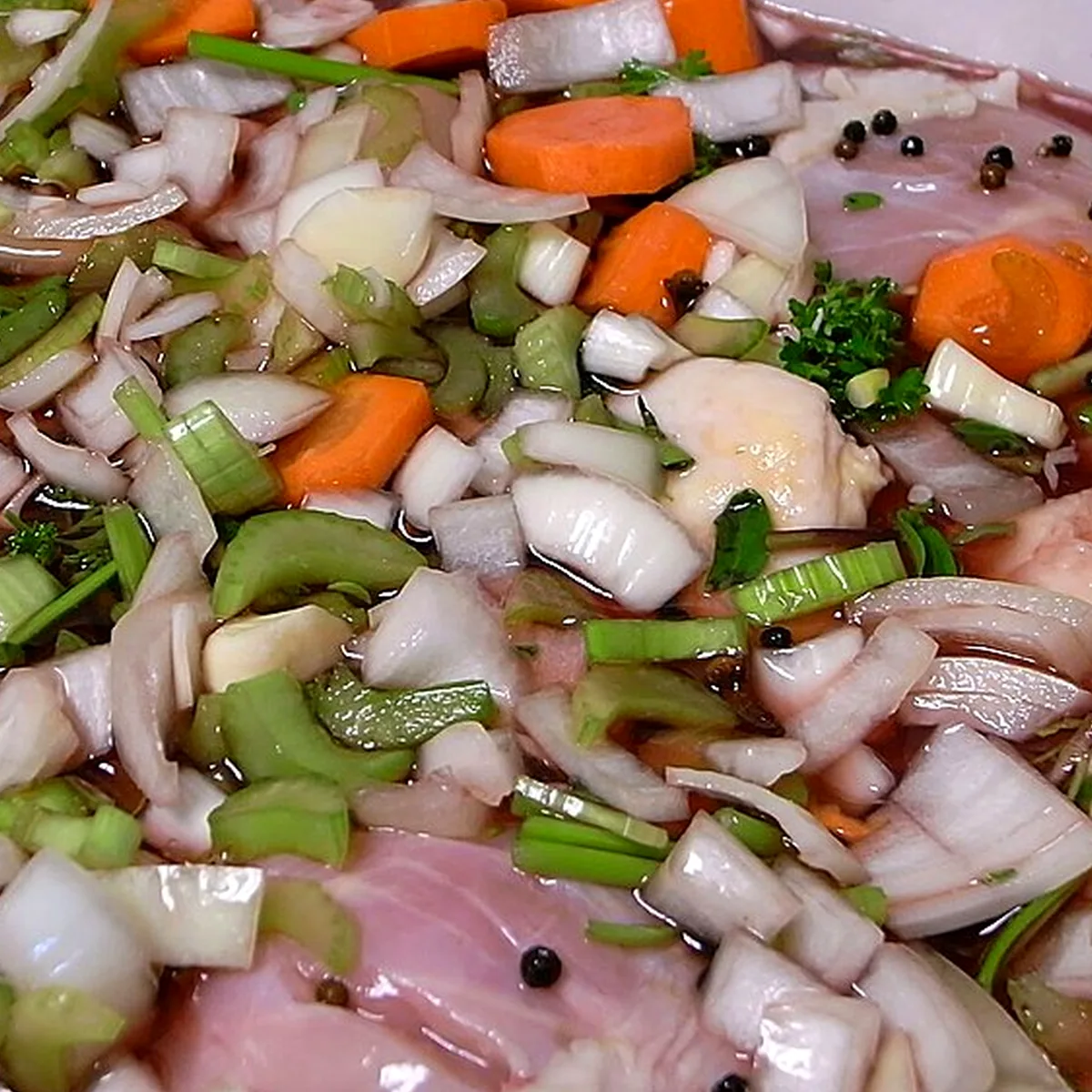
Step 4: Step 4 for Coq Au Vin. 4Step 4
Meanwhile, heat 1 tablespoon oil in a large pot over medium-high heat. Add mushrooms; sauté until browned, about 5 minutes.
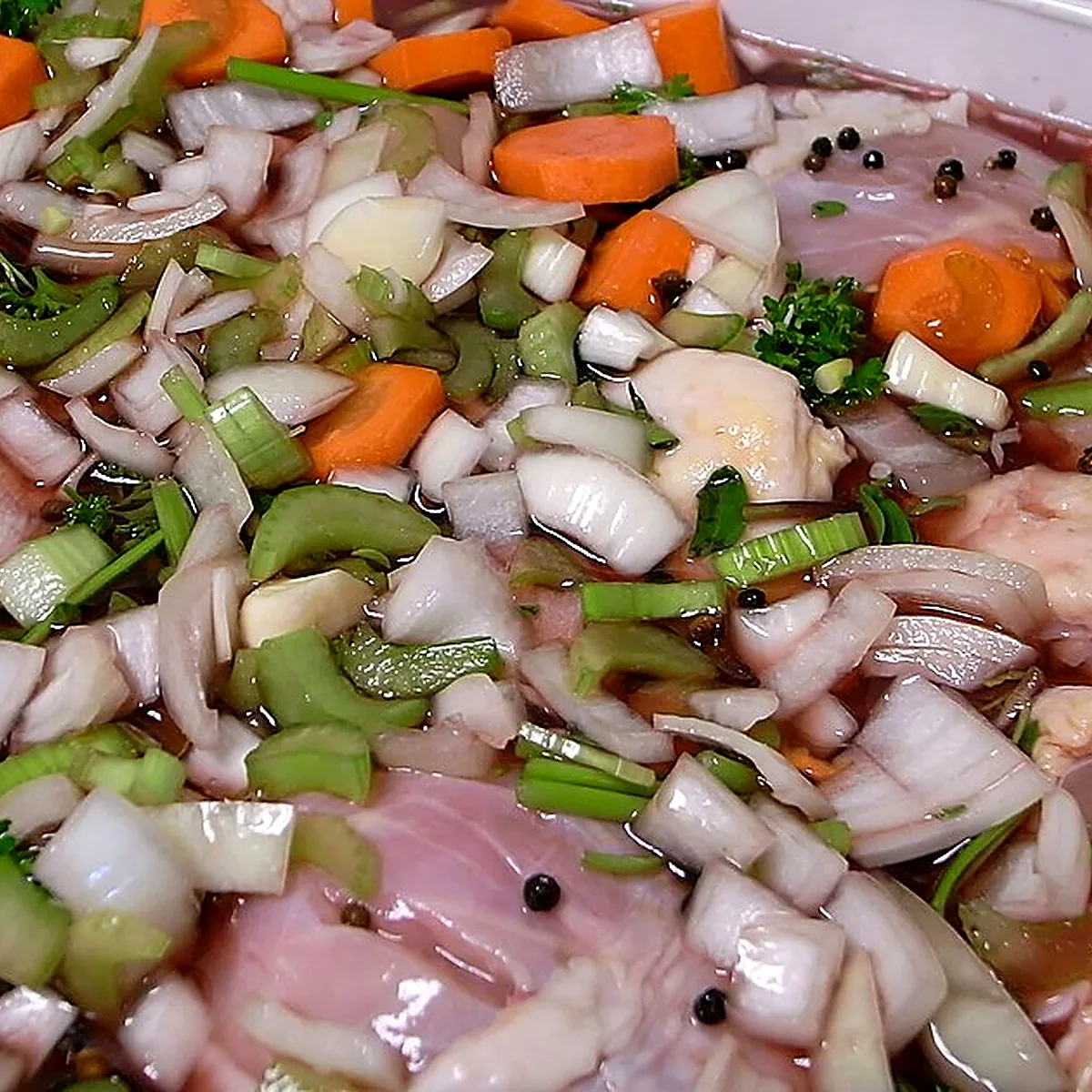
Step 5: Step 5 for Coq Au Vin. 5Step 5
Transfer chicken from sauce to pot with mushrooms; keep warm. Simmer sauce over medium heat until reduced by 1/3, about 20 minutes. Season with salt and pepper.
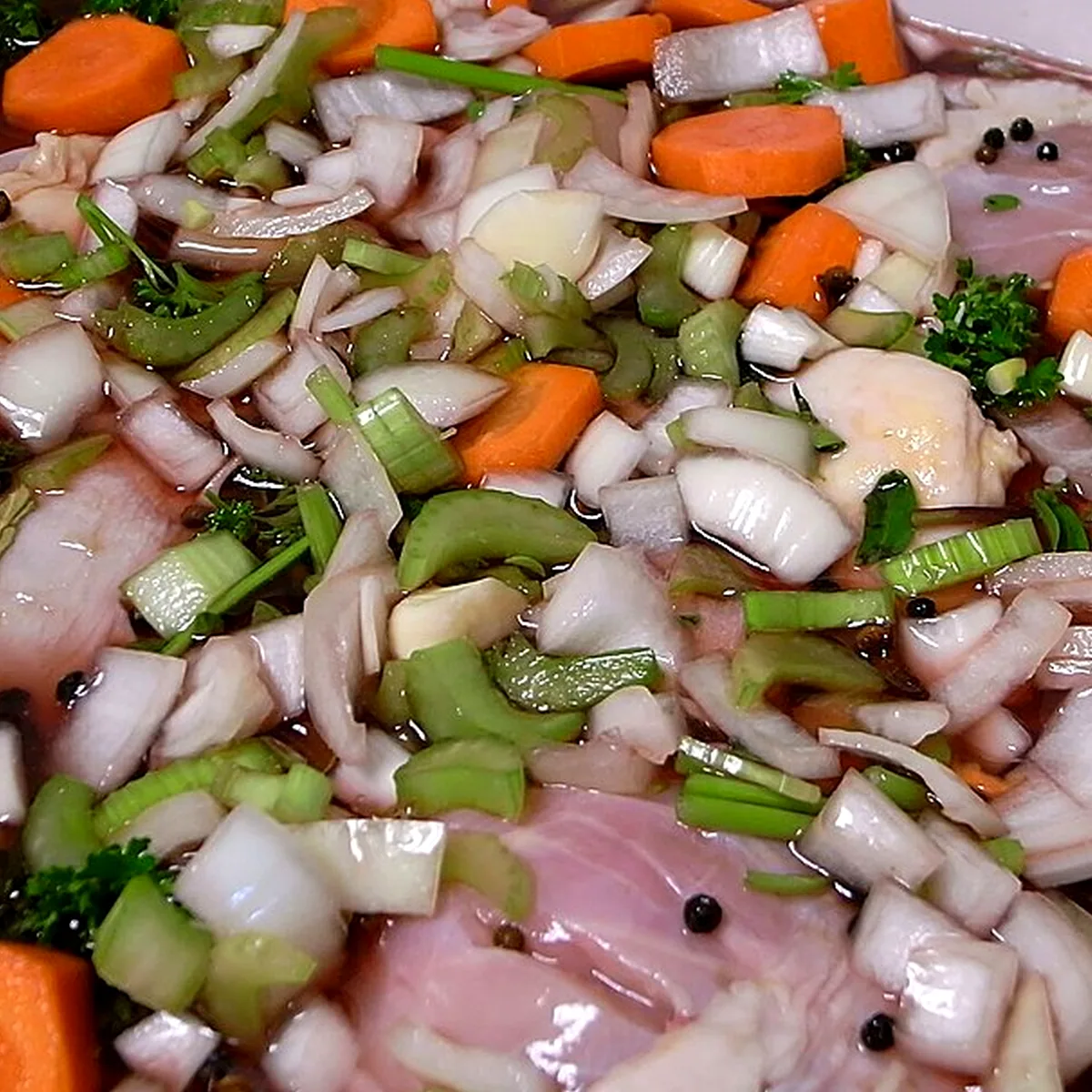
Step 6: Step 6 for Coq Au Vin. 6Step 6
Add mushrooms and chicken to sauce. DO AHEAD Coq au vin can be made 3 days ahead. Chill uncovered until cold. Cover; keep chilled. Rewarm before serving.
Why this dish belongs here
The history behind the method
This dinner builds on the history of from jungle fowl to the world's most eaten meat, linking the dish to chicken’s longer story in food culture.