
The Dubai Pistachio Chocolate Bar Has 500 Years of Ottoman Roots
The viral 2026 Dubai pistachio knafeh chocolate bar links social-commerce hype to centuries of Ottoman and Persian pistachio dessert culture.
The 2026 viral Dubai pistachio knafeh chocolate bar looks like a social-commerce one-off, but it sits on centuries of Ottoman and Persian pistachio dessert culture — baklava, halva, knafeh — and a long trade in pistachios from Iran and the Levant.
What's happening
The Dubai pistachio knafeh chocolate bar became one of the defining viral foods of 2026, driven by social commerce and a pistachio-cream filling that reads as both luxury and novelty. 2026 trend coverage names pistachio as a flavor of the year [1], and the bar turned a regional confection into a global social-media product.
The history behind it
Pistachios are native to West Asia and Central Asia, and the nut has a deep dessert history across the Ottoman and Persian worlds — in baklava, halva, and knafeh, the cheese-and-syrup pastry the viral bar references [2]. The trade in pistachios from Iran and the Levant shaped Mediterranean and South Asian sweets for centuries [3]. The 2026 bar did not invent pistachio desserts; it put one in a chocolate format and a TikTok feed.
Why it matters
The food-history value is that a 2026 social-commerce object has a 500-year culinary lineage behind it. The "new" viral bar is a packaging of an old pistachio dessert tradition. For the full history, see the Dubai pistachio chocolate, pistachio, chocolate, and sugar articles below.
Why pistachio became luxury
Pistachios were not always a luxury nut. Their 2026 premium is partly viral and partly a real supply squeeze. Pistachio trees are alternate-bearing, meaning a heavy harvest one year is followed by a light one the next, and they are slow to mature and drought-sensitive, so supply cannot ramp up quickly when demand spikes. At the same time, water stress in California and weather pressure on the Gaziantep groves in Turkey, the source of the prized Antep pistachio used in the Dubai chocolate, have squeezed yields just as the viral chocolate sent demand through the roof. Pistachio cream is also far costlier per kilogram than hazelnut or peanut. The luxury, in short, is a viral wave landing on a crop that cannot easily scale. For the full histories of the pistachio, chocolate, and sugar, read below.
📖 Read the full history
Trend Desk notes are timely. The durable history behind each trend lives in these articles and collections.
Dubai Pistachio Chocolate
The pistachio cream, knafeh, and kataifi chocolate bar from FIX Dessert Chocolatier that went viral on TikTok in 2024 and drove a global pistachio shortage
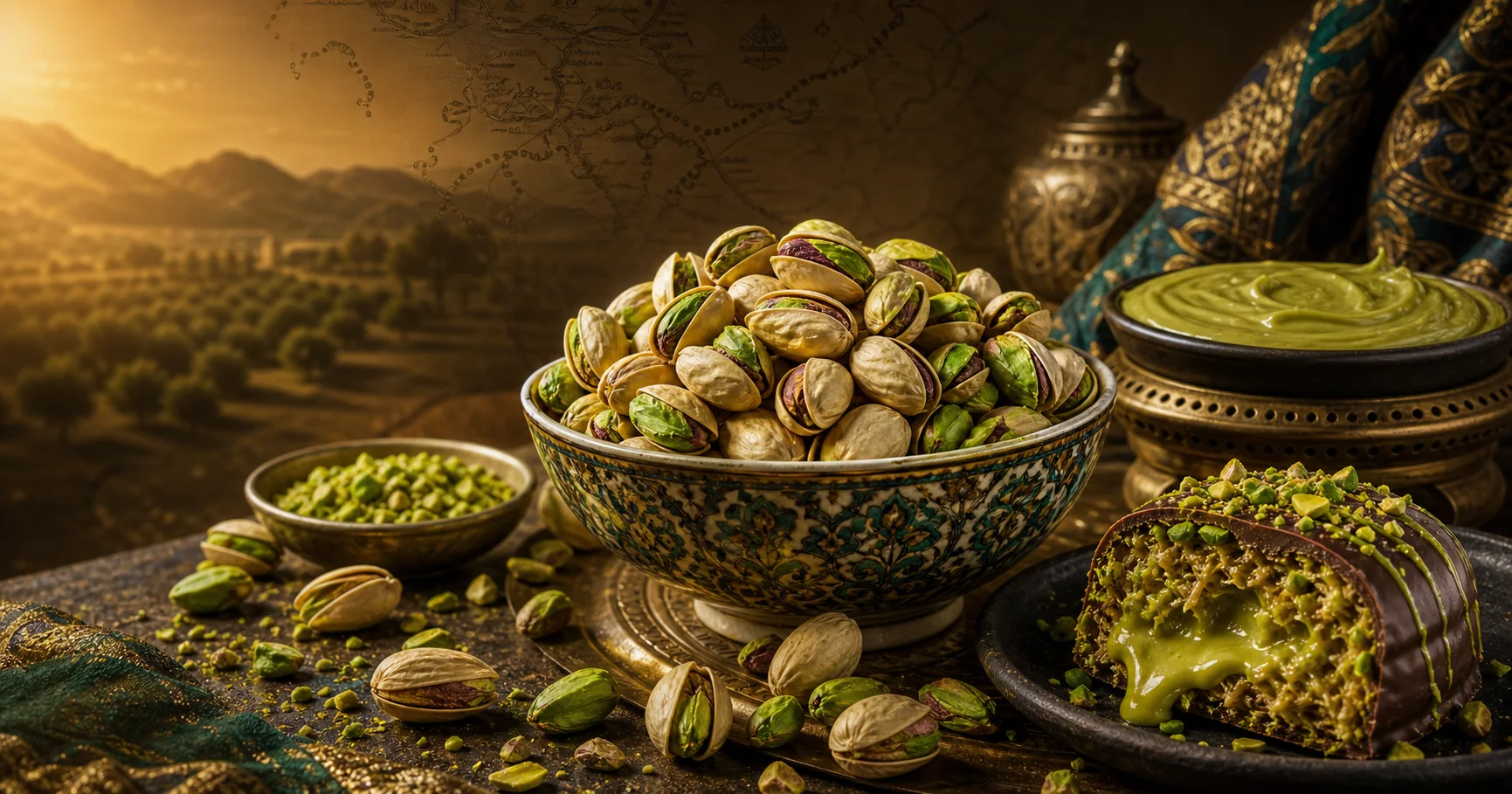
Pistachio
The ancient luxury nut that moved from Iranian and Central Asian orchards into baklava, gelato, American farms, Dubai chocolate, and modern scarcity culture
Chocolate
The cacao drink that moved from Amazonian domestication and Mesoamerican ritual into colonial sugar, industrial bars, and global luxury
Sugar
The sweet commodity that turned cane into empire, labor, and daily habit
Comments
Community comments are coming soon. Check back later to join the discussion!