💡 Key Takeaways
- Pistachio history begins in ancient dryland orchard zones around Iran, Central Asia, and the eastern Mediterranean rather than in modern dessert trends.
- Its color, cost, labor, and trade routes helped make pistachio a luxury nut in sweets, pastries, ice creams, and gift foods.
- Modern pistachio demand is shaped by California and Iranian production, water pressure, export markets, branding, and viral desserts such as Dubai chocolate.
- The best pistachio story is not only taste; it is scarcity, color psychology, orchard economics, and luxury culture.
What Is a Pistachio?
A pistachio is the edible seed of a hardy dryland tree, prized for its green color, mild sweetness, fat, aroma, and texture. In food history, it belongs with almond, dates, sugar, and vanilla: ingredients that turn preservation, trade, and dessert into status.
Unlike many viral foods, pistachio did not become interesting yesterday. Its modern popularity rests on ancient orchard skill, dry climates, long-distance trade, confectionery labor, and the way a small green nut can make sweets look rare, expensive, and deliberate.
Persian Orchards and Dryland Luxury
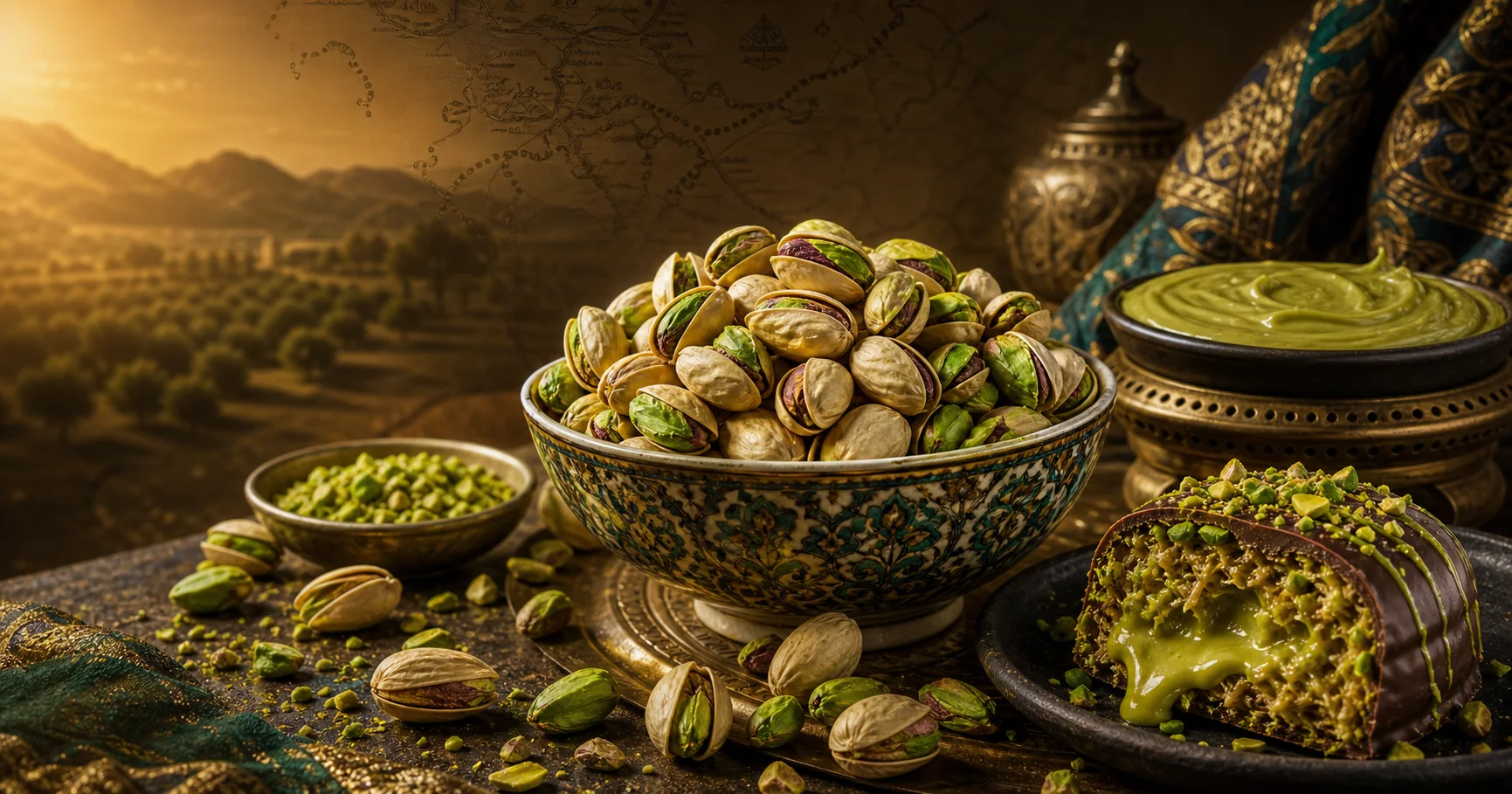
Pistachio history is strongly tied to Iran, Central Asia, and the eastern Mediterranean, where dry climates and orchard knowledge made the tree valuable [3][4]. It was not a grain for feeding armies or a cheap staple for calories. It was a tree crop that required patience, land, climate, harvest labor, and trade. That made it well suited to luxury food systems.
In Persian and wider Islamic food cultures, pistachios joined almonds, rosewater, honey, sugar, saffron, dates, rice, and spices in dishes where color and aroma mattered. The nut could appear in rice, sweets, confections, and festive foods. Its value came from taste, but also from scarcity and presentation.
From Baklava to Gelato
Pistachio traveled well because it could carry luxury into many formats. In Mediterranean and Middle Eastern pastry, chopped pistachios gave sweets color, fat, crunch, and expense. In ice cream and gelato, pistachio became a flavor that signaled craft because real pistachio is harder and costlier than simple vanilla or sugar flavoring [5].
This matters for modern food marketing. Pistachio is rarely neutral. It makes a dessert feel premium. A croissant, chocolate bar, latte, gelato, or cake can become more fashionable when green pistachio cream is visible inside it.
Green Gold and Modern Shortages
Modern pistachio supply is shaped by Iran, the United States, Turkey, and other producing regions, with water, climate, export restrictions, harvest cycles, and demand all affecting price. The Guardian reported in 2025 that the viral Dubai chocolate trend helped intensify pistachio demand and shortage concerns [1]. Good Housekeeping's 2026 trend reporting also identified pistachios as rising in modern food culture [2].
That is why pistachio is a perfect case of old luxury meeting new algorithms. The tree is ancient, but the demand spike is digital. A nut that once marked elite pastry now marks viral scarcity.
How Pistachio Is Used Today
Today pistachio appears in baklava, maamoul, nougat, halva, gelato, ice cream, chocolate bars, croissants, cookies, cakes, lattes, spreads, pestos, rice dishes, and luxury gift boxes. Its modern rise is tied to color as much as flavor. Bright green cream looks instantly recognizable on a phone screen.
For The Foods That Shaped Us, pistachio connects ancient orchard systems, Persian and Mediterranean dessert culture, chocolate, sugar, global supply chains, and the viral luxury economy. It is not just a nut. It is an edible signal of scarcity.
In the news
Recent 2026 food-culture notes that reference this article.
Historical Timeline
Pistachios are cultivated and gathered across dryland zones connected to Iran, Central Asia, and the eastern Mediterranean
Pistachios move through Persian, Mediterranean, and Islamic foodways as costly nuts for sweets, rice dishes, and elite tables
Pistachios become important in pastry and confectionery traditions, including baklava-like sweets and nut-filled desserts
California pistachio production expands and reshapes global supply alongside long-standing Iranian production
Dubai chocolate, pistachio cream, and green dessert aesthetics push pistachio into viral luxury culture and shortage headlines
Evidence Explorer
Review the Source Trail
Inspect the article sources, scoped review credits, and copyable citation details without leaving the page.
Reviewed for Stated Scope
Sources Listed
Comments
Community comments are coming soon. Check back later to join the discussion!