
U.S. purchase guide

Which Vanilla Extract Should You Buy? Pure vs Imitation in the U.S.

Three U.S.-available pure vanilla extracts compared by alcohol base, bean origin, fold strength, unit price per ounce, and baking suitability.
Published Updated Market: United StatesBy
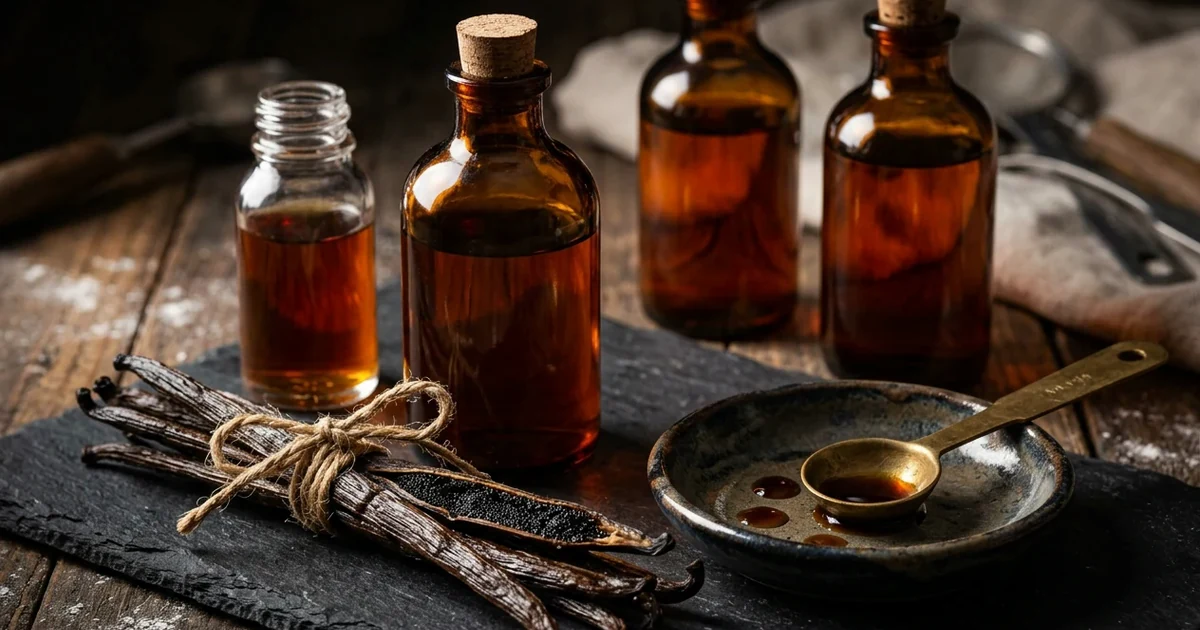
Three unlabelled glass bottles of dark amber vanilla extract beside a bundle of cured Bourbon vanilla beans and a tasting dish
Pure vanilla extract in the U.S. requires at least 35% alcohol and 13.35 ounces of vanilla beans per gallon under federal standard 21 CFR 169.175. Image: The Foods That Shaped Us Research Desk. Image terms. Request permission.

Purchase verdict

For baking and pastry applications that benefit from single-origin bean complexity and cold extraction, Nielsen-Massey Madagascar Bourbon is the most detailed documented fit in this comparison. McCormick offers the lowest unit price per ounce among conventional grocery store options for everyday baking, while Simply Organic provides a certified organic formulation without added sugar. These are label-based distinctions, not a blind taste ranking. Pure vanilla extract is not interchangeable with imitation flavoring, vanilla flavor, vanilla paste, or whole cured beans, and imported products containing coumarin or tonka bean extractives do not meet United States legal identity standards.

Track this category through time

Quick choices

Observed prices are U.S. snapshots from August 30, 2026. Seller links are direct and non-affiliate.

Product choices, documented use, observed U.S. price, package size, unit price, and seller
ProductDocumented fitObserved priceSeller
Nielsen-Massey Madagascar Bourbon Pure Vanilla ExtractSingle-fold pure vanilla extract in 35% alcohol; 8 fl oz bottleFor bakers and pastry cooks seeking a Madagascar-origin pure vanilla extract with cold-extraction processing claims and stated bean origin.$37.958 fl oz$4.74 per fl ozAvailable when checkedCheck Nielsen-MasseyVerified 2026-08-30
McCormick All Natural Pure Vanilla ExtractSingle-fold pure vanilla extract in 35% alcohol; 4 fl oz bottleFor an everyday pantry vanilla extract widely available in U.S. grocery aisles with a lower total package price point for standard home baking.$14.494 fl oz$3.62 per fl ozAvailable when checkedCheck McCormickVerified 2026-08-30
Simply Organic Madagascar Pure Vanilla ExtractCertified USDA Organic single-fold vanilla extract; 4 fl oz bottleFor shoppers seeking third-party certified organic Madagascar vanilla extract with no added sugar in the formulation.$18.994 fl oz$4.75 per fl ozAvailable when checkedCheck Simply OrganicVerified 2026-08-30

Where to buy in the U.S.

These direct, non-affiliate seller pages were checked on August 30, 2026. Stock, shipping, taxes, and checkout prices can vary by location and date.

How products were selected

  • We selected products with a manufacturer-controlled U.S. product page, a readable ingredient list, a stated package size, and a price observed on August 30, 2026.
  • The comparison separates documented format and label claims from sensory judgments. The Research Desk has not completed a side-by-side taste test of these extracts.
  • Unit prices use the observed single-bottle price before shipping, tax, subscriptions, bundles, or checkout discounts.

Product evidence

documented only

Nielsen-Massey Madagascar Bourbon Pure Vanilla Extract

Single-fold pure vanilla extract in 35% alcohol; 8 fl oz bottle

Check seller

For this use: For bakers and pastry cooks seeking a Madagascar-origin pure vanilla extract with cold-extraction processing claims and stated bean origin.

Ingredients documented
Water, cane alcohol (35%), cane sugar, vanilla bean extractives.
Stated origin / claims
The maker specifies vanilla beans sourced from Madagascar (Bourbon vanilla).; Non-GMO Project Verified; Certified Kosher; Certified Gluten-Free; All-Natural claim
Suitable uses
Baking cakes, cookies, and pastries; Custards and ice creams; Whipped cream and dessert frostings
Allergens to check
Check the current package and facility statement.

Documented advantages

  • Stated single-origin Madagascar Bourbon bean extractives
  • 8 fl oz bottle size is practical for regular home baking
  • Cold extraction process claim disclosed by maker

Limitations

  • Higher unit price per ounce than mass supermarket vanilla
  • Contains cane sugar in the vehicle formulation
  • Requires cool, dark storage away from direct heat

documented only

McCormick All Natural Pure Vanilla Extract

Single-fold pure vanilla extract in 35% alcohol; 4 fl oz bottle

Check seller

For this use: For an everyday pantry vanilla extract widely available in U.S. grocery aisles with a lower total package price point for standard home baking.

Ingredients documented
Water, alcohol (35%), sugar, vanilla bean extractives.
Stated origin / claims
Blended Bourbon and regional vanilla bean extractives (global sourcing).; Non-GMO claim; Gluten-free claim; Kosher certified
Suitable uses
Everyday cookies, brownies, and quick breads; Pancakes and breakfast batters; Everyday sauces and puddings
Allergens to check
Check the current package and facility statement.

Documented advantages

  • Broad grocery store availability across the United States
  • Standardized single-fold strength meeting 21 CFR 169.175
  • Lower cash outlay per bottle than specialty 8 oz bottles

Limitations

  • Blended global bean sourcing rather than single-region focus
  • Contains added sugar
  • Smaller bottle size means frequent replenishment for heavy bakers

documented only

Simply Organic Madagascar Pure Vanilla Extract

Certified USDA Organic single-fold vanilla extract; 4 fl oz bottle

Check seller

For this use: For shoppers seeking third-party certified organic Madagascar vanilla extract with no added sugar in the formulation.

Ingredients documented
Organic vanilla bean extractives in water, organic alcohol (35%).
Stated origin / claims
Madagascar Bourbon vanilla beans.; USDA Certified Organic; QAI Certified Organic; Kosher Certified; Gluten-Free claim
Suitable uses
Organic baking and pastry production; Unsweetened custards and beverages; Clean-label frostings and desserts
Allergens to check
Check the current package and facility statement.

Documented advantages

  • USDA Organic certification from QAI
  • No added sugar or corn syrup in ingredient list
  • Madagascar bean origin specified on label

Limitations

  • Higher unit price per ounce than conventional supermarket vanilla
  • Unsweetened formula may taste sharper directly from the bottle
  • Subject to agricultural supply fluctuations in organic vanilla markets

What to check on the label

  • Verify that the front label reads "Pure Vanilla Extract" rather than "Vanilla Flavor", "Imitation Vanilla", or "Vanilla Blend". Under 21 CFR 169.175, pure extract must be derived exclusively from vanilla beans with at least 35% ethyl alcohol by volume.
  • Check the solvent base and fold strength. Standard commercial retail extract is single-fold, containing the extractives of 13.35 ounces of vanilla beans per gallon of 35% alcohol. Products with less alcohol or non-standard solvents cannot legally use the single name "Vanilla Extract" in the United States.
  • Understand origin descriptors. Terms like "Bourbon Vanilla" refer to vanilla planifolia beans from Madagascar, Réunion, or the Comoros Islands, not bourbon whiskey. An origin claim identifies agricultural sourcing, not an independent laboratory purity certificate.
  • Beware of unregulated imported vanilla containing tonka bean or coumarin. The FDA maintains strict import alerts against products sold as "Mexican vanilla" that substitute toxic coumarin-rich tonka beans (Dipteryx odorata) for genuine vanilla orchids.

What the words on a vanilla bottle actually mean

Federal regulation under 21 CFR 169.175 establishes a rigorous legal identity for pure vanilla extract sold in the United States. To bear the pure extract name, the liquid must contain the soluble extractives of no less than 13.35 ounces of vanilla beans per gallon, suspended in an aqueous ethyl alcohol solution of not less than 35 percent alcohol by volume [4]. Optional ingredients permitted by the standard are limited to water, sugar, dextrose, invert sugar, corn syrup, or glycerin. When a product replaces ethyl alcohol with propylene glycol or uses synthetic vanillin derived from wood pulp or petrochemical precursors, it must be labeled as vanilla flavor or imitation vanilla [4].

The distinction between single-fold and two-fold extract is primarily a matter of concentration. Single-fold is the standard home kitchen strength, while double-fold (two-fold) contains double the bean solids per gallon and is used primarily in commercial bakeries. Origin names on labels—such as Madagascar Bourbon, Tahitian (Vanilla tahitensis), or Mexican—denote the botanical species and regional curing traditions. Madagascar beans are known for high vanillin content and creamy profiles, Tahitian beans provide floral anisyl compounds, and Mexican beans offer woody, spicy notes. These geographical designations describe aromatic character, not superior legal compliance [4][6].

How to choose vanilla extract for baking vs unheated desserts

The culinary performance of vanilla extract depends heavily on the cooking temperature of the application. In baked goods subjected to sustained oven heat—such as butter cookies, layer cakes, and quick breads—much of the volatile top notes evaporate during baking, leaving behind the core vanillin structure. For everyday baked items, a reliable single-fold extract with balanced sweetness and grocery availability, such as McCormick, provides dependable aromatic delivery at an accessible unit price [2].

In contrast, cold or gently heated applications—including pastry creams, ice creams, panna cotta, and buttercream frostings—preserve delicate aroma fractions that are lost in the oven. For these preparations, single-origin extracts produced through cold-percolation methods, such as Nielsen-Massey Madagascar Bourbon or Simply Organic, deliver richer, more nuanced aromatic complexity [1][3]. When choosing among products, compare the price per fluid ounce rather than total package price, verify that the alcohol content meets the 35% federal threshold, and ensure storage in a cool, dark cupboard tightly sealed to prevent alcohol evaporation.

The history behind the purchase

Vanilla is the cured seed pod of tropical climbing orchids in the genus Vanilla, originally cultivated by the Totonac and Aztec peoples of Mesoamerica before European colonial trade spread vine cuttings to the Indian Ocean islands. The full Vanilla history article traces the long transformation of the orchid from Aztec royal beverage additive to global flavor staple; this buying guide evaluates current United States retail labels, standard-of-identity compliance, packaging math, and home baking use cases.

Read the full history of Vanilla

Read when labels differ

Pandan is a distinct tropical leaf aromatic, not a substitute for vanilla extract, and purchase decisions for baking extracts remain tied to U.S. standard-of-identity rules.

Pandan vs Vanilla in Southeast Asia

Sources and price records

  1. [1]Madagascar Bourbon Pure Vanilla Extract. Nielsen-Massey Vanillas (2026).
  2. [2]All Natural Pure Vanilla Extract. McCormick (2026).
  3. [3]Madagascar Pure Vanilla Extract 4 fl oz. Simply Organic (2026).
  4. [4]21 CFR § 169.175 Vanilla extract. U.S. Food and Drug Administration / eCFR (2024).
  5. [5]Sec. 525.750 Vanilla Extract - Adulterated with Coumarin. U.S. Food and Drug Administration (2020).
  6. [6]Our Story & Heritage. Nielsen-Massey Vanillas (2026).
🏛️

Written by The Foods That Shaped Us Research Desk

The Foods That Shaped Us Research Desk is the publication byline for collaboratively maintained food-history articles, Case Files, Trend Desk analysis, and original Recipe Desk development. Historical work is grounded in cited sources. Recipes use measured formulations and receive an editorial consistency, safety-note, and image-provenance review before release.

Source-led editorial process·Read our Editorial Standards