Margarine, Butter, and the Dairy Lobby: How a Cheaper Fat Threatened a Commodity
Market and economic context review: Amine Naini — Reviewed against cited public sources for: Dairy lobbying, margarine regulation, food law, and commodity competition between butter and margarine.
Review lanes show the scope checked for this case file. Active standalone case files present source-led historical context.
Why was margarine dyed pink?
Verdict: Margarine was dyed pink in several US states because dairy lobbying pushed laws to make artificially colored margarine visually unappealing and protect butter from a cheaper competitor. [1] [2] [3] [4]
Why it matters: The pink margarine laws show how food regulation can be weaponized by incumbent industries, and why food fraud and food law often reveal commodity politics more than safety.
A Cheaper Fat for an Industrial Age
Margarine was invented in 1869 by the French chemist Hippolyte Mège-Mouriès after Napoleon III offered a prize for a cheap butter substitute useful to the military and the working class . [1] [2]
Margarine was invented in 1869 by the French chemist Hippolyte Mège-Mouriès after Napoleon III offered a prize for a cheap butter substitute useful to the military and the working class [1][2]. The original margarine used rendered beef fat combined with milk, which is why its early history overlaps with rendered fats like tallow.
From the start, margarine was a political food, not just a recipe. It existed because butter was expensive and a growing industrial urban population needed affordable fat. That economic fact — a cheaper substitute arriving in a market dominated by an incumbent — is the engine of everything that followed.
Why Butter Felt Existentially Threatened
Once margarine became a credible butter rival, the dairy industry faced a genuine commodity threat: a product that looked similar, kept better, and undercut butter on price. [1] [3]
Once margarine became a credible butter rival, the dairy industry faced a genuine commodity threat: a product that looked similar, kept better, and undercut butter on price. Dairy interests responded not by competing on quality but by changing the law. Across the late 19th and early 20th centuries, butter-producing regions imposed licensing fees, taxes, labeling rules, and color restrictions on margarine [1][3].
The lobbying logic was openly protectionist. The federal Margarine Act of 1886 taxed margarine heavily and restricted who could make or sell it. The stated justification was consumer protection and preventing fraud; the practical effect was to shield butter's price from a cheaper competitor. This is the textbook pattern of an incumbent commodity using regulation to slow a substitute.
Color as a Market Weapon
The color fight was the sharpest edge of the dairy-margarine commodity war. [2] [3]
The color fight was the sharpest edge of the dairy-margarine commodity war. Natural margarine was white, while butter was yellow; to compete on the shelf, margarine makers added yellow coloring. Dairy lobbies responded by banning or penalizing that coloring, forcing margarine to be sold white and visually unappealing beside yellow butter [2][3].
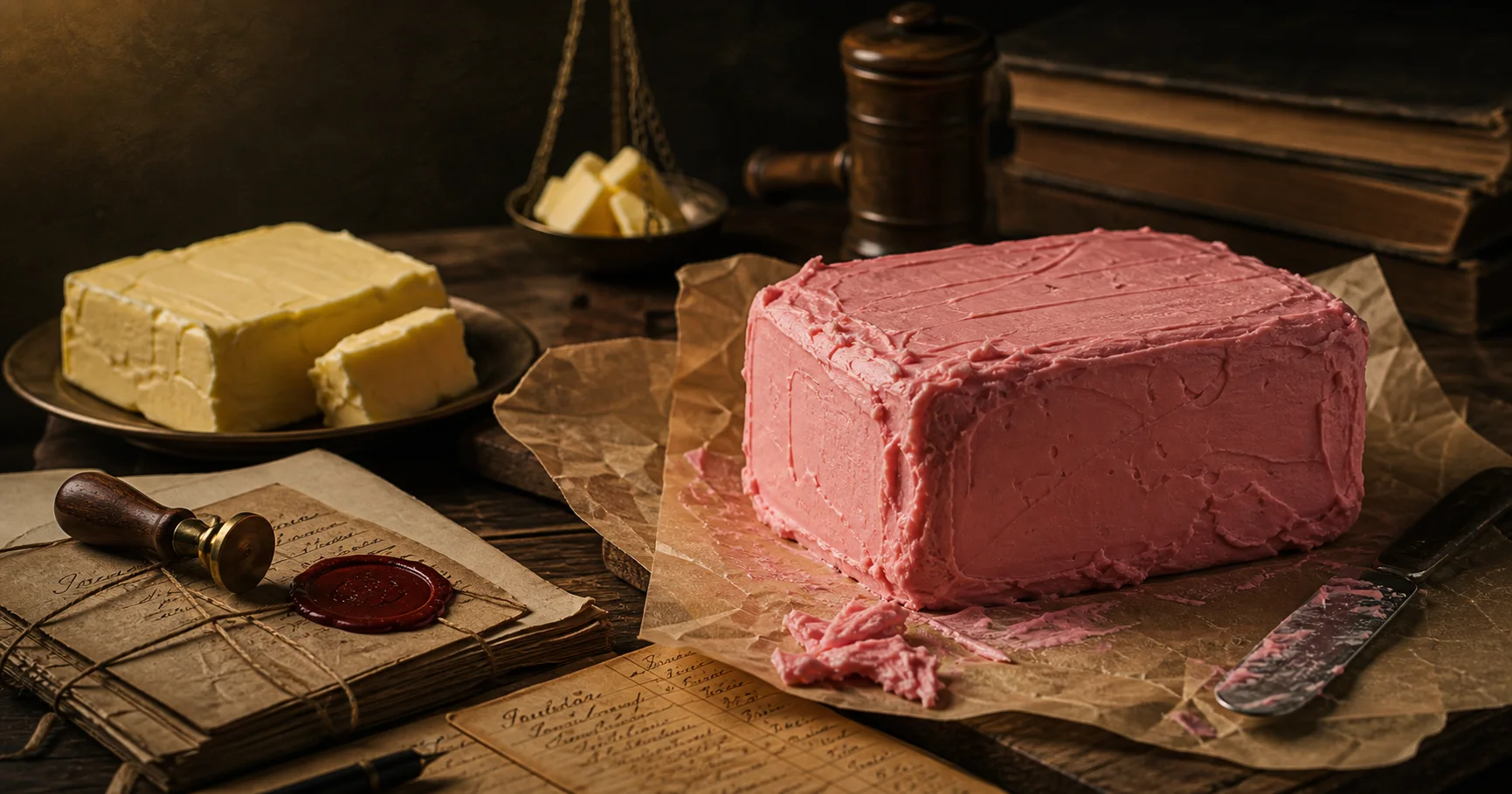
Some states went further and required margarine to be dyed pink or other bright colors to make it look unappetizing. The intent was market suppression, not safety: make the cheaper substitute look bad enough that shoppers would reach for butter instead. (The constitutional showdown over those pink-dye mandates — Collins v. New Hampshire — is covered in its own case file on the legal battle.)
How the Commodity War Wound Down
The dairy-margarine war unwound slowly as economics and politics shifted. [1]
The dairy-margarine war unwound slowly as economics and politics shifted. Federal margarine taxes were repealed in 1950, and state color restrictions fell away over the following decades as margarine normalized and dairy's political grip loosened [1]. By the mid-20th century margarine had moved from a contested substitute to an ordinary grocery staple.
The lasting lesson is about commodity politics, not about margarine being dangerous. When a cheaper alternative threatens an incumbent food, the first response is often legislative rather than culinary — taxes, licenses, color rules, and fraud claims used to defend market share. The pink margarine episode is one of the cleanest examples of food regulation deployed to protect a commodity rather than to protect eaters.
Claim Graph
Evidence-Backed Claims
Each conclusion below carries a machine-resolvable proof path to the cited sources listed at the bottom of this page.