How Did Whey Go From Cheese Waste to Protein Gold?
Market and economic context review: Amine Naini — Reviewed against cited public sources for: Dairy byproduct economics, supplement demand, proteinmaxxing culture, and commodity pressure.
Review lanes show the scope checked for this case file. Active standalone case files present source-led historical context.
How did whey go from cheese waste to protein gold?
Verdict: Whey protein became protein gold because industrial filtration made it scalable, sports nutrition made it desirable, and proteinmaxxing plus GLP-1-era diet culture made demand surge. [1] [2] [3] [4]
Why it matters: The whey boom shows how modern food systems can transform a disposal problem into a premium commodity when technology, branding, and consumer anxiety align.
The Byproduct Problem
Whey begins in the cheese vat. [1]
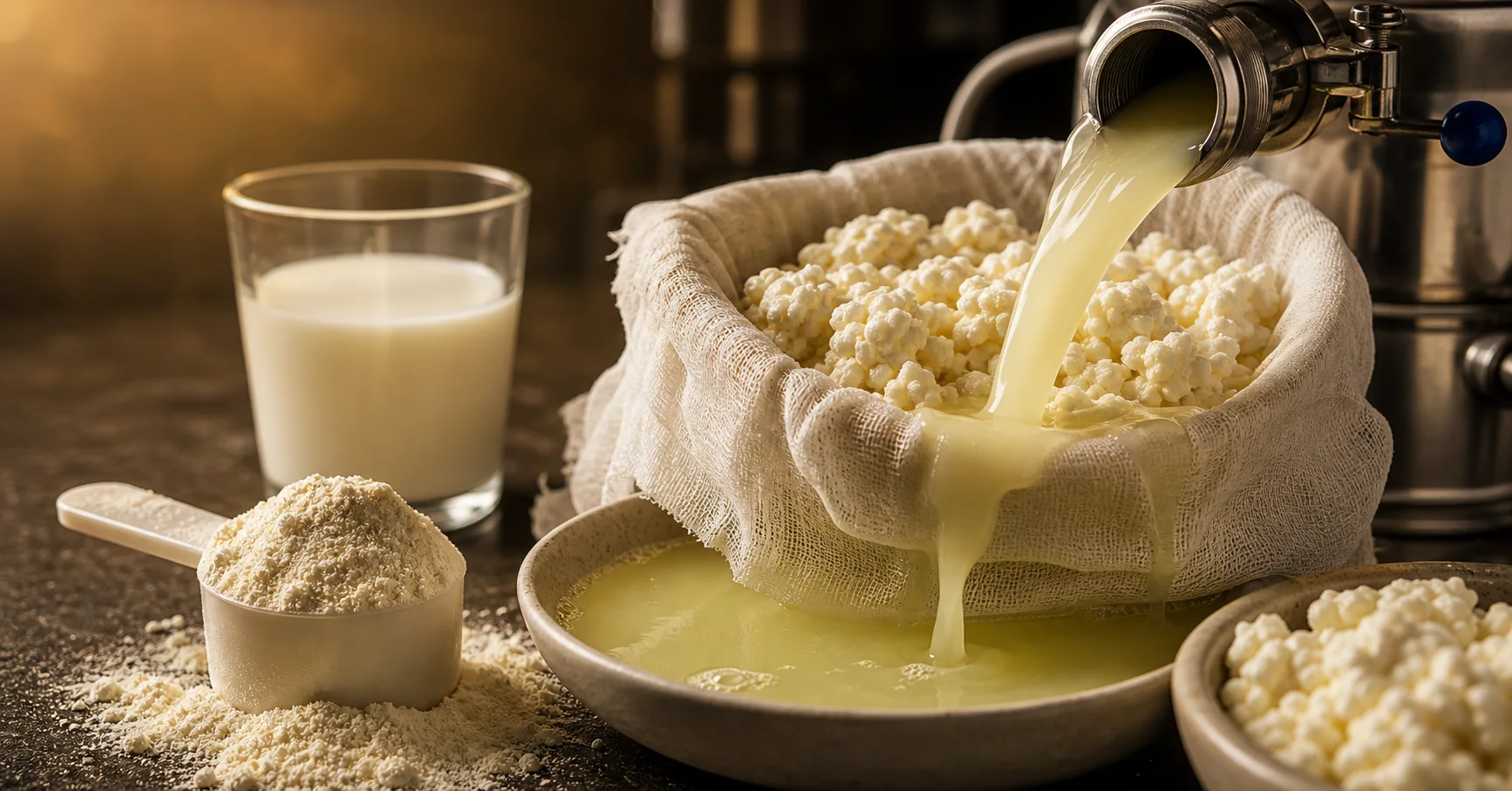
Whey begins in the cheese vat. When milk coagulates, cheesemakers keep the curds and are left with liquid whey. In a household dairy, that liquid could feed animals, enrich cooking, or ferment into local foods. In an industrial cheese plant, the scale changes everything. Large volumes of whey become a disposal, environmental, and economic problem unless they can be converted into something stable and valuable.
That is the first twist in the whey protein story. The modern product did not start as a luxury. It started as a stream of liquid left after another food was made.
Filtration Changed the Value of Whey
Whey became economically powerful when processors could separate, concentrate, and dry it. [1]
Whey became economically powerful when processors could separate, concentrate, and dry it. Membrane filtration made it possible to isolate whey proteins from much of the water, lactose, and minerals. Drying made the ingredient shelf-stable. Standardization made it useful to food companies and supplement brands.
This technology changed the identity of whey. Instead of being the leftover of cheese, it became an ingredient with its own price, label, and market. That shift is what turns food waste into commodity power.
Sports Nutrition Made It Desirable
Bodybuilding and sports nutrition gave whey a cultural language. [1]
Bodybuilding and sports nutrition gave whey a cultural language. It became a scoop, a shake, a recovery ritual, and a measurable number. The powder form helped it look scientific and controlled, even though the source was ordinary milk.
The strongest marketing move was psychological: whey protein did not feel like leftover dairy. It felt like efficient self-improvement. That made it easy for the ingredient to move from gym culture into supermarkets, cafes, bars, and everyday snacks.
Proteinmaxxing and the GLP-1 Demand Shock
The 2020s added a second engine. [1]
The 2020s added a second engine. Proteinmaxxing turned protein intake into social-media identity, while GLP-1 weight-loss drugs made many consumers more conscious of preserving protein intake during lower appetite. The Guardian reported in July 2026 that demand for whey protein products was creating supply pressure and sharp price rises in some parts of the market.
That is why the whey case file is not just about fitness. It is about how diet culture, pharmaceutical change, and dairy infrastructure collide. A cheesemaking byproduct became a commodity because the culture around protein changed faster than the supply chain could comfortably absorb.
Claim Graph
Evidence-Backed Claims
Each conclusion below carries a machine-resolvable proof path to the cited sources listed at the bottom of this page.