💡 Key Takeaways
- Whey protein begins as whey, the liquid left after milk coagulates into curds during cheesemaking.
- For much of dairy history, whey was low-value, fed to animals, fermented, cooked into regional foods, or treated as waste depending on place and technology.
- Modern membrane filtration, drying, sports nutrition, and proteinmaxxing culture turned whey into a high-demand dairy commodity.
- The current whey boom is not only a fitness story; it is a supply-chain story linking cheese plants, supplement brands, GLP-1-era diets, and dairy prices.
What Is Whey Protein?
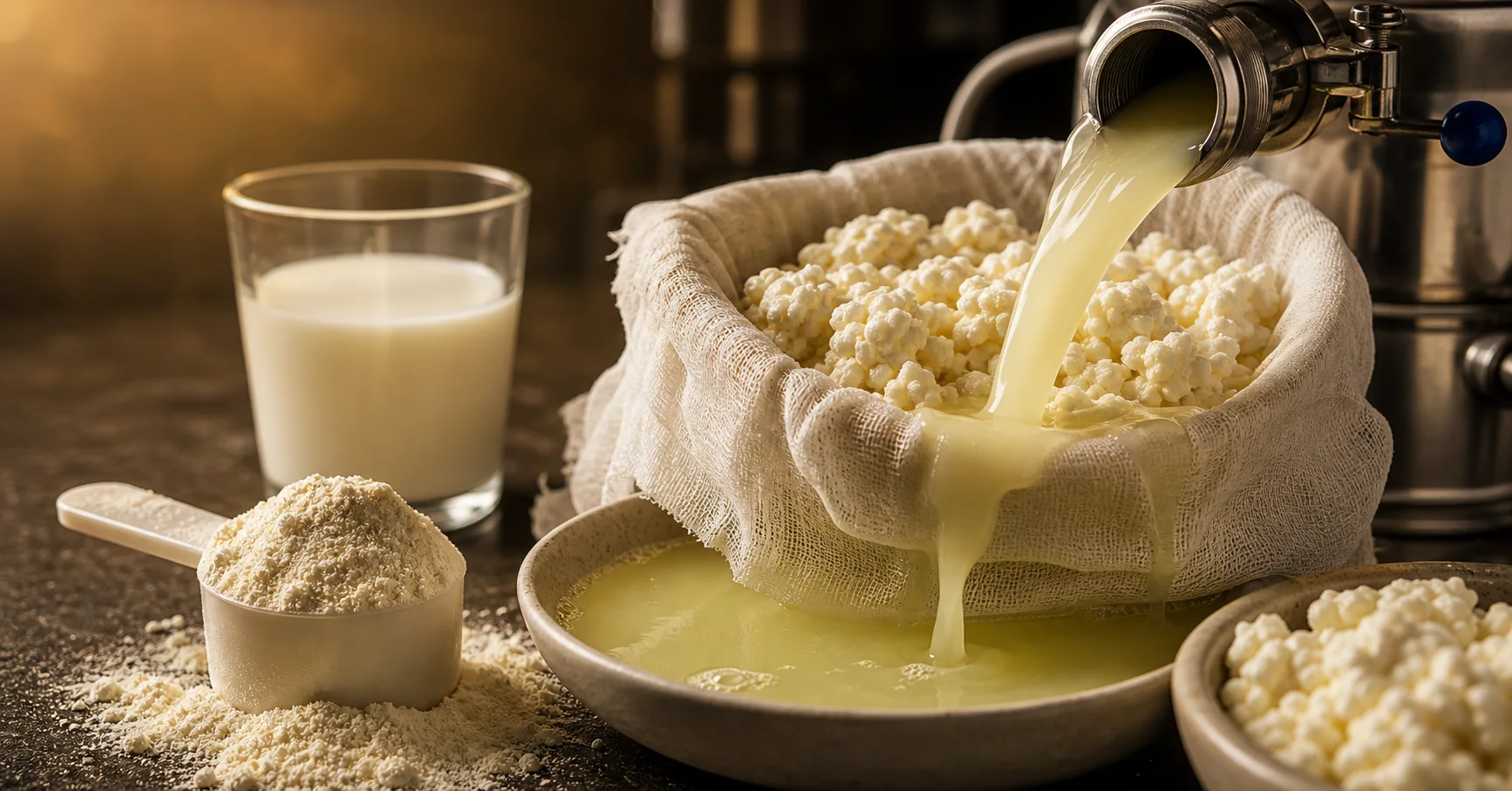
Whey protein begins with a simple cheesemaking split. When milk is coagulated with rennet, acid, or cultures, it separates into solid curds and liquid whey. The curds become cheese; the whey carries water, lactose, minerals, and soluble milk proteins. Modern whey protein is made when that liquid is filtered, concentrated, dried, and sold as powder, drinks, bars, or ingredients in high-protein foods [2][3].
That means whey protein is both old and modern. Whey itself belongs to ancient dairy history. Whey protein powder belongs to industrial dairy technology. The gap between those two facts is the story: a low-status byproduct became valuable when factories learned to isolate, standardize, flavor, and market the proteins that cheesemaking once left behind.
From Cheese Waste to Useful Byproduct
For most of food history, whey was useful only when a household or dairy had a reason to use it quickly. It could feed pigs, enrich soups, ferment into drinks, acidify doughs, or appear in regional dairy foods, but it was also watery, perishable, and awkward to transport. Large-scale cheesemaking turned that problem into an environmental and economic issue. More cheese meant more whey, and more whey meant more pressure to dispose of or transform it [2][3].
The shift from waste to ingredient required technology. Drying made whey easier to store. Ultrafiltration and related membrane processes helped separate proteins from lactose and minerals. Once whey could be concentrated into predictable powders, it could leave the cheese plant and enter bakeries, processed foods, infant formulas, sports nutrition, and later the global supplement aisle [3][4].
Sports Nutrition and the Protein Powder Era
Whey entered popular culture through fitness before it entered ordinary breakfast routines. Bodybuilding and sports nutrition gave protein powder a heroic language: recovery, lean mass, macros, shakes, scoops, tubs, and performance identity. The product was not sold as leftover cheese liquid. It was sold as purified, efficient, measurable nutrition.
That branding mattered. Whey protein turned the messiness of dairying into a clean white powder with grams printed on the label. The more nutrition culture learned to count protein, the more whey fit modern self-tracking. It became a food that felt scientific even when the cultural desire behind it was much older: to turn animals, labor, and technology into strength.
Proteinmaxxing and GLP-1-Era Demand
The 2020s gave whey a new demand engine. Proteinmaxxing made high-protein eating a social-media identity, while GLP-1 weight-loss drugs pushed many consumers to think more carefully about protein intake during reduced appetite. The Guardian reported in July 2026 that whey demand has risen sharply enough to strain parts of the dairy supply chain, with whey protein concentrate prices climbing dramatically in some markets [1].
This is why whey protein belongs on a food-history site rather than only a nutrition site. Its story is about a byproduct becoming a commodity. Cheese plants, supplement brands, diet culture, pharmaceutical weight-loss trends, and consumer anxiety all meet in one scoop.
How Whey Protein Is Used Today
Today whey protein appears in shakes, bars, ready-to-drink beverages, yogurts, ice creams, cereals, pancakes, coffees, snack foods, and meal replacements. Some products use whey isolate for higher protein concentration; others use concentrate for cost, flavor, or texture. For consumers, the difference often appears as a number on the front of a package. For food systems, it reflects filtration, pricing, ingredient supply, and dairy plant economics.
Whey protein is therefore not just a gym ingredient. It links milk, cheese, yogurt, and modern commodity culture. The surprising part is not that people want protein. The surprising part is that one of the world's most fashionable nutrition ingredients began as the liquid left after cheese was made.
Historical Timeline
Cheesemaking separates milk into curds and whey, making whey one of dairying's oldest secondary products
Whey is used unevenly as animal feed, household food, fermented drink base, cooking liquid, and medicinal or spa ingredient
Industrial dairying expands cheese production and creates larger whey streams that require practical disposal or reuse
Drying, fractionation, and membrane filtration turn whey into powders and more concentrated dairy proteins
Bodybuilding, sports nutrition, and supplement branding make whey protein a visible consumer product
Proteinmaxxing, GLP-1-era diet culture, and demand for high-protein foods push whey from byproduct to contested dairy commodity
Evidence Explorer
Review the Source Trail
Inspect the article sources, scoped review credits, and copyable citation details without leaving the page.
Reviewed for Stated Scope
Sources Listed
Comments
Community comments are coming soon. Check back later to join the discussion!