💡 Key Takeaways
- Roasted vegetable bowls are modern, but their structure draws on much older food habits: grains, legumes, vegetables, oil, salt, and practical serving vessels.
- Ancient Mediterranean meals often centered on cereals, vegetables, legumes, olive oil, and wine, but that does not mean the modern cafe bowl existed in antiquity.
- The contemporary bowl format grew through macrobiotic food culture, vegetarian and whole-food restaurants, fast-casual customization, and social media-friendly presentation.
Bowls, Grain, and the Old Logic of Mixed Meals
A roasted vegetable bowl is not an ancient dish with one birthplace. It is a modern way of arranging older food ideas: grain as the base, vegetables for substance and seasonality, oil and salt for flavor, and a vessel that lets everything be mixed, carried, and eaten together. That distinction matters. The ancient world had bowls, grains, vegetables, legumes, oils, and hearth cooking; it did not have the modern branded cafe bowl.
Archaeology shows how important bowls could be long before restaurants turned them into lifestyle objects. Mesopotamian bevel-rimmed bowls, for example, appear in large numbers around the fourth millennium BCE and are often discussed in relation to food distribution, labor, and early urban administration [1]. A bowl could be more than tableware. It could be a unit of rationing, a cooking or serving tool, and a way of organizing everyday food.
Mediterranean Foodways Before the Wellness Bowl
The Mediterranean past gives the modern roasted vegetable bowl some of its strongest historical echoes, but not a direct recipe lineage. Ancient Mediterranean diets revolved around cereals, vegetables, legumes, olive oil, wine, and modest amounts of fish or meat, with regional variation and major differences by class [2][3]. These were practical foods before they became diet-book language.
Roasted and cooked vegetables mattered because they made seasonal produce more flavorful, digestible, and useful with grain. Oil, salt, herbs, garlic, bread, barley, wheat, chickpeas, lentils, onions, and greens could turn simple ingredients into filling meals. The modern bowl borrows that architecture, but its look, branding, and portability belong to a much newer food culture.
Macrobiotics, Counterculture, and Whole-Food Restaurants
The closest ancestors of the modern grain bowl are not ancient Greek banquets. They are twentieth-century vegetarian restaurants, macrobiotic kitchens, counterculture food shops, and health-food movements that made brown rice, beans, vegetables, seaweed, fermented foods, and simple dressings feel modern. The National Museum of American History describes macrobiotic food culture in the United States as built around whole grains, freshly prepared vegetables, fermented foods, beans, and legumes [4].
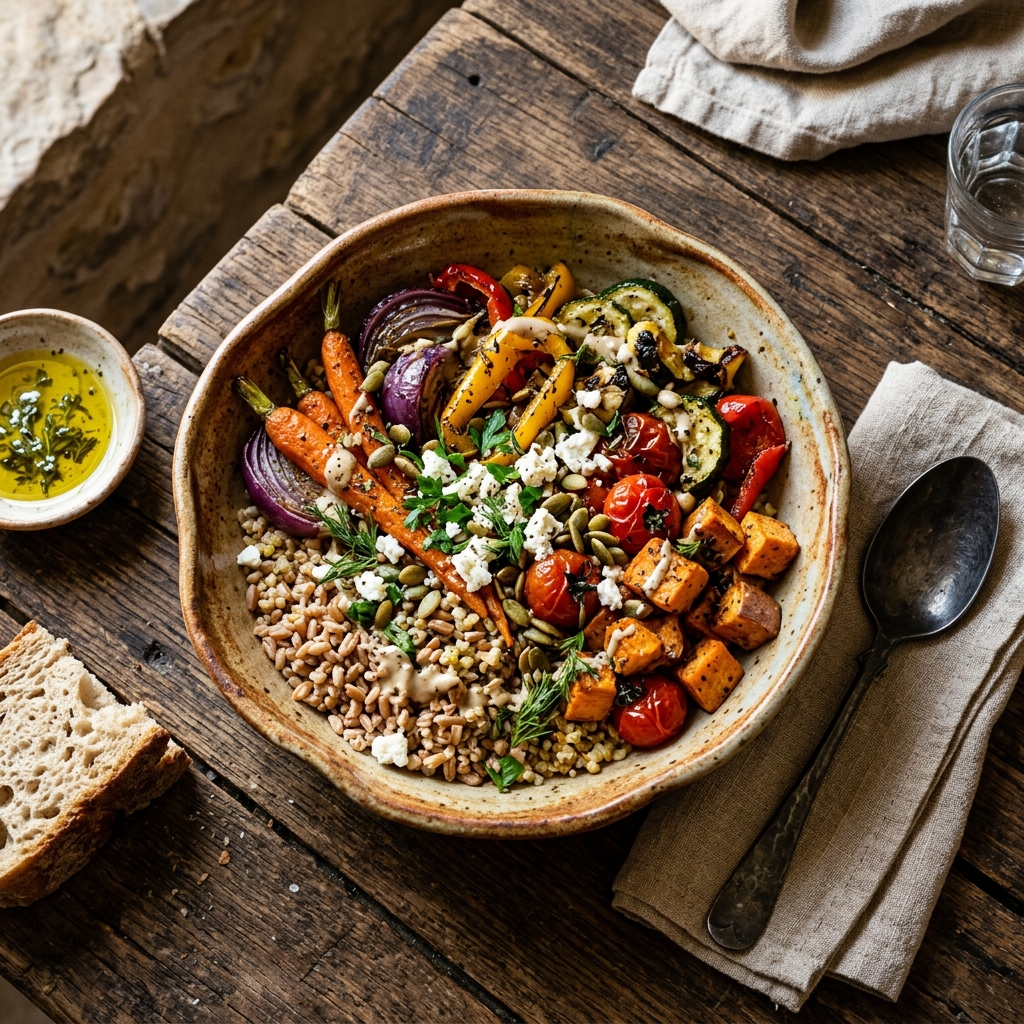
That framework helped make the bowl a complete meal rather than a side dish. Rice or another grain formed the base. Vegetables added color and texture. Beans, tofu, eggs, fish, or meat added protein. Sauces supplied identity: tahini, miso, vinaigrette, yogurt, chili crisp, salsa, or herb oil. In that sense, the bowl became a template, not a fixed recipe.
Fast-Casual Dining and Social Media Presentation
By the 2010s, the roasted vegetable bowl fit perfectly into fast-casual dining. It was customizable, easy to assemble, visually neat, and adaptable to vegetarian, vegan, gluten-free, high-protein, or seasonal menus. It also photographed well. A bowl could be arranged like a color wheel: orange squash, green herbs, white grains, red tomatoes, golden chickpeas, black seeds, and a glossy dressing.
Food media popularized names such as "Buddha bowl," though the term has a loose and modern history rather than one clear ancient origin [5]. The safer reading is that several forces converged: health-food restaurants, macrobiotics, poke and rice bowls, salad bars, grain bowls, social media, and the restaurant economics of modular assembly. The result was a dish that looked timeless while being very much a product of modern food culture.
How is roasted vegetable bowls used today?
Today roasted vegetable bowls appear in cafes, meal-prep plans, fast-casual chains, workplace lunches, vegetarian restaurants, and home cooking. Common bases include rice, barley, farro, quinoa, couscous, bulgur, or greens. Roasted vegetables might include carrots, squash, cauliflower, eggplant, onions, peppers, tomatoes, mushrooms, potatoes, or sweet potatoes. The finishing layer often does the cultural work: olive oil and lemon, tahini, yogurt, harissa, pesto, soy sauce, miso dressing, salsa, or chili oil.
The food-history value of the roasted vegetable bowl is not that it is ancient. It is that it makes visible a very old human strategy: combine staple carbohydrates, seasonal plants, fat, salt, and sauce in a practical vessel. The modern version sells freshness, choice, and visual abundance, but beneath the branding is a durable pattern of eating that has helped people turn ordinary harvests into satisfying meals for thousands of years.
Historical Timeline
Mass-produced bevel-rimmed bowls appear in Mesopotamian contexts, showing how bowls could serve food, labor, and administration
Cereal, vegetable, legume, olive oil, and wine-based eating patterns shape everyday food culture around the Mediterranean
Macrobiotic and counterculture food movements popularize whole grains, vegetables, beans, and communal eating in parts of the United States
Fast-casual restaurants and social media turn customizable grain and vegetable bowls into a recognizable modern format
Evidence Explorer
Review the Source Trail
Inspect the article sources, scoped review credits, and copyable citation details without leaving the page.
Reviewed for Stated Scope
Sources Listed
Comments
Community comments are coming soon. Check back later to join the discussion!