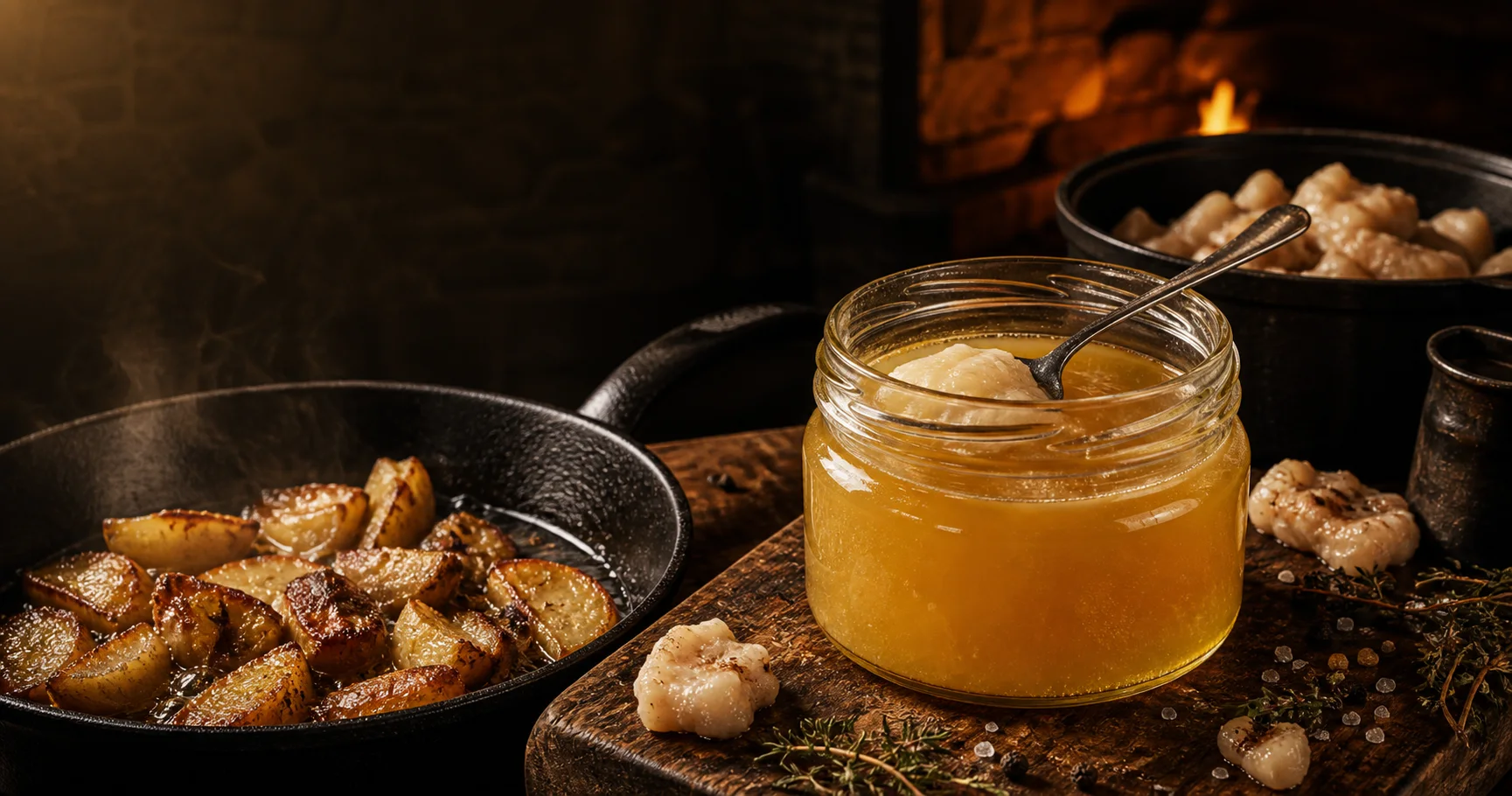
Beef Tallow Is Up 106% in 2026 — and It Is Riding 1,000 Years of Rendered-Fat History
The fastest-growing traditional fat of 2026 is an old story: rendered tallow, fryer oil, and the return of a fat McDonald's walked away from in 1990.
Beef tallow popularity rose about 106% year-over-year in 2026, the fastest-growing traditional fat, according to FoodNavigator citing Tastewise. The number looks new, but tallow is an old fat — rendered for millennia, used as fryer oil and soap, and dropped by McDonald's in 1990. The 2026 boom is a return, not a debut. [1]
What's happening
Beef tallow is the fastest-growing traditional-fat flavor of 2026. According to FoodNavigator, citing Tastewise, beef tallow popularity rose about 106% year-over-year [1]. Whole Foods' 2026 trend coverage points to a wider return of traditional fats, with tallow as the poster child [2]. The drivers are familiar: nose-to-tail cooking, seed-oil skepticism, high-heat frying, ancestral-food aesthetics, and social video of rendered fat in jars.
A source-led food-history page should avoid turning that into a health verdict. The 2026 story is cultural and symbolic, not clinical.
The history behind it
Tallow is rendered beef or kidney fat — solid at room temperature, stable, and energy-dense. For centuries it was a kitchen and household staple: for frying, pastries, and pies, and outside the kitchen for soap and candles [3]. It was also the original fast-food fryer oil. McDonald's cooked its fries in beef tallow until 1990, when it switched to vegetable oil — a change that is still argued about because the tallow fries are remembered as the benchmark for flavor [3].
So the 2026 "boom" is a fat returning to the pantry and the discourse after a 35-year exile, not a new invention.
Why it matters
The tallow comeback sits at the intersection of thrift, flavor, tradition, and resistance to industrial food — one ingredient that lets a cook perform all of those at once. The food-history value is that it reframes a 2026 trend as a return: the "new" fat is the fat your great-grandmother rendered, and the fat McDonald's left behind. For the full history, see the beef tallow article and the french-fries origin case file below.
The bottom line
The bottom line on the 2026 tallow revival is that it is a return, not a revelation. Tallow is a millennia-old cooking fat that fast food dropped in 1990 in favor of vegetable oils, and the current boom is part culinary nostalgia, part seed-oil backlash, part social-video aesthetics. Nutritionally it is a saturated fat: not a health food, and not a poison either. Anyone with a specific cardiovascular concern should follow their clinician rather than a trend post. The food-history story, which is what this page is for, is that the fat your great-grandmother rendered and the fat McDonald's left behind are the same fat now trending in jars. For the full tallow history and the french-fries origin dispute, read below.
📖 Read the full history
Trend Desk notes are timely. The durable history behind each trend lives in these articles and collections.
Beef Tallow
The rendered cattle fat that moved from candles, pies, pemmican, and frying vats into seed-oil backlash, nostalgia, and modern fat politics
Potato
The humble tuber that conquered the world
Butter
The churned gold of pastoral civilizations
French Fries Origin Dispute
Explore the full collection →
Claim Graph
Evidence-Backed Claims
Each conclusion below carries a machine-resolvable proof path to the cited sources listed at the bottom of this page.
Comments
Community comments are coming soon. Check back later to join the discussion!