The High-Fiber Smoothie Trend Rests on Beans, Oats and Fermentation
The high-fiber smoothie is a top-trending 2026 search — and its ingredients (beans, oats, chickpeas, fermented foods) are ancient staples wearing a blender.
The high-fiber smoothie is one of Google Summergeist's top-trending 2026 recipe searches, alongside the high-fiber blueberry muffin. The format is new — a blender — but the ingredients are ancient: oats, beans, chickpeas and fermented foods, the fiber backbone of human diets for thousands of years.
What's happening
"High fibre smoothie" and "high fibre blueberry muffin" are the top-trending "high fiber" recipe searches of 2026, per Google Summergeist [1]. The fibermaxxing smoothie — oats, seeds, beans, sometimes chickpeas and fermented additions — is the year's signature gut-health breakfast.
The history behind it
The ingredients are old. Oats were a Northern European staple for centuries before they were a wellness food [2]. Beans and chickpeas were domesticated in the Near East and the Americas thousands of years ago and carried cheap protein and fiber through cuisines worldwide [3]. Fermented foods — yogurt, kefir, kimchi, sauerkraut — added live cultures alongside fiber.
Why it matters
The food-history value is that a 2026 smoothie trend is ancient pantry staples in a new format. The fiber is not new; the blender is. For the full histories of beans, oats and fermentation, see the articles below.
How to try it
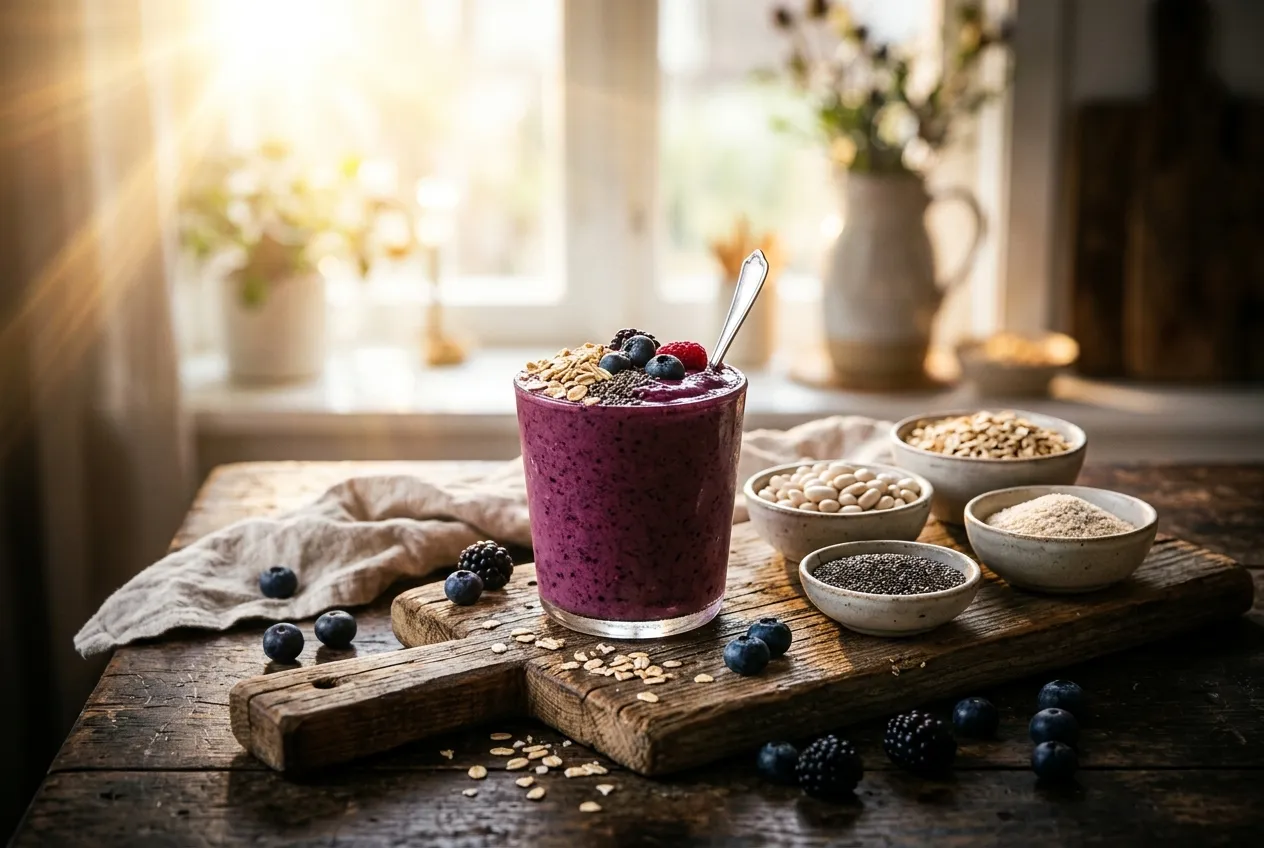
A fibermaxxing smoothie is built, not poured. Blend oats, a tablespoon of chia or flax, a handful of berries, and a milk or yogurt base; add half a frozen banana for texture and a small pinch of psyllium husk only if you are used to it. A scoop of cooked oats or white beans thickens it and adds fiber without much flavor. Aim for 8 to 10 grams of fiber per glass, and drink it slowly. For the histories of the grains and beans inside, read below.
📖 Read the full history
Trend Desk notes are timely. The durable history behind each trend lives in these articles and collections.
Fiber and Ancient Grains
Explore the full collection →

Beans
How dried legumes — from Fertile Crescent pulses to American Phaseolus — became humanity’s portable protein and fiber pantry
Oats
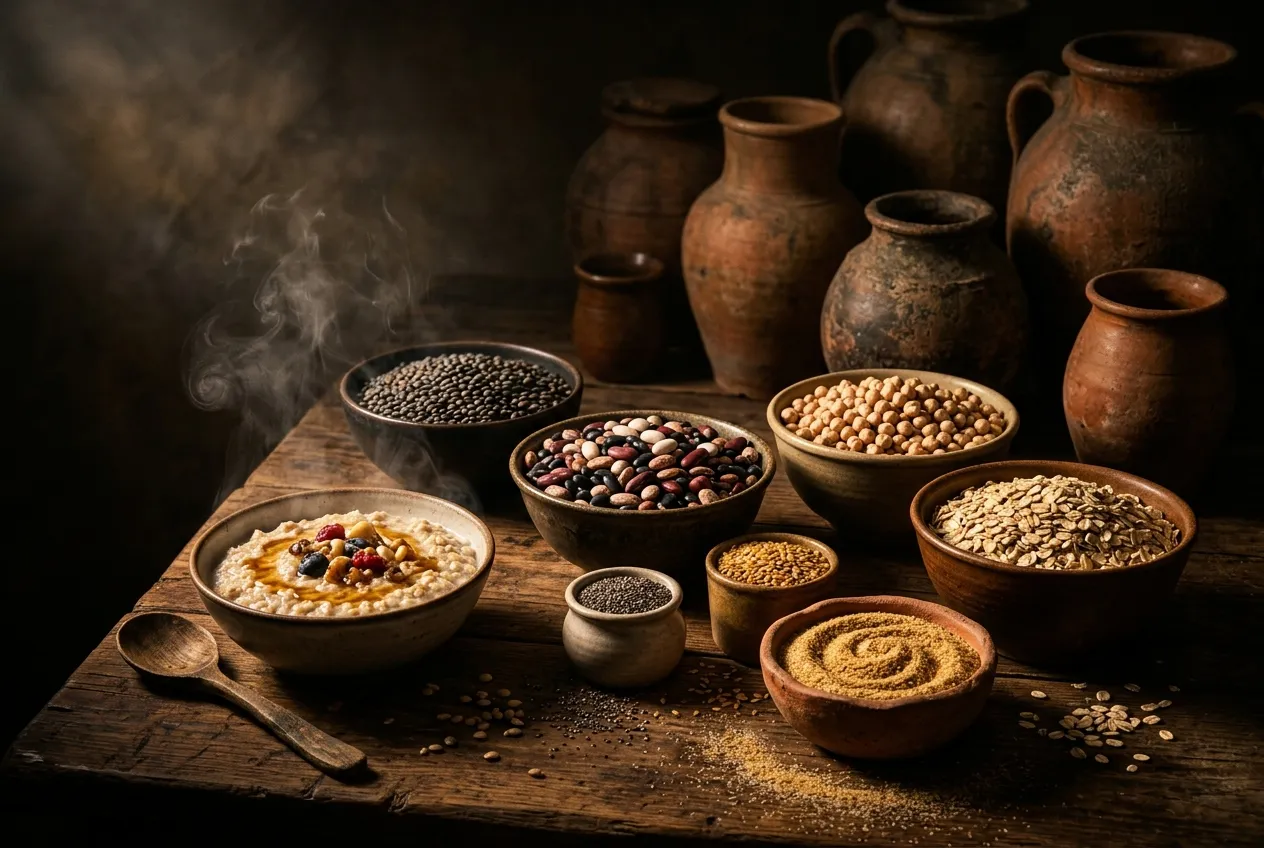
The cool-climate cereal that began as a weed among wheat and barley — then became porridge, oatcakes, oat milk, overnight oats, and a fibermaxxing staple
Chickpea
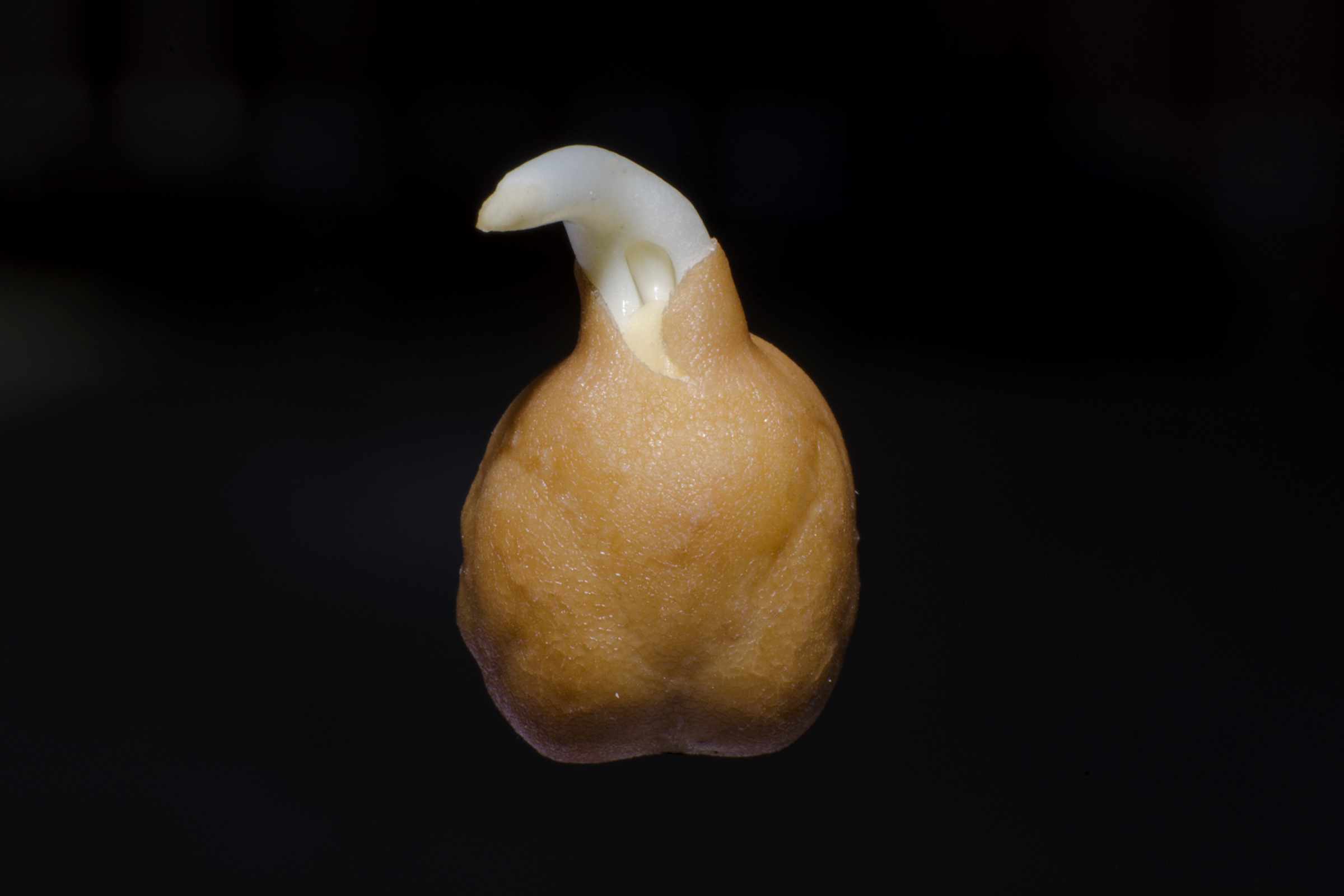
The ancient legume behind hummus, falafel, chana masala, and the modern plant-protein pantry
Spoiled on Purpose: Fermented Foods
Explore the full collection →
Comments
Community comments are coming soon. Check back later to join the discussion!