Kataifi vs Baklava: Shredded Threads Are Not Layered Baklava
Kataifi is a fine pastry thread. Baklava is stacked phyllo with nuts and syrup. They share a phyllo family and a syrup logic. They are not the same dessert — and Dubai chocolate uses kataifi, not baklava sheets.
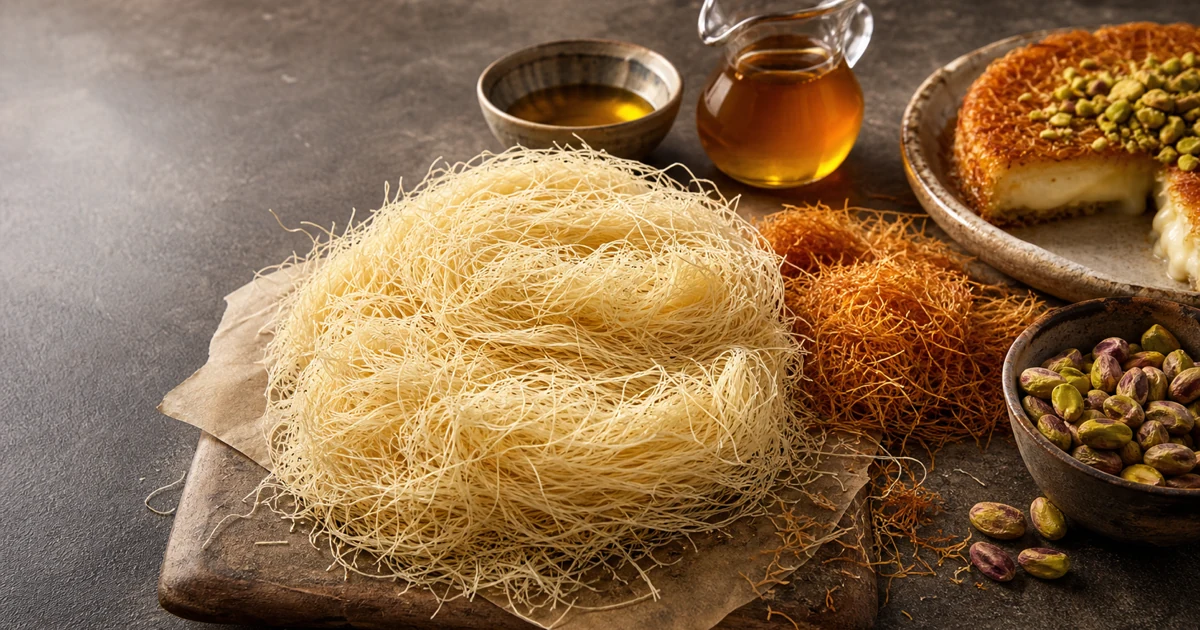
Kataifi is not baklava. Kataifi (kadayıf) is a fine vermicelli-like pastry thread used in knafeh-style desserts and, recently, toasted inside Dubai chocolate. Baklava is layered phyllo stacked with nuts and soaked in syrup. They share Ottoman, Greek, Levantine, and Balkan pastry kinship. The shapes and techniques are different. Substituting baklava sheets for kataifi strands will not make the same filling.
What's happening
Dubai-style chocolate made kataifi a grocery search. Shoppers who already know baklava then ask whether the shredded stuff is just baklava by another name [1].
It is not. The pastry family is real. The format is not identical.
The history behind it
Phyllo and thread pastries developed across Ottoman, Greek, Turkish, Balkan, Arab, and Levantine dessert traditions: thin dough, nuts, butter or samneh, and sugar syrup [2][3]. Baklava stacks sheets. Kataifi / tel kadayıf is extruded or shredded into fine strands, then used as a nest or a crunchy layer — including in knafeh.
The viral chocolate bar borrowed toasted kataifi for texture, not baklava’s laminated diamond. For the thread pastry’s longer story, read Kataifi.
Why it matters
The food-history value is keeping a 2026 candy trend from overwriting a pastry map. “Shredded baklava” is a useful metaphor and a bad shopping instruction. Buy frozen kataifi if the recipe wants threads.
How to try it
For baklava, expect stacked phyllo and a syrup soak. For kataifi, thaw shredded phyllo, separate strands, and toast until dry and golden before mixing into pistachio cream. Check wheat on the label. For U.S. packages, see the kataifi buying guide.
Common comparison questions
📖 Read the full history
Trend Desk notes are timely. The durable history behind each trend lives in these articles and collections.
Comments
Community comments are coming soon. Check back later to join the discussion!