What American Soldiers Ate During World War II
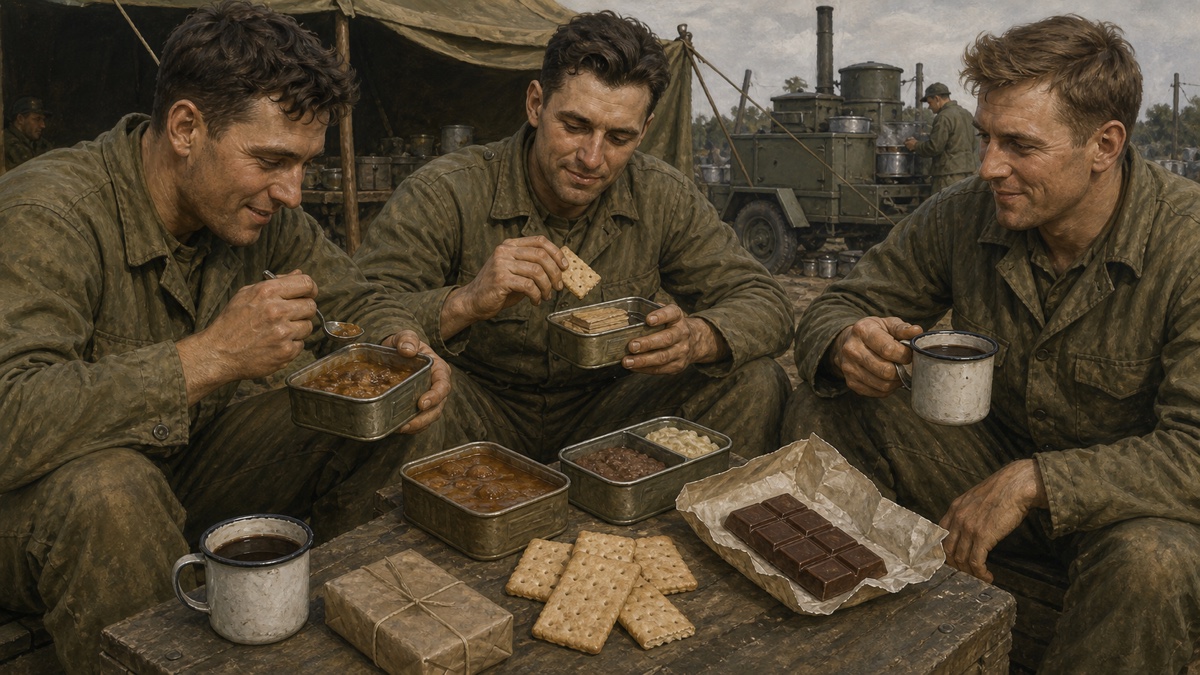
American soldiers during World War II ate a mix of packaged combat rations and freshly prepared meals when field kitchens were available. Depending on where they were fighting and how reliably supplies could reach them, their food could include canned meat and vegetables, biscuits or crackers, coffee, chocolate, powdered drinks, stews, beans, bread, and specialized K- or C-rations designed to travel with troops. The closer a unit was to active combat, the more likely its meals came from a box or can rather than a cookhouse.
The lightweight K-ration was developed for paratroopers and other mobile forces, then adopted for wider use in 1942. Its breakfast, dinner, and supper boxes packed compact combinations of canned meat or cheese products, biscuits, coffee or beverage powder, sugar, gum, and small morale items. Components changed during the war, and some meals included a chocolate bar. Compactness was the point: a soldier could carry the ration when a kitchen truck could not follow. It was intended for short periods, however, and became deeply unpopular when troops had to live on it for days or weeks.
The C-ration was heavier but designed as a complete day of food. Early versions paired canned meat-and-vegetable components with cans containing crackers, sugar, and soluble coffee. Later menus offered more variety, but soldiers still complained about repetition and the weight of the cans. C-rations could be eaten cold, although troops often heated them when fuel, time, and tactical conditions allowed. They were not restaurant meals in miniature; they were durable food engineered to survive storage, transport, rough handling, and uncertain access to cooking equipment.
Packaged rations were only one part of Army food. When roads, distance, and enemy fire permitted, company cooks and mobile field kitchens prepared bulk A- or B-ration meals. Fresh ingredients were preferred for A-rations, while B-rations relied more heavily on canned and shelf-stable supplies. Hot food could mean meat, vegetables, potatoes, beans, stew, and bread, served from insulated containers or at a mess point behind the line. In a Library of Congress oral history, veteran Elvyn Davidson remembered mostly K- and C-rations at the front, interrupted by occasional hot meals brought as close as the mess crew could manage.
Several foods acquired an outsized place in wartime memory. Coffee supplied warmth, routine, and a familiar taste. Chocolate appeared both as an emergency D-ration bar and in other field-ration combinations, valued for portability and concentrated energy as well as morale. Canned meats, including Spam within the wider military supply system, traveled without refrigeration. Biscuits and crackers lasted longer than ordinary bread. Powdered lemon drinks, bouillon, sugar, candy, and gum helped make an otherwise repetitive ration easier to consume.
There was no single universal soldier's menu. An infantryman advancing through Italy, France, or a Pacific island might spend long stretches on individual rations, while troops at a base, hospital, airfield, or rear-area camp could receive regular cooked meals. Weather, shipping losses, roads, refrigeration, unit movement, and the judgment of local quartermasters all shaped what reached a mess line. Soldiers also traded unwanted components, supplemented rations with locally obtained food, or discarded items they disliked, which meant the nutritional design of a ration did not always match what a man actually ate.
The simplest answer is therefore logistical: American troops ate hot, recognizable meals whenever the Army could bring kitchens and bulk supplies forward, and carried preserved rations when it could not. K-rations emphasized mobility; C-rations emphasized a portable full-day food supply; field kitchens restored variety and comfort. The distance between a soldier and the nearest working kitchen often mattered more than the menu printed in any Army manual.