Why Did Psyllium Become the Face of Fibermaxxing?
Source and factual review: Mehdi Iarab — Reviewed against cited public sources for: Plantago seed-husk terminology, mucilage behavior, fibermaxxing context, and non-medical source boundaries.
Review lanes show the scope checked for this case file. Active standalone case files present source-led historical context.
Why did psyllium become the face of fibermaxxing?
Verdict: Psyllium became the face of fibermaxxing because its water-binding mucilage is visible, measurable, easy to package, and perfectly suited to modern fiber-tracking culture. [1] [2] [3] [4]
Why it matters: The psyllium trend shows how old botanical materials become new wellness symbols when science language, packaging, and social media converge.
A Seed Husk With Visible Chemistry
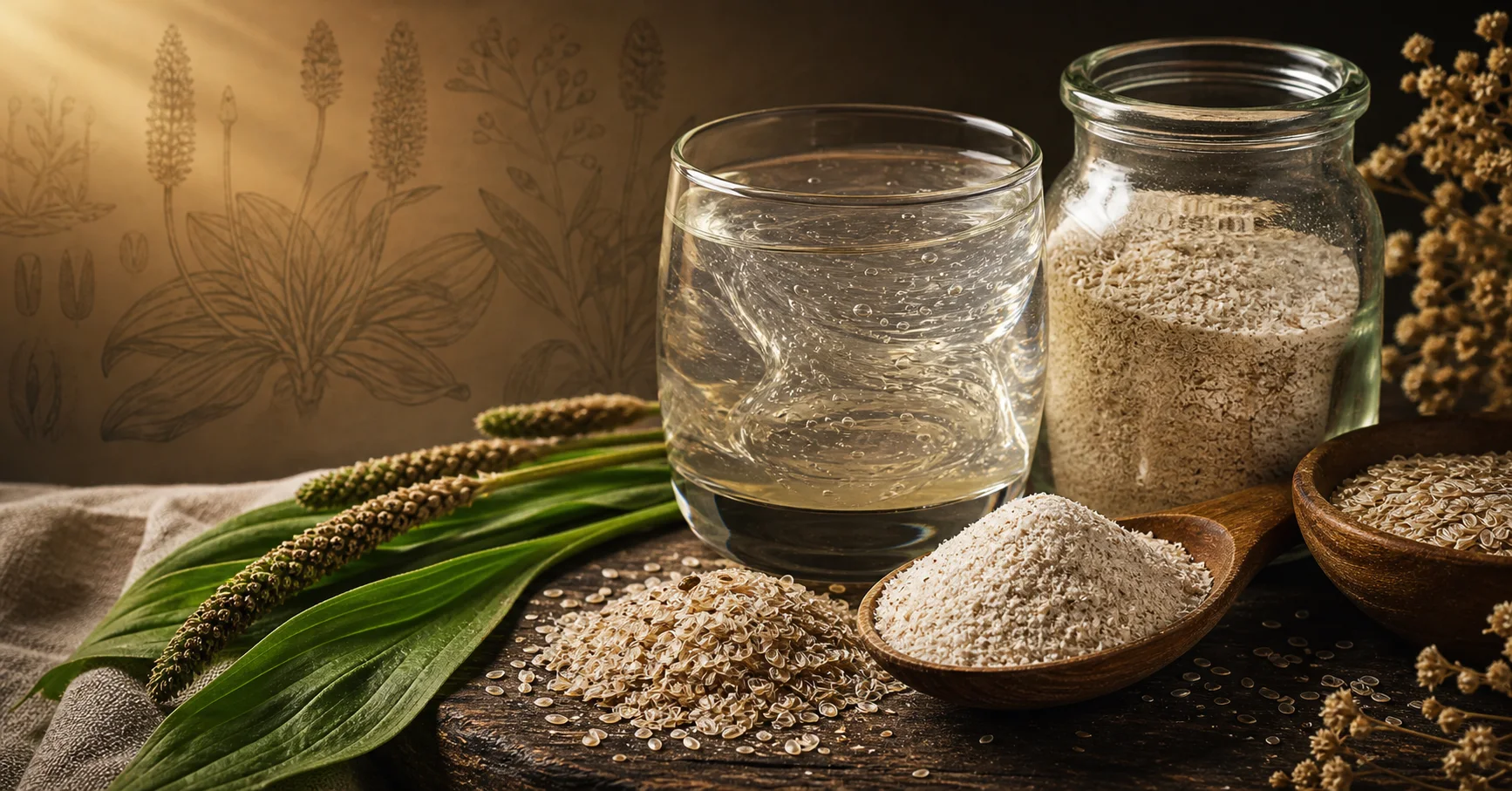
Psyllium's appeal begins with a visible physical behavior. [1]
Psyllium's appeal begins with a visible physical behavior. Add water to the husk and it swells into mucilage, a gel-like plant material. That makes psyllium easy to understand, photograph, measure, and package.
This is why the ingredient fits modern food culture so well. It looks like science in a glass, even though the plant behavior is old.
From Botanical Material to Pharmacy Product
Psyllium became modern when plant husks were standardized into powders and packaged products. [1]
Psyllium became modern when plant husks were standardized into powders and packaged products. The ingredient moved from botanical and pharmacy contexts into measured fiber routines. That shift made it easier to sell because consumers could understand the product as a dose, not just a plant.
The history is not only about health. It is about packaging plant behavior into a repeatable commodity.
Why Fibermaxxing Chose Psyllium
Fibermaxxing culture rewards ingredients that are measurable, repeatable, and easy to display. [1]
Fibermaxxing culture rewards ingredients that are measurable, repeatable, and easy to display. Psyllium fits all three. It can be scooped, mixed, counted, filmed, and folded into a daily routine. The New Yorker and Food & Wine both describe fiber as a rising 2026 food trend, partly after years of protein obsession.
Psyllium therefore became a symbol because it translates fiber into action. It gives the abstract idea of dietary fiber a visible object.
The Boundary: Food History, Not Medical Advice
The case file should not promise digestion, cholesterol, weight loss, or disease outcomes. [1]
The case file should not promise digestion, cholesterol, weight loss, or disease outcomes. Those claims need medical context and are not the purpose of this page. The safer and stronger claim is cultural: psyllium became newly visible because fiber moved into the same tracking culture that previously made protein dominant.
That makes psyllium a useful food-history topic. It shows how old plant materials get renamed by new anxieties.
Claim Graph
Evidence-Backed Claims
Each conclusion below carries a machine-resolvable proof path to the cited sources listed at the bottom of this page.