💡 Key Takeaways
- Psyllium is made from the husks of Plantago seeds, whose mucilage swells in water and gives the ingredient its thickening power.
- Its history sits between food and pharmacy: it was valued as a botanical material before it became a modern packaged fiber product.
- Fibermaxxing gives psyllium new attention, but the page should frame this as cultural and food-science history rather than medical advice.
- Psyllium connects plant botany, colonial commodity movement, pharmacy branding, gluten-free baking, and functional-food marketing.
What Is Psyllium?
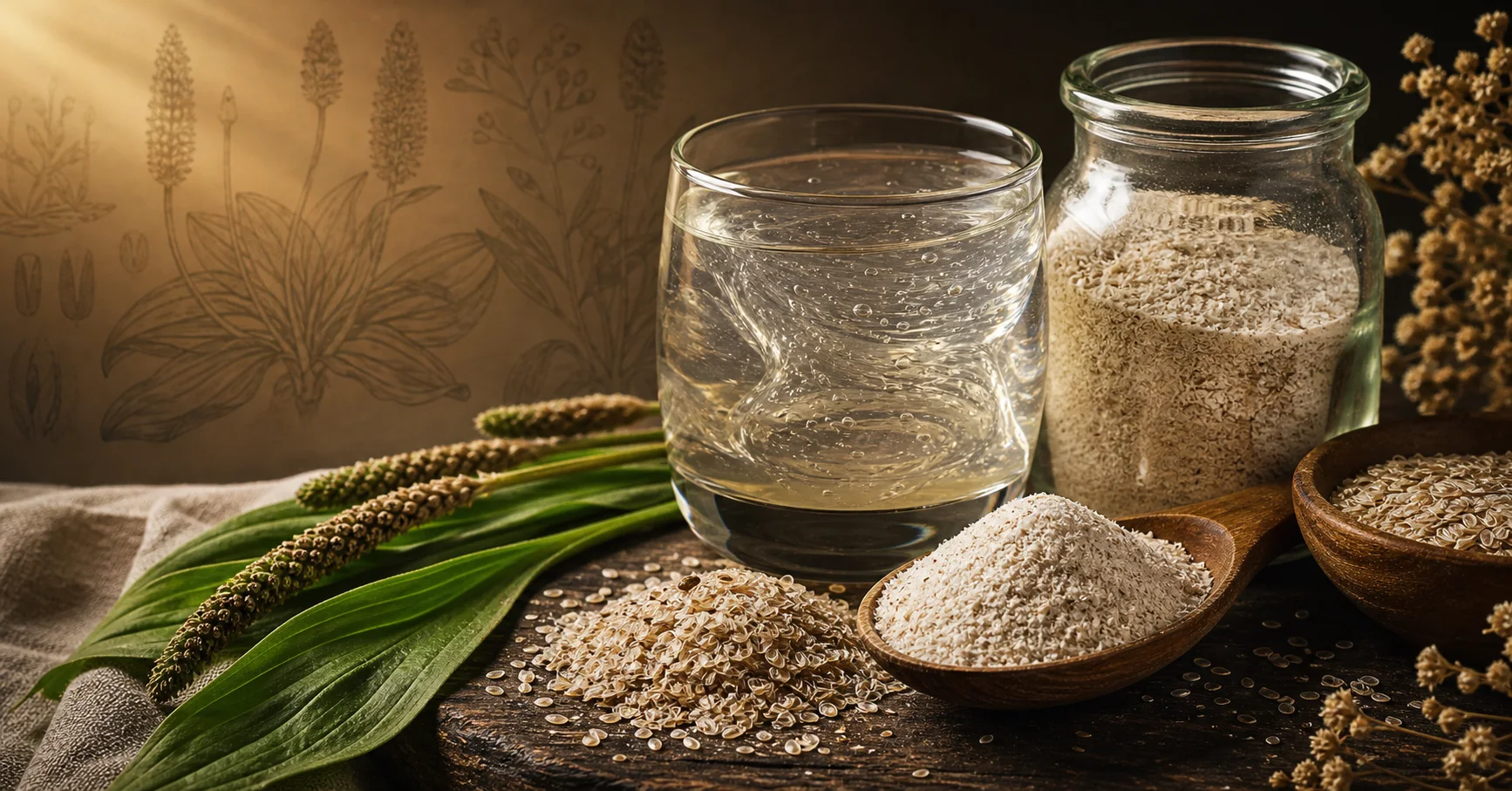
Psyllium is the husk of small seeds from Plantago plants, especially Plantago ovata. When the husk meets water, it forms mucilage: a slippery, gel-like material that thickens, swells, and binds. That texture is the reason psyllium appears in pharmacy powders, fiber products, gluten-free baking, and modern functional foods [3][4].
This page treats psyllium as food-history and botanical-history material, not as medical advice. Its importance is that a tiny seed husk moved from plant knowledge and pharmacy shelves into a new culture of fiber tracking, packaged wellness, and algorithmic nutrition trends.
Plant Mucilage Before Fibermaxxing
Long before fibermaxxing, people noticed that some seeds and plants become slippery or gelatinous in water. Mucilage mattered because it could soothe, thicken, suspend, bind, or change texture. Psyllium belonged to that wider family of useful plant materials, especially in medicinal and household contexts [4].
The historical point is not that ancient people used psyllium the way modern influencers do. They did not count daily fiber grams on a phone. The continuity is material: the plant husk had a visible physical behavior, and that behavior made it useful.
From Pharmacy Shelf to Functional Food
Psyllium became modern when it was standardized, packaged, branded, and measured. Pharmacy powders turned a plant material into a repeatable dose, while food manufacturers learned to use fiber as texture, label claim, and marketing language. That moved psyllium into the world of breakfast cereals, drink mixes, powders, and later wellness products [3].
This is a common pattern in food history. A plant once known through household or medicinal practice becomes industrial when it can be purified, measured, labeled, and sold at scale.
Fibermaxxing and the New Gut-Health Culture
The New Yorker described the modern fibre fad as part of a wider cultural turn toward fiber tracking, prebiotic language, and gut-health branding [1]. Food & Wine also identified fibermaxxing as a 2026 trend, partly as a counterweight to years of protein obsession [2]. Psyllium fits that shift because it is visually simple, measurable, and easy to add to powders, drinks, and baking.
The safe framing is cultural rather than medical. Psyllium is being rediscovered because modern eaters want numbers, routines, and ingredients that feel functional. That makes it less a miracle and more a sign of how nutrition culture turns old plant materials into new habits.
How Psyllium Is Used Today
Today psyllium appears in fiber powders, capsules, cereals, smoothies, gluten-free breads, low-carb baking, vegan egg substitutes, and thickened foods. Bakers use it because it binds water and can help replace some structure that gluten normally provides. Packaged food companies use it because fiber can be both functional and marketable.
For The Foods That Shaped Us, psyllium connects wheat, barley, millet, oats, rice, and the broader question of how modern eaters turn plants into metrics. It is a seed husk with a very modern second life.
In the news
Recent 2026 food-culture notes that reference this article.
- Jul 25, 2026The High-Fiber Muffin Is the Quiet Workhorse of the 2026 Fiber Trend→
- Jul 25, 2026GLP-1 Drugs Quietly Rewired Snack Culture Toward Protein and Fiber→
- Jul 8, 2026Prebiotic Soda Is the 2026 Fiber Drink — Built on Chicory Inulin→
- Jul 5, 2026Seaweed Fiber Traditions in Asia→
- Jun 30, 2026Prebiotic Dirty Soda: Wellness Reframe→
- Jun 16, 2026What Is Fibermaxxing? Meaning, Origins, and the Foods Behind It→
- Jun 13, 2026Chicory Root Went From Wartime Coffee to Inulin Fiber Darling→
- Jun 13, 2026Konjac and Shirataki Are Riding the Fiber Wave — an Old Japanese Root Crop→
- Jun 12, 2026Psyllium Origin: The 3,500-Year-Old Plant Behind Fibermaxxing→
- Jun 11, 2026Fibermaxxing Searches Rose 115%: Why an Old Pantry Went Viral→
Historical Timeline
Plantago seeds and mucilaginous plants appear in medicinal and botanical traditions around the Mediterranean, West Asia, and South Asia
Psyllium becomes increasingly standardized as a pharmacy and bulk-forming fiber product
Packaged fiber powders and cereals turn psyllium into a modern functional ingredient
Gluten-free and low-carb baking use psyllium husk for water binding and structure
Fibermaxxing and gut-health marketing make psyllium visible in social media food culture
Evidence Explorer
Review the Source Trail
Inspect the article sources, scoped review credits, and copyable citation details without leaving the page.
Reviewed for Stated Scope
Sources Listed
Comments
Community comments are coming soon. Check back later to join the discussion!