💡 Key Takeaways
- Iru is a Yoruba fermented condiment made from African locust bean seeds.
- It belongs to a wider West African family that includes dawadawa and soumbala.
- Long boiling and dehulling precede Bacillus-led alkaline fermentation.
- Women producers and traders have carried the knowledge and market system.
What Is Iru?
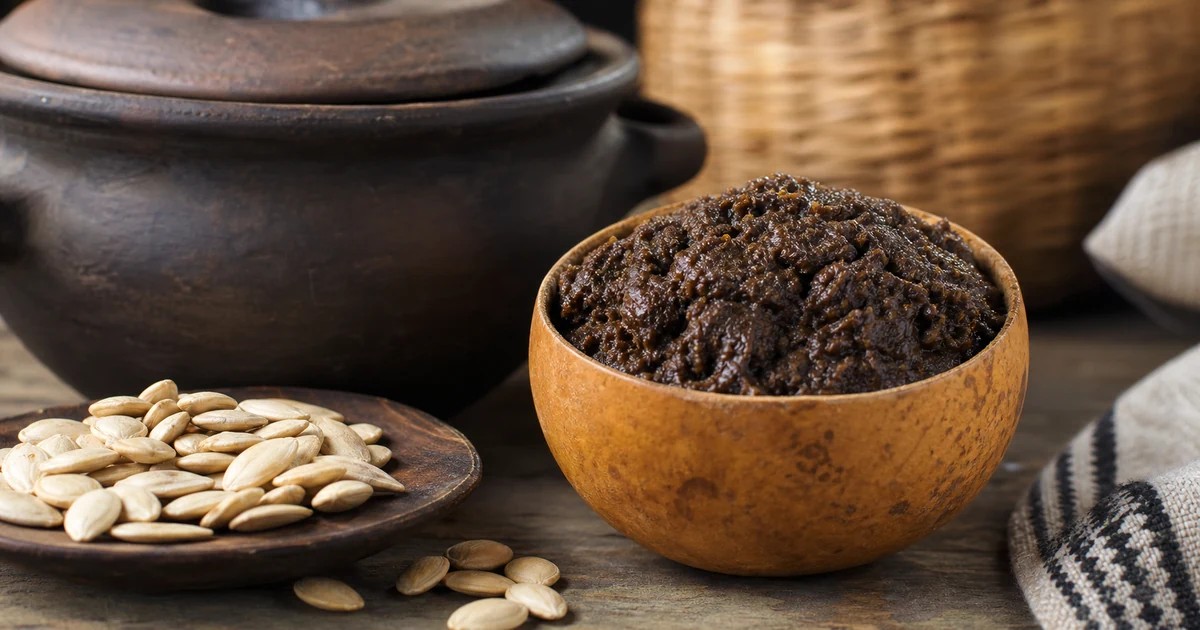
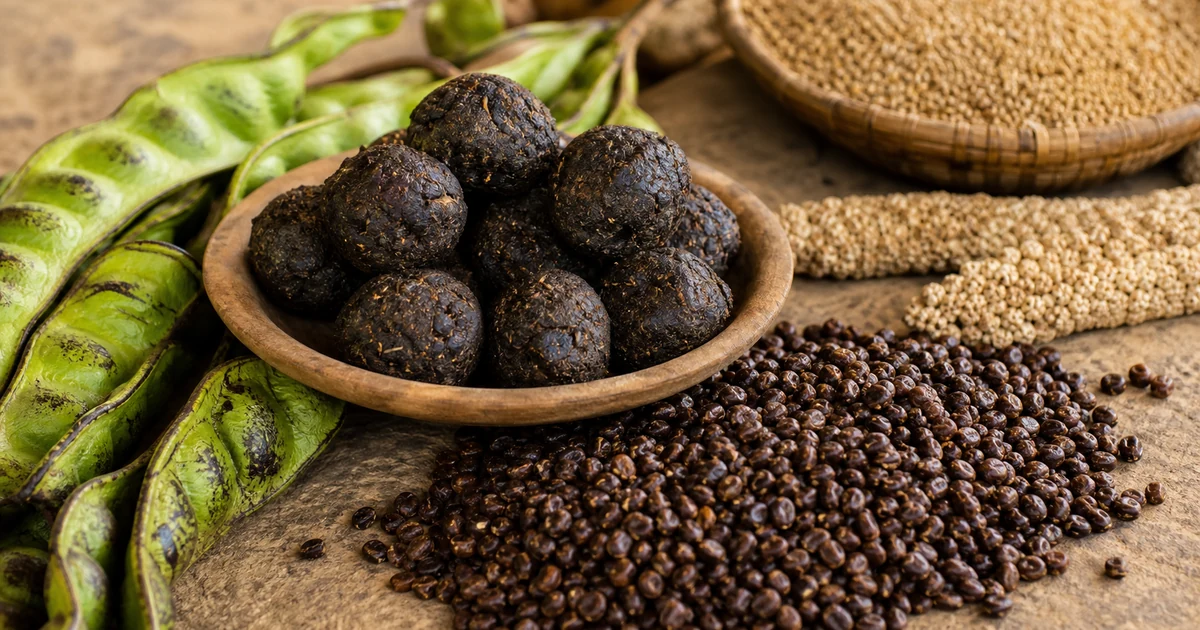
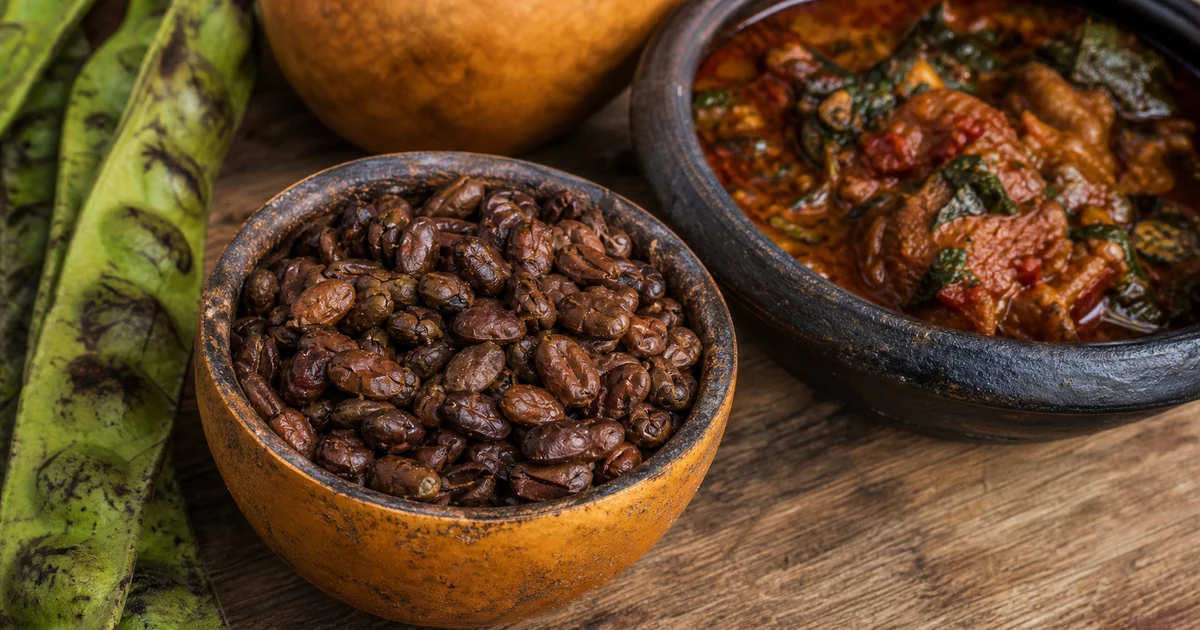
Iru is a Yoruba condiment made from fermented seeds of the African locust bean tree, Parkia biglobosa. The brown beans are intensely aromatic and used in small quantities to season soups and stews [1].
It belongs to a wider family of West African locust-bean foods, but Yoruba names and serving practices give iru a specific cultural home.
Parkia Trees and Savanna Food Systems
Parkia trees provide pulp, seeds, shade, and ecological value. Processing the hard seeds turns a seasonal tree crop into durable seasoning. The system connects forest and savanna landscapes with household cooking and markets [2].
The tree’s importance cannot be reduced to protein content. It belongs to land use, gathering rights, and local economies.
How Alkaline Fermentation Works
Makers boil seeds for many hours, remove tough coats, cook again, and incubate the soft cotyledons. Bacillus species break down protein and raise pH, producing the characteristic aroma and sticky texture [1][3].
This alkaline process differs from sour lactic fermentation. Strong smell signals transformation when production is controlled.
Women’s Labor and the Iru Market
Women have often managed the demanding sequence and sold iru fresh or dried in local markets. Skill determines dehulling efficiency, incubation, moisture, and shelf life [2].
Bouillon cubes compete through convenience and advertising, but they do not reproduce the tree, labor, and fermented complexity behind iru.
Iru Today
Packaged iru travels to diaspora consumers and urban kitchens, while researchers investigate starter cultures and improved processing. Standardization can support safety and income if producers remain central.
The historical lesson is clear: iru is not a primitive seasoning waiting to be replaced. It is a sophisticated West African protein fermentation with deep Yoruba culinary meaning.
Historical Timeline
Communities process Parkia seeds into fermented condiments across the savanna and forest zones
Iru remains central to Yoruba soups as cities and colonial markets expand
Imported bouillon cubes compete with local fermented seasonings
Research and packaged products renew attention to iru’s microbial and cultural value
Evidence Explorer
Review the Source Trail
Inspect the article sources, scoped review credits, and copyable citation details without leaving the page.
Reviewed for Stated Scope
Sources Listed
Comments
Community comments are coming soon. Check back later to join the discussion!