💡 Key Takeaways
- Soumbala is an alkaline-fermented condiment made from néré seeds.
- It belongs to a related family of locust-bean foods with different regional names.
- Women’s processing and trade are central to its history and present economy.
- Imported bouillon competes with a locally rooted tree-and-fermentation system.
What Is Soumbala?
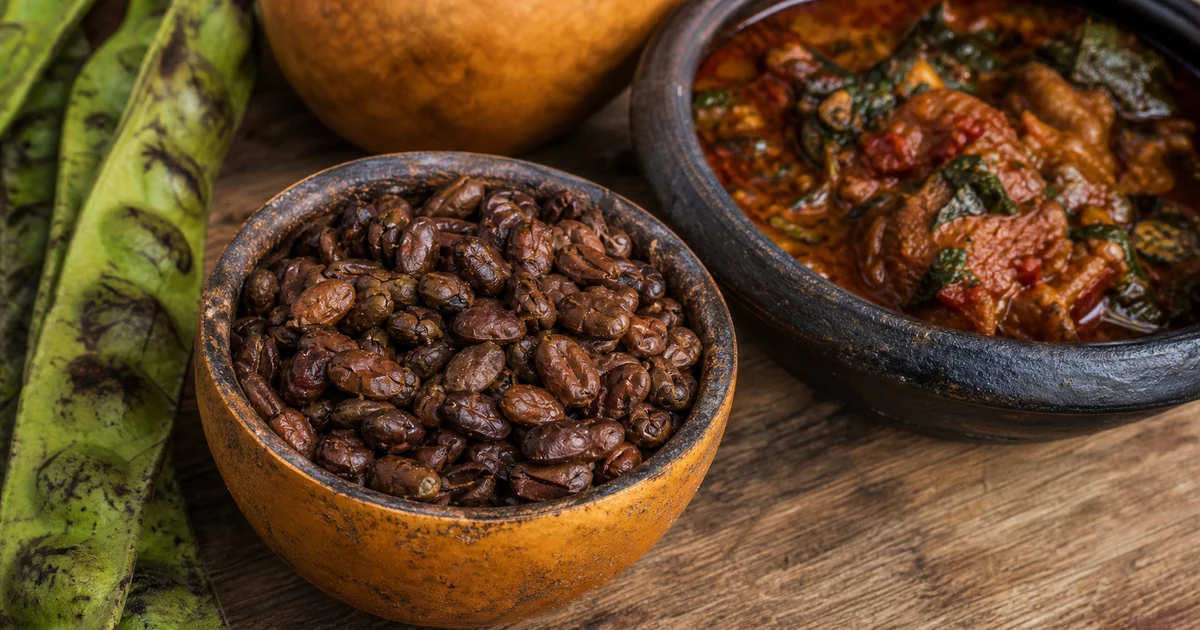
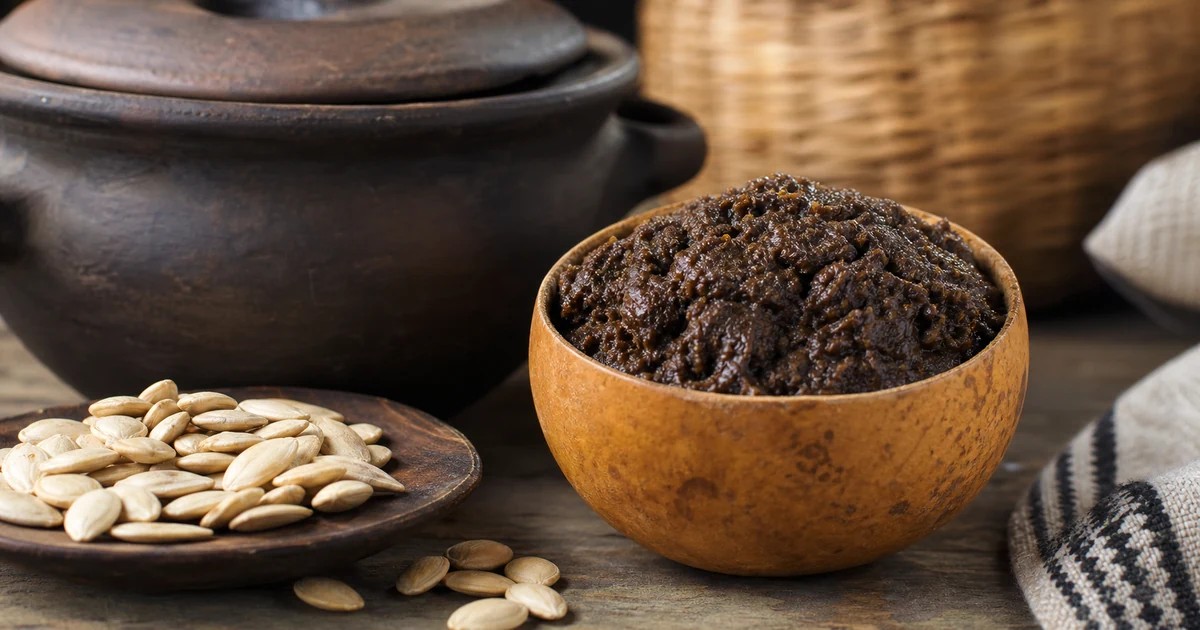
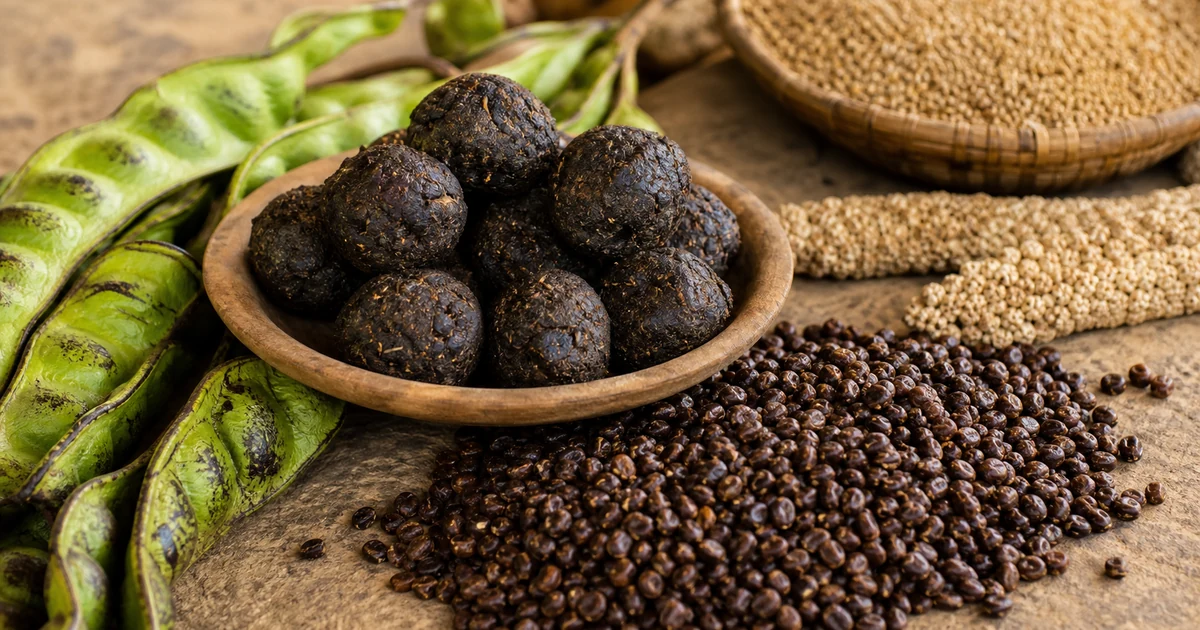
Soumbala is a dark, aromatic condiment made by fermenting seeds of the néré tree, Parkia biglobosa. It is used in small amounts to deepen sauces, soups, grain dishes, and vegetable preparations across Burkina Faso, Mali, and neighboring areas [1].
Related foods may be called dawadawa, netetu, or iru elsewhere. Shared botany does not erase regional names and techniques.
The Néré Tree as Food Infrastructure
Néré trees provide sweet pulp and protein-rich seeds while supporting agroforestry landscapes. Rights to harvest, process, and sell the crop tie soumbala to land and local economies [2].
A seasoning ball therefore begins long before fermentation, with tree stewardship and seasonal collection.
How Soumbala Is Made
Seeds are boiled, dehulled, cooked again, and incubated so Bacillus-led alkaline fermentation can transform protein. Producers then salt, dry, or shape the beans according to local practice [1][4].
The labor is intensive. Aroma, softness, color, and stickiness guide decisions that laboratory measurements later describe in microbial terms.
Women, Trade, and Bouillon Competition
Women dominate much soumbala processing and market sale. Industrial bouillon cubes compete by offering uniformity, portability, and advertising, sometimes framing local fermented aroma as old-fashioned [3].
Choosing soumbala can therefore support local trees, producers, and culinary identity as well as flavor.
Soumbala Today
Cooperatives package soumbala more hygienically and market it to cities and diaspora communities. Researchers explore starter cultures and shorter processing without losing character.
The future is strongest when modernization benefits existing makers. Soumbala is already advanced food technology: it turns a hard tree seed into concentrated savory value through knowledge, microbes, and time.
Historical Timeline
Communities process néré seeds into portable fermented seasonings
Local tree products and women’s markets persist through economic disruption
Industrial bouillon becomes a major competitor in urban cooking
Women’s groups and food-sovereignty projects strengthen soumbala production and branding
Evidence Explorer
Review the Source Trail
Inspect the article sources, scoped review credits, and copyable citation details without leaving the page.
Reviewed for Stated Scope
Sources Listed
Comments
Community comments are coming soon. Check back later to join the discussion!