💡 Key Takeaways
- Panela is concentrated whole cane juice rather than white sugar dyed brown.
- Its history begins after sugarcane entered the Americas through colonial expansion.
- Village trapiches and household uses gave panela regional meanings beyond plantation export sugar.
- Piloncillo, rapadura, chancaca, and jaggery are related categories but are not automatically identical.
What Is Panela?
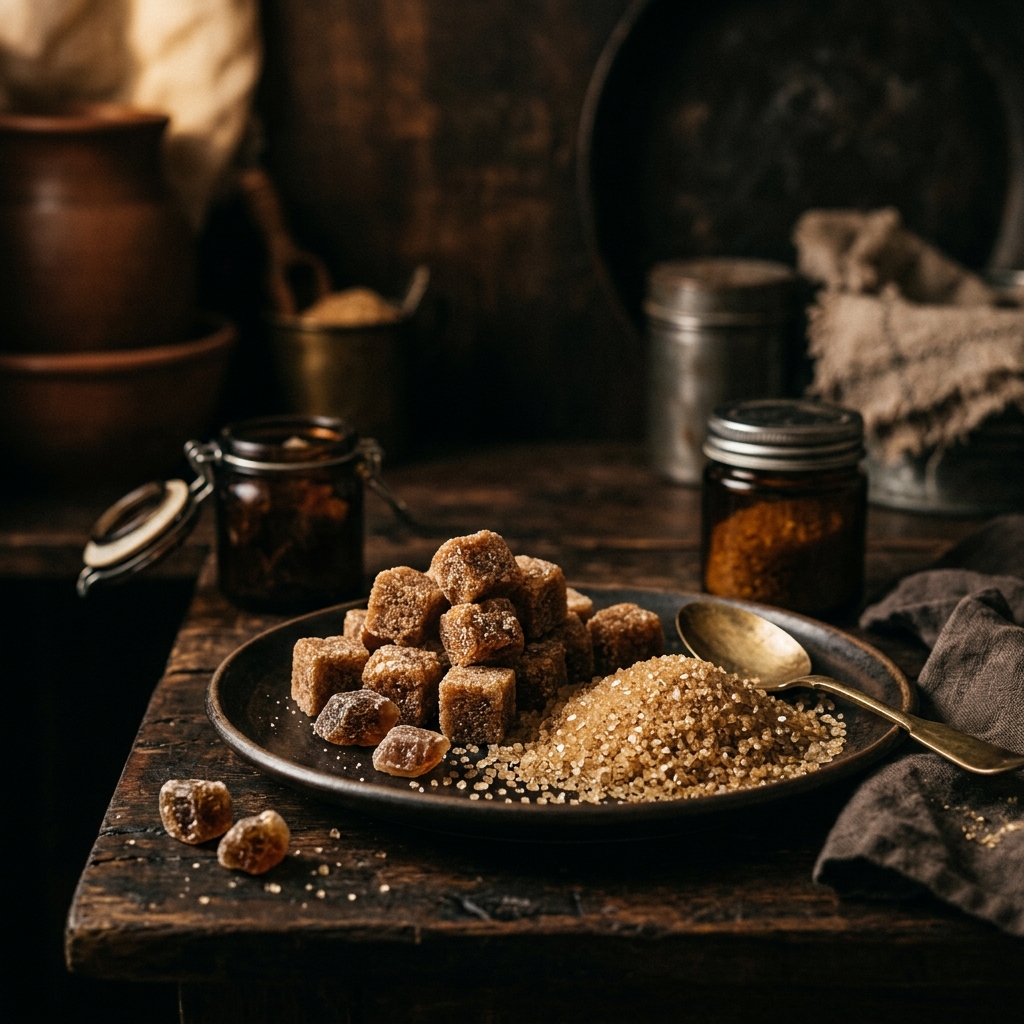
Panela is made by crushing sugarcane, clarifying the juice, and boiling away water until the concentrate can be poured into molds or dried into granules. Unlike refined white sugar, the process does not separate clean crystals from all surrounding cane syrup [1][2].
That does not make panela raw cane or an untouched natural substance. It is carefully processed through milling, heating, skimming, concentration, and molding. Its flavor reflects cane variety, heat, equipment, and producer skill.
Where Did Panela Originate?
Sugarcane originated in Asia and reached the Americas through European colonial expansion. Spanish colonizers established cane fields and mills using Indigenous, enslaved African, and other coerced labor [1][4]. Panela therefore cannot be described honestly as a precolonial American sugar.
Latin American communities made the introduced crop local through small mills, regional forms, drinks, sweets, and daily cooking. Colombia developed one of the strongest panela identities, but related whole cane sugars appear throughout the region.
Panela, Piloncillo, Rapadura, and Jaggery
Panela, Mexican piloncillo, Brazilian rapadura, Andean chancaca, and South Asian jaggery belong to a family of minimally separated cane or palm sugars. Their relationship does not make every block interchangeable. Shape, source crop, clarification, color, moisture, and local use differ [2].
The terminology matters for search and cooking. A recipe asking for panela may be built around Colombian flavor and texture, while a piloncillo cone carries Mexican market history. Family resemblance should support comparison rather than erase provenance.
Aguapanela and the Modern Panela Economy
In Colombia, aguapanela turns the solid sweetener back into a drink. Panela also enters coffee, baked foods, desserts, sauces, and savory preparations. It remains tied to many small producers even as industrial refiners dominate global sugar.
Premium export branding now presents panela as artisanal and heritage-rich. That can add value, but the history should keep rural labor, pricing, and processing visible. The block is both flavor and commodity, shaped by empire and by the communities that made cane juice their own.
Historical Timeline
Spanish colonization expands sugarcane and milling across parts of Latin America using coerced labor
Small mills and regional markets produce molded whole cane sugars alongside plantation exports
Panela remains a daily rural and urban ingredient despite industrial refined sugar
Origin branding, export demand, and specialty markets renew attention to panela
Evidence Explorer
Review the Source Trail
Inspect the article sources, scoped review credits, and copyable citation details without leaving the page.
Sources Listed
Comments
Community comments are coming soon. Check back later to join the discussion!