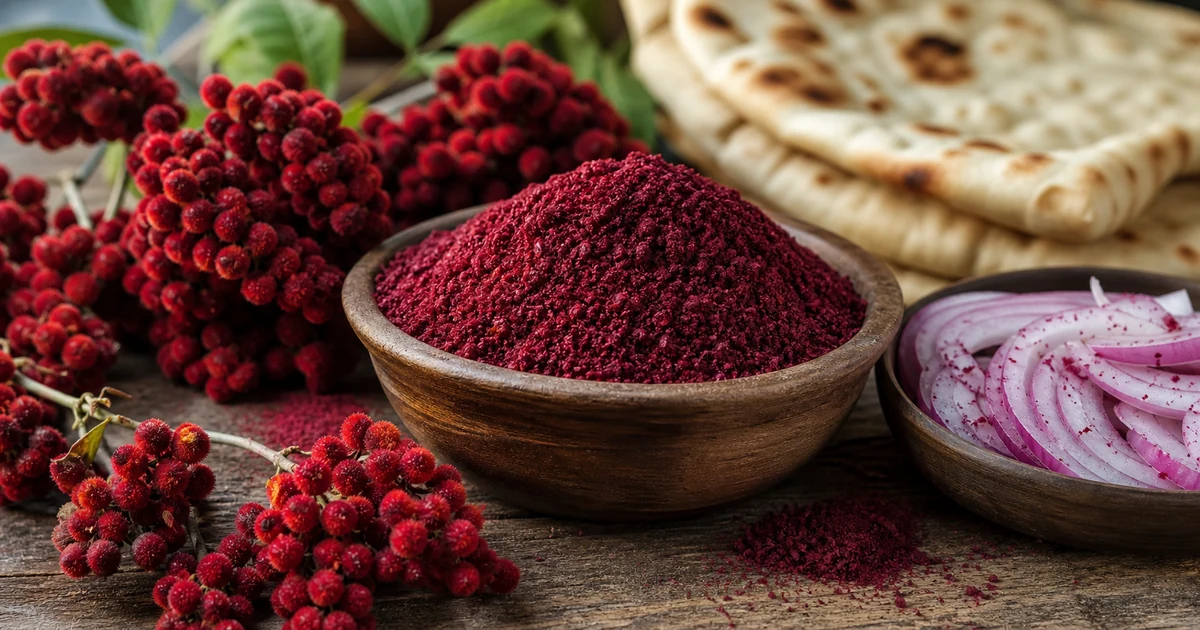
Deep red ground sumac and fuzzy sumac berry clusters beside flatbread and onion
Image: The Foods That Shaped Us Research Desk · License

Sumac History: The Crimson Sour Spice That Seasoned Food Before Lemons Were Everywhere

How Mediterranean and West Asian shrubs, dried berry clusters, acidity, Roman and medieval cooking, za’atar, migration, and modern restaurant culture revived an ancient souring tool

📍 Mediterranean and West Asia📅 Ancient culinary and medicinal use7 min read
Published: ·Updated: ·
Source and factual review: Mehdi IarabEdible Rhus identification, ancient and medieval souring, za’atar distinctions, and source quality.
Sumac History: Ancient Sour Spice of West Asia

💡 Key Takeaways

  • Culinary sumac is a tart spice made from edible Rhus fruits.
  • It provided acidity in regions and seasons where citrus was absent, expensive, or unsuitable.
  • Ancient and medieval sources place sumac in food, drink, tanning, dyeing, and medicine.
  • Culinary sumac must not be confused with unrelated or toxic plants casually called poison sumac.

What Is Culinary Sumac?

Culinary sumac is made by drying and grinding the tart fruits of edible Rhus species, especially Rhus coriaria around the Mediterranean and West Asia [1]. It tastes fruity, tannic, and acidic rather than hot.

The word covers many plants globally, so botanical identification matters. Culinary spice should not be gathered from an unknown shrub based on a common name.

Sourness Before Ubiquitous Citrus

Cooks have always needed acidity to balance fat, season starch, preserve, and sharpen appetite. Before lemons became broadly available in every market and season, sumac offered dry, portable sourness. Grapes, vinegar, pomegranate, fermented dairy, and other acids filled related roles [2][4].

Saying sumac came “before lemon” is context, not a universal sequence. Citrus and sumac histories overlapped for centuries.

Ancient and Medieval Uses

Classical and medieval sources describe sumac in food, medicine, tanning, and dyeing. Arabic cookbooks use it in sauces, meat dishes, and sour preparations, showing that it was an active culinary ingredient rather than merely a wild garnish [2].

Its astringency also made Rhus materials valuable beyond the kitchen.

Sumac, Za’atar, and Regional Specificity

Sumac appears in some za’atar blends, on onions, salads, kebabs, rice, bread, and fish. But za’atar can mean an herb species, a seasoning mixture, or a regional tradition. Not every blend contains the same ratio or ingredients.

Global marketing often presents one standardized red-speckled mix; local practice is more diverse.

The Modern Sumac Revival

Migration, restaurants, cookbooks, and spice retailers made sumac increasingly visible in Europe and North America. Chefs use it on roasted vegetables, eggs, fries, sweets, and cocktails, sometimes detaching it from West Asian context.

The historical opportunity is better than novelty branding: sumac reveals a long regional science of sourness, where dried fruit could do work that modern consumers assume belongs only to citrus or vinegar.

📜 Informational & Historical Context NoteHistorical systems of medicine, traditional remedies, and herbal applications discussed on this page (such as ancient Ayurvedic, Greek, or Egyptian practices) are presented purely for historical interest and cultural context. They are not intended as, and must not be taken as, modern medical or dietary advice. Always consult a qualified healthcare professional before making any wellness or nutritional decisions. Read our full Disclaimer.

Historical Timeline

Antiquity

Mediterranean and West Asian communities use sumac for souring, medicine, dye, and tannins

Medieval period

Arabic culinary and medical texts describe sumac in sauces and preparations

Early modern-modern era

Regional markets maintain whole and ground sumac despite expanding citrus trade

21st century

Restaurant and cookbook interest makes sumac widely visible outside its historic regions

🎉 Fun Historical Facts

  • Sumac’s acidity comes from organic acids on and in the fruit.
  • Ground sumac may include salt depending on the product.
  • Za’atar can mean an herb, a blend, or a family of regional preparations.

📚 Sources & References

  1. [1]Rhus coriaria. Kew Science, Plants of the World Online (2024).
    Search Source
  2. [2]Maxime Rodinson, A. J. Arberry, and Charles Perry. Medieval Arab Cookery. Prospect Books (2001).
    Find Book
  3. [3]A Mediterranean Society: Food and Material Culture in the Medieval Levant. Culinary history scholarship (2015).
    Find Book
  4. [4]Alan Davidson. The Oxford Companion to Food. Oxford University Press (2014).
    Find Book

Articles are reviewed internally for source quality, historical context, clarity, and relevance. Our references may include academic books, university-press publications, museum records, archaeological studies, peer-reviewed journals, historical archives, official cultural institutions, and established food-history works. Case file links point to supporting evidence.

Evidence Explorer

Review the Source Trail

Inspect the article sources, scoped review credits, and copyable citation details without leaving the page.

Reviewed for Stated Scope

Source and factual review: Mehdi IarabEdible Rhus identification, ancient and medieval souring, za’atar distinctions, and source quality.

Sources Listed

[1] Rhus coriariaKew Science, Plants of the World Online (2024)

[2] Maxime Rodinson, A. J. Arberry, and Charles Perry. Medieval Arab CookeryProspect Books (2001)

[3] A Mediterranean Society: Food and Material Culture in the Medieval LevantCulinary history scholarship (2015)

[4] Alan Davidson. The Oxford Companion to FoodOxford University Press (2014)

🏛️

Written by The Foods That Shaped Us Research Desk

The Foods That Shaped Us Research Desk is the publication byline for legacy and collaboratively maintained food-history articles. Articles are researched and edited through a publication-led process, grounded in cited sources, and reviewed for historical context, source quality, and clarity.

Comments

Community comments are coming soon. Check back later to join the discussion!
Related Foods