
Use-case buying guide

Which Beef Tallow Should You Buy? Frying, Roasting and Pastry Compared

Choose beef tallow by source, rendering, flavor, storage, and cooking job. A neutral, filtered jar works for frying; a more aromatic butcher-rendered tallow can suit roasting; neither label proves that tallow is healthier than another cooking fat.
Published Updated 755 wordsMarket: United StatesBy
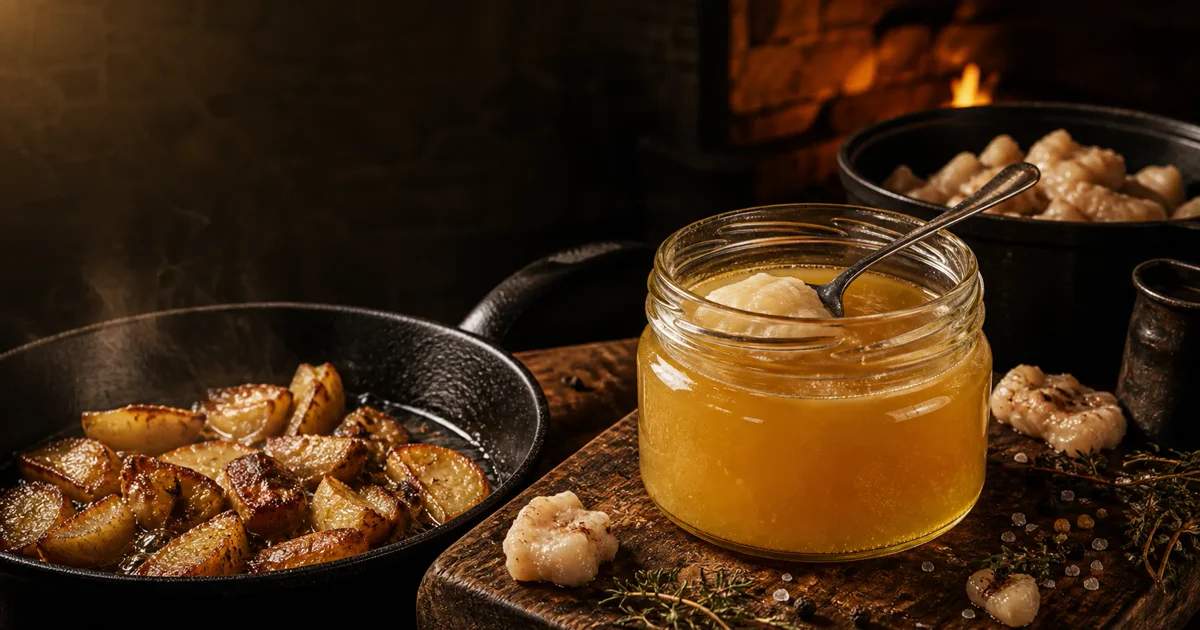
Filtered beef tallow in a jar beside rendered beef fat, roast potatoes, and a cast-iron pan
Beef Tallow formats compared for the cooking jobs they perform best.

The short answer

Buy a food-grade, clearly labelled beef tallow with one declared fat ingredient, practical storage instructions, and a flavor level that suits the dish. Choose a neutral filtered tallow for repeat frying and a more characterful butcher tallow for roasting or savory pastry. Do not pay a wellness premium for unsupported claims about seed oils or health.

Choose this when...

Start with the dish, then verify the package. Format, ingredients, handling, and intended use matter more than a universal ranking.

UseChooseWhyCheckDo not miss
Deep or shallow fryingA neutral, filtered food-grade tallowFiltration and mild flavor make repeated cooking more predictable.Check ingredients, storage, and intended culinary use.Do not confuse industrial or cosmetic tallow with food.
Roast potatoes and vegetablesA clean rendered tallow with moderate beef characterThe fat can contribute browning and a savory aroma.Look for clear beef source and handling guidance.Strong flavor may overwhelm delicate vegetables.
Searing meatA firm, filtered tallowIt coats a hot pan and reinforces beef flavor.Check that no water-based seasonings are mixed in.Avoid overheating simply because the label says high heat.
Savory pastryA mild leaf- or suet-derived tallow when documentedFirm fat can create a short texture when the recipe is designed for it.Verify source and recipe proportions.It is not a direct spoon-for-spoon substitute in every butter pastry.

Beef Tallow types compared

Filtered shelf-stable tallow

Usually mild and consistent

Choose it for
Frying, roasting, and general cooking
Label clue
Storage directions and ingredients should be explicit.
Not the first choice for
Shoppers seeking a strong butcher flavor.

Refrigerated butcher tallow

Potentially more beef-forward

Choose it for
Roasting and savory dishes
Label clue
Ask what fat was rendered and when.
Not the first choice for
Long room-temperature storage without guidance.

Suet-derived tallow

Firm and relatively clean when carefully rendered

Choose it for
Traditional pastry and some high-heat uses
Label clue
Suet should be identified rather than implied.
Not the first choice for
Assuming every commercial jar is exclusively suet.

Blended frying fat

Formulation-dependent

Choose it for
Commercial-style frying when chosen knowingly
Label clue
Read every oil and additive in the blend.
Not the first choice for
Calling a blend pure beef tallow.

What rendering changes

Rendering separates fat from water and tissue; filtration then affects clarity, flavor, and keeping quality. A pale neutral jar and an aromatic butcher batch can both be legitimate products for different jobs. Judge the declared source, cleanliness, packaging, and storage rather than color alone.

Tallow for frying vs roasting

Frying rewards consistency, low moisture, and a flavor that does not become tiring. Roasting can benefit from more beef character because the fat remains part of the finished dish. Buy toward how often the jar will be heated and how visible its flavor will be.

The seed-oil backlash is not a label standard

Modern tallow marketing often positions an old rendered fat against seed oils. That story can explain demand, but it does not convert a package into medical evidence. Culinary function, source transparency, turnover, price, and flavor are defensible purchase criteria.

What to check before you buy beef tallow

  • Food-grade use must be explicit.
  • One-ingredient claims should match the ingredient panel.
  • Storage instructions depend on processing and packaging.
  • Grass-fed and high-heat language do not establish a health advantage.

How rendered beef fat returned to the retail jar

Tallow once linked household rendering, candles, soap, pastry, preservation, and commercial frying. Industrial oils displaced many uses before nose-to-tail cooking and anti-seed-oil culture returned branded jars to U.S. shelves. The parent article separates that commercial comeback from health promises.

Read the full food history

Sources and label evidence

  1. [1]Types of Food Ingredients. FDA (2026).
  2. [2]Whole Foods Trends 2026. Better Homes & Gardens (2026).
  3. [3]Whole Foods 2026 Food Trend Predictions. People (2025).
  4. [4]On Food and Cooking: The Science and Lore of the Kitchen. Scribner (2004).
  5. [5]The Oxford Companion to Food. Oxford University Press (2014).
  6. [6]Fast Food Nation. Houghton Mifflin (2001).
  7. [7]Flavour trends 2026. FoodNavigator (2026).
๐Ÿ›๏ธ

Written by The Foods That Shaped Us Research Desk

The Foods That Shaped Us Research Desk is the publication byline for collaboratively maintained food-history articles, Case Files, Trend Desk analysis, and original Recipe Desk development. Historical work is grounded in cited sources. Recipes use measured formulations and receive an editorial consistency, safety-note, and image-provenance review before release.

Source-led editorial processยทRead our Editorial Standards